Winter in the Greek mountains reveals its beauty through the warmth of hospitality Discover Greece with a local expert.
Winter in the Greek mountains reveals its beauty through the warmth of hospitality.
In January, nature has quieted down in mountainous Greece. The forests have shed their autumn colors and the landscape shows what it truly is. In the villages, daily life moves slowly. They're wrapped in fog, the smell of burning wood spreads through their stone-paved streets, and visitors see another face of Greece. Three destinations stand out in January, each with its own unique identity: Mountainous Arcadia with the weight of history and its stone settlements, Trikala Corinthias with its almost alpine aesthetic, and Mountainous Nafpaktia with its wild beauty. Three different versions of the Greek winter.
Arcadia: Stone Villages Above the Gorge
January's Arcadia is imposing, a landscape full of mystery. Its villages, Dimitsana and Stemnitsa, literally stand above the Lousios Gorge like stone bastions that have learned to withstand time. Dimitsana, known as the "powder keg" of the 1821 Revolution, keeps its character unchanged. The tall tower houses, narrow cobblestone alleys, the humidity that makes the stone glisten, compose a landscape where time has stopped. The Open Air Water Power Museum, with its restored gunpowder mills, water mills, and tanneries, tells how water power supported the region's daily life for centuries. In winter, when the waters swell and their sound spreads through the gorge, the landscape seems to come alive in an almost primal way.
A little further south, Stemnitsa exudes a different atmosphere. The manor houses here stand out for their intricate details, while the square, with cafés smoking from wood stoves, functions as a meeting point where time passes slowly, accompanied by coffee and locals' stories.
In the Lousios Gorge, where according to myth they bathed the newborn Zeus, beats the heart of the region. In winter, hiking in the gorge requires caution, as the paths become slippery, but the reward is unique. The Philosophou Monastery, built in a natural cavity of the rock, and the Prodromos Monastery, clinging to the vertical side of the gorge, seem to defy all logic. The monks, accustomed to winter walkers, offer warm coffee and hospitality.
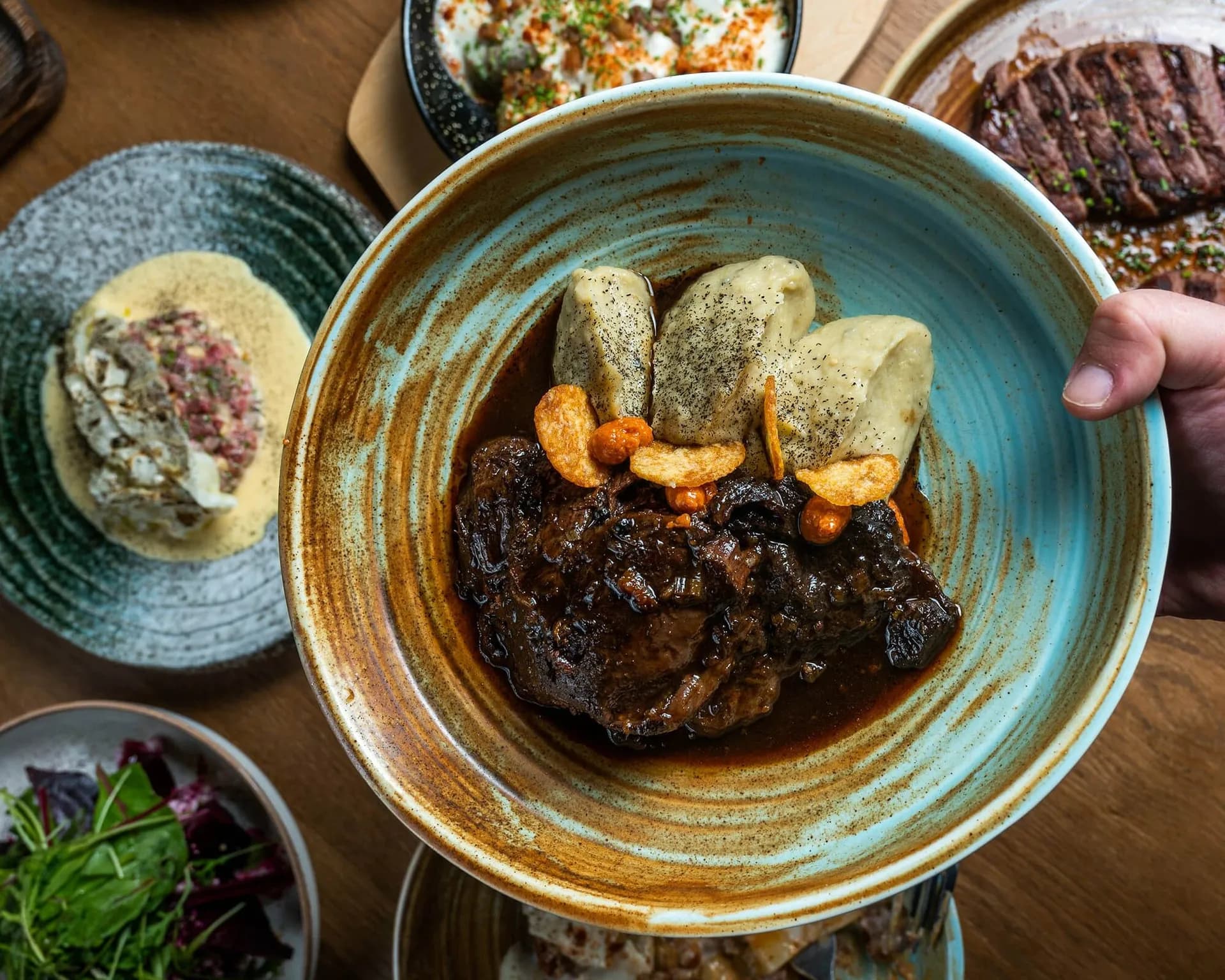
At the table: Cured pork in kayana with fresh tomato, rooster in wine with handmade chilopites, hare stew with walnut garlic sauce.
Trikala Corinthias: The Corinthian Switzerland
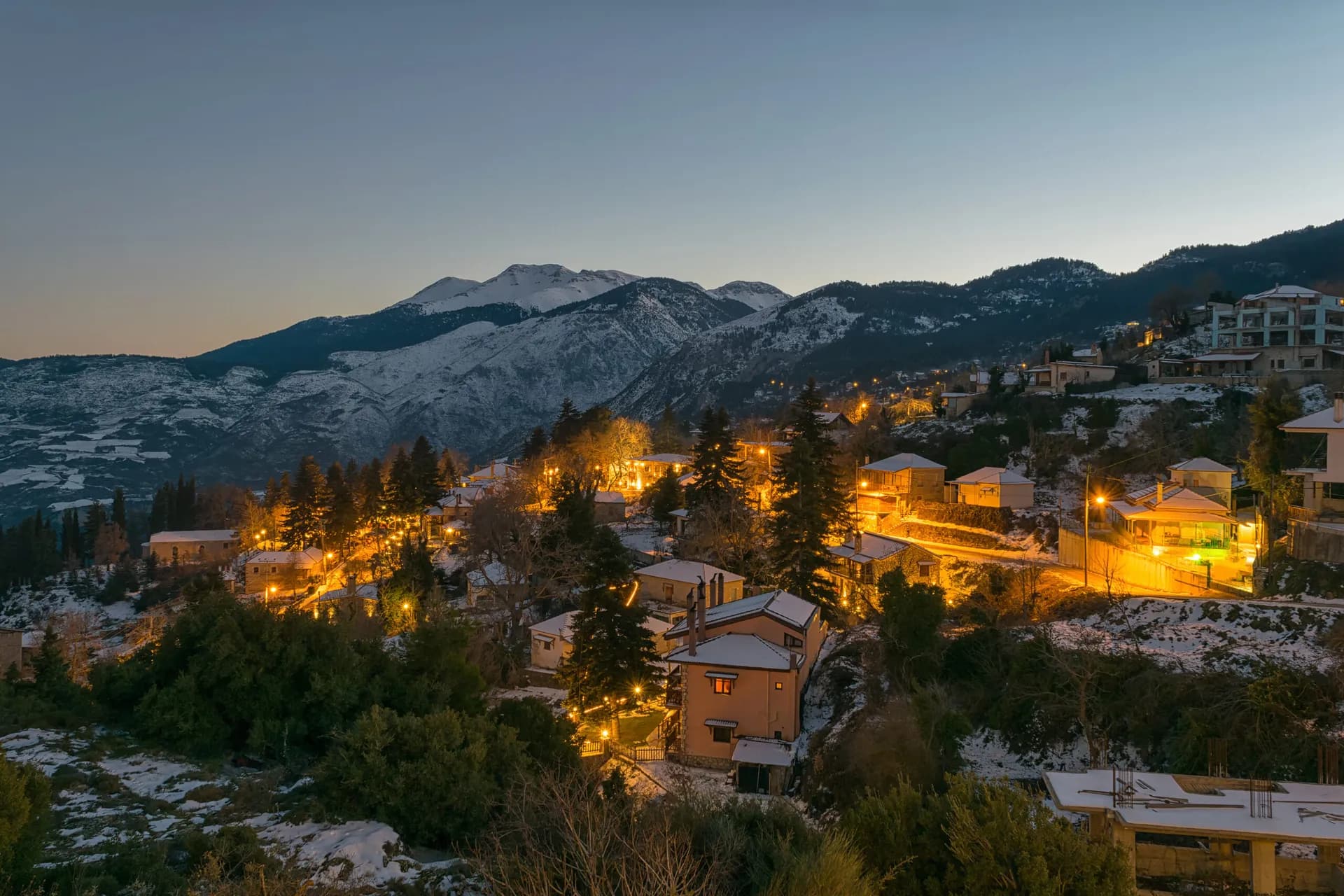
Just two hours from Athens, Trikala Corinthias offers a different version of mountain winter. Here, tradition coexists with modern hospitality in balance.
The villages Kato, Mesaia, and Ano Trikala develop at three different altitudes, like "natural amphitheaters" with views toward the Corinthian Gulf. The stone architecture harmonizes with the landscape, while many of the old houses have been converted into small boutique guesthouses with fireplaces, jacuzzis, and views of the fir forest.
Lake Doxa, about 40 minutes away, is often called the "Corinthian Switzerland." Its waters reflect the peaks of Ziria, Chelmos, and Dourtouvanas, while in the lake's center, the small church of Agios Fanourios seems almost to float. The walk around the lake, with scents of firs and wet earth, functions as a natural "antidote" to the city's intensity. Along the way, local producers sell the famous legumes of Feneos, vanilla beans, fava, along with honey and walnuts.
Higher up, on the Ziria plateau, we encounter Lake Dasiou. This is a seasonal lake that in winter often freezes, transforming the landscape into a "natural ice rink" surrounded by firs. Access isn't always easy, but the landscape's purity rewards those who make it here. The Ziria Ski Center, on the mountain where according to mythology Hermes was born, offers activities even when snow is insufficient: buggy rides, stops for hot chocolate at the chalet with a view, and a general sense of mountain excursion that appeals to all ages.
At the table: The cuisine here is less austere than that of Arcadia, with influences from Corinthia and the central Peloponnese. Stifado, lamb in the pot, and pies with crispy phyllo. The meal usually ends with spoon sweets and coffee by the fireplace.
Mountainous Nafpaktia: Wild and Untamed
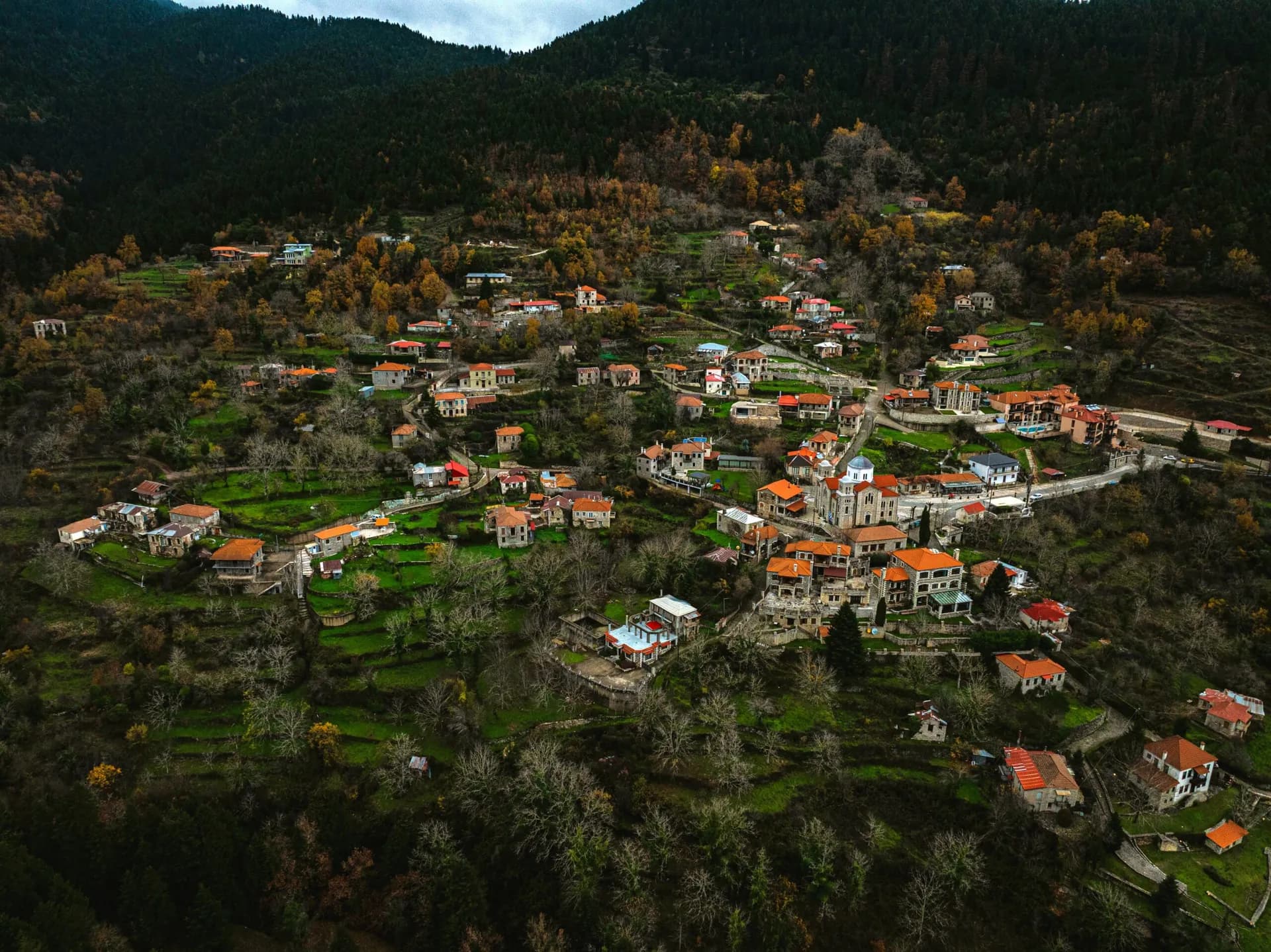
If Arcadia is history and Trikala is comfort, Mountainous Nafpaktia (the historic Kravara) is pure nature. Here the road feels like an endless dance of turns through dense forests, while the villages seem to hang from the slopes, isolated and self-sufficient. Ano Chora, the region's capital village, is surrounded by one of Greece's most beautiful forests, a combination of firs and chestnuts that in January acquires an almost melancholic beauty. The leaves have fallen, forming a thick carpet in shades of red and brown, while the bare branches stand out against the winter sky.
Around Ano Chora, smaller villages like Elatou (drowned in firs like a scene from a Scandinavian fairy tale) and Platanos with its stone-paved square offer different versions of winter beauty.
At the table: The cuisine is seasonal and connected to the forest. Wild boar stifado or with chilopites, pies with thick, handmade phyllo filled with wild greens (dock, nettles), and the region's strong tsipouro, the essential "antifreeze" for cold nights. Chestnuts, roasted in the fireplace or boiled, along with spoon sweets, complete the culinary experience.
Common Questions
How do I get here from Athens?
Most destinations covered on this site are 2 to 4 hours from Athens by car. I always recommend renting a car rather than joining a bus tour — you control your stops, you can pull over when something looks interesting, and the drive itself is often half the experience in Greece.
What is the best time to visit?
April to June is my personal preference — the wildflowers are out, the crowds haven't arrived, and the light is extraordinary. September and October are equally good. Summer is beautiful but you'll share it with everyone else. Winter is underrated and deeply local.