Destinations that enchant with their colors and aromas during this season By food journalist Dimitris Stathopoulos.
Destinations that enchant with their colors and aromas during this season.
It's that time of year when nature is reborn, and with it comes rejuvenation, the mood for new things and new experiences. It's now that each of us will find new ways of expression, set aside rigidity and limitations, and want to see daily life from a perhaps more creative perspective.
Here are 4 excursion suggestions that will make us think differently and enjoy more of what we have around us.
The Blooming Peach Orchards of Imathia
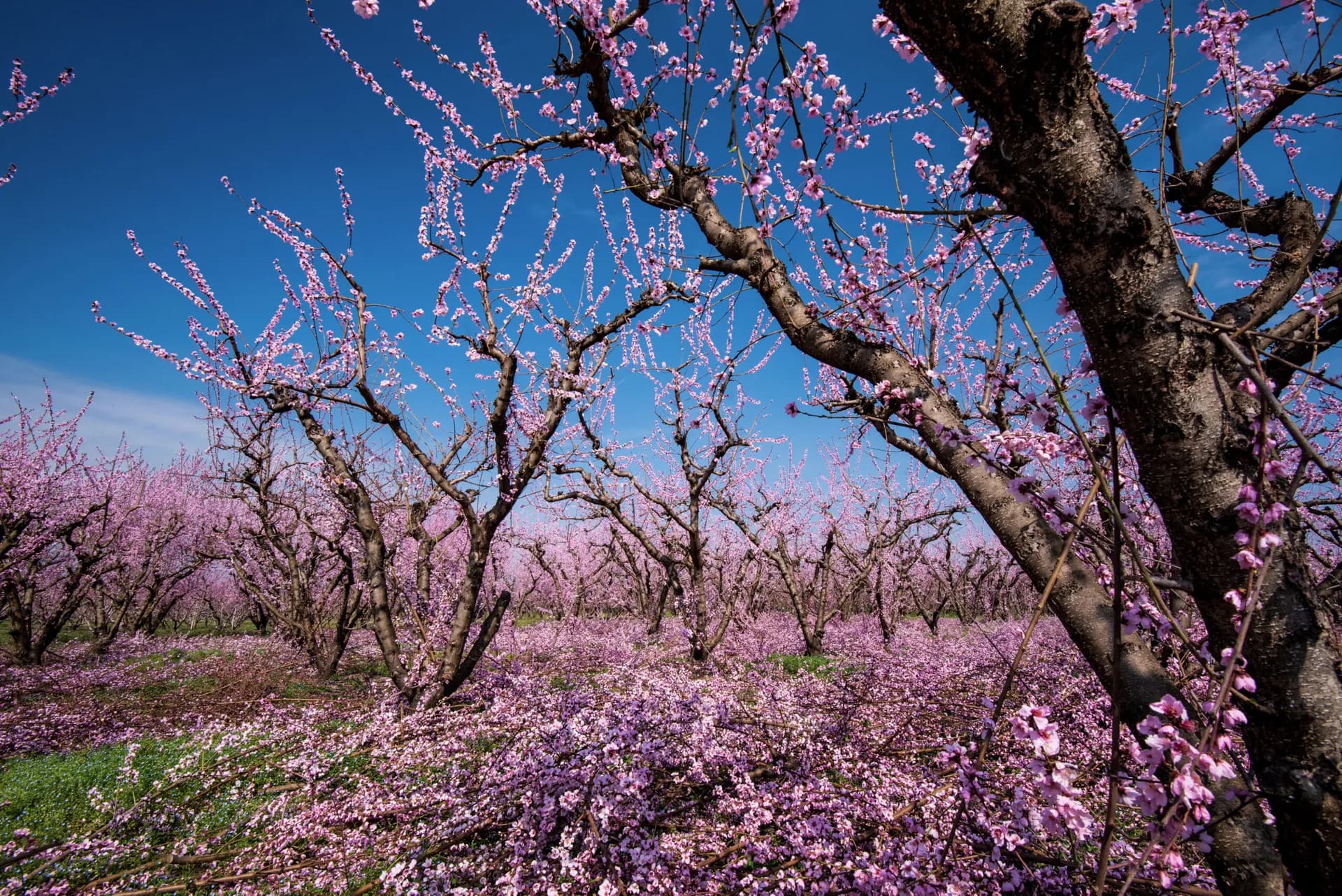
Peach blossoms in every shade of pink. About twenty magical days of peach tree flowering in the fertile plain of Imathia create a fairy-tale spectacle. Dozens of varieties, early and late, of a beloved fruit bloom until the first ten days of April, creating a pink flowering sea.
The Veria Tourist Club organizes bike rides, hikes, and a photography competition for professional and amateur photographers from Greece and abroad every year. Powerful emotions and images of incredible beauty at nature's first awakening. A scene that inspires, similar to the Japanese "hanami," the viewing of blossoms on cherry trees that thousands of residents in the Land of the Rising Sun enjoy every spring. Color explosions for the first signs of spring.
Cape Tainaron Lighthouse: Where Two Seas Meet
In a landscape that stuns, where a rocky cape thrusts into the sea, and beneath the almost constant storm rises the lighthouse of Akrotainaro. On one side spreads the Laconic Gulf and on the other the Messenian Gulf, meeting here at the definitive and irrevocable terminus of Mount Taygetos. The lighthouse was built in 1882 and put into operation in 1887. It belongs to the second generation of Greek lighthouses and is considered the most important of the three that exist in Mani.
It's located on one of the busiest sea passages of the eastern Mediterranean, where the maritime routes of the Aegean converge toward the Adriatic. The other two light the inner recess of the Messenian Gulf from Kitries and the entrance to Gytheio harbor. Its height is 16 meters, while its beam reaches 22 nautical miles. The lighthouse's architecture follows the widespread typology of lighthouses from its era: a distinctive, eclectic industrial architecture with clean geometric shapes and few decorative elements, in combinations of metal and stone.
Vatheia: The Tower Village of Mani
An impressive traditional settlement that transports us among towers and old churches, the sea and the characteristic mountainous landscape of Laconia. A landmark settlement of Mani. We're in the heart of Laconic Mani, at one of the most important monuments of our architectural tradition, in Vatheia. It's a prime example of folk fortification in Greece, and certainly the most photographed settlement of the entire region. The settlement is full of tower houses, which were built by Mani's powerful families as symbols of power, while each tower's height reflected each family's worth.
These towers are two stories or can reach even four floors and functioned as a security space for the whole family. The walls often exceed one meter in thickness, windows are small, while doors are low, to hinder attackers' entry. After World War II, many were abandoned as migration to urban centers was continuous. Several became desolate and some collapsed, until in the early 1980s restoration interventions began with the contribution of EOT (Greek National Tourism Organization). Tourist accommodations were created and the until-then forgotten Vatheia returned to the forefront. Today, a visit there offers a special experience that brings the visitor close to a living journey into the past, within a settlement that resembles an open-air museum.
Lake Plastira: The Trichonida of Thessaly
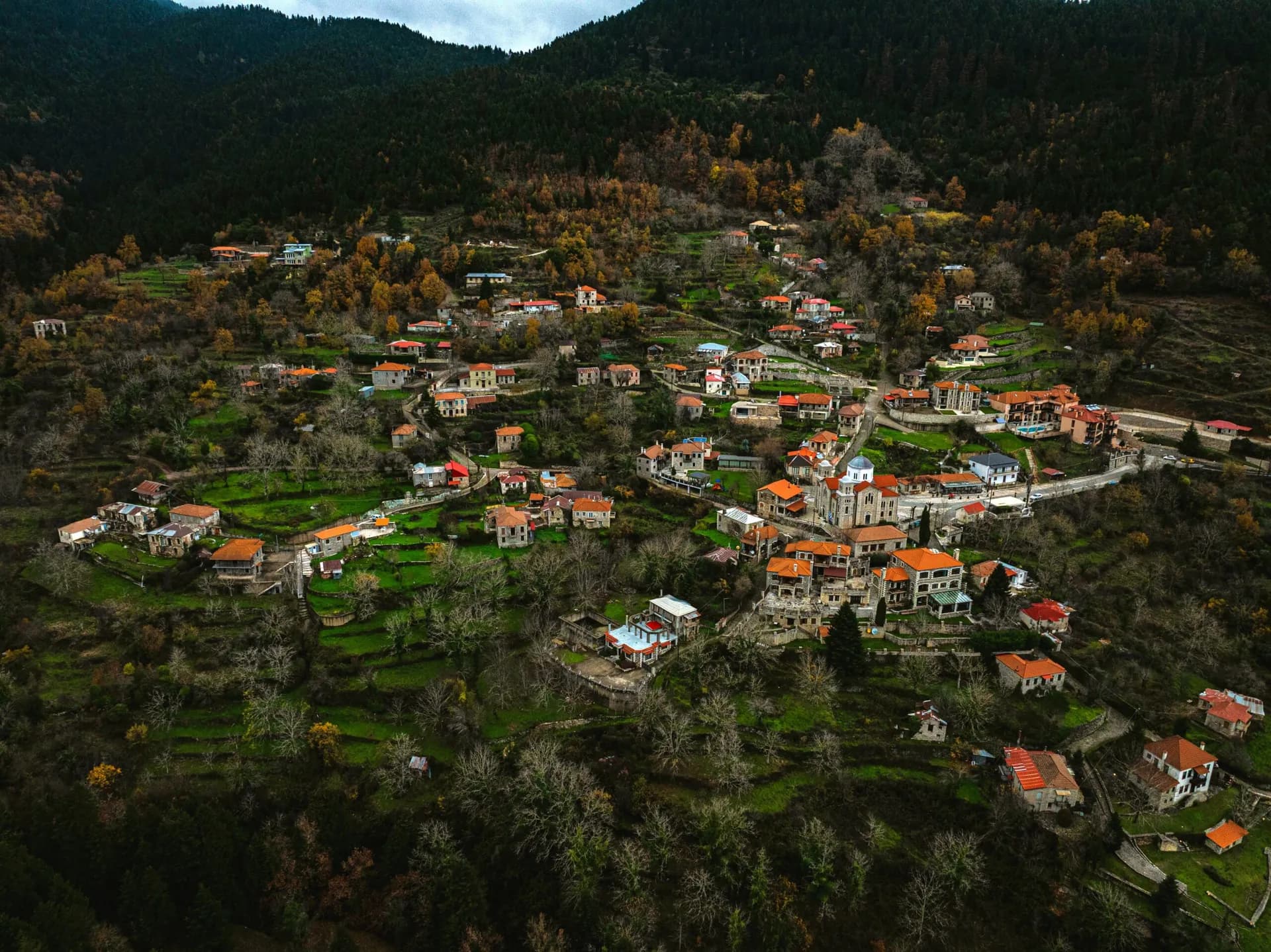
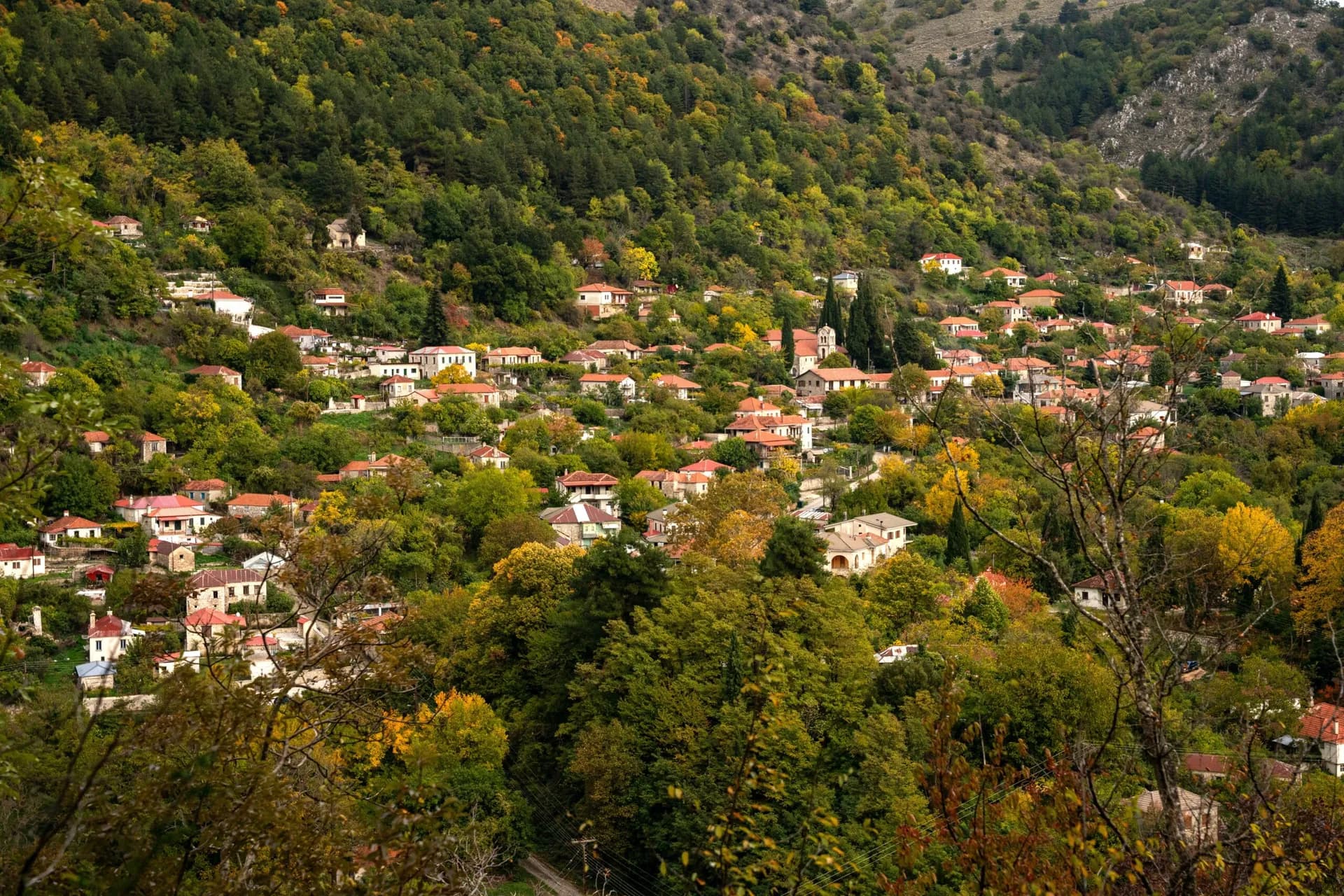
A landscape that seems to have sprung from a fairy tale, with beautiful and well-kept villages perched on slopes, forests reaching to the water, and fjords that make the image even more impressive. We're at Lake Plastira, beneath the imposing mountain peaks of Agrafa. This artificial lake was the inspiration of General Plastiras, who envisioned the construction of a dam on the Tavropos River, aiming to solve the chronic irrigation problem of the Thessalian plain.
The idea was formulated as early as 1925, but the work's construction was completed several decades later, in 1959. Then Lake Tavropou, or Lake Plastira as it came to be called, began to form. Before the area became a lake, the site played a special role in World War II, as the "invisible" Allied Neraida airfield operated there without ever being detected by the Germans.
We choose a road route around the lake and find ourselves before impressive coves, with firs and chestnuts dominating the slopes, while we enjoy the landscape's tranquility. We pass through Kalyvia Fylaktis, a settlement built on the slopes of Agrafa with a beautiful view toward the lake and fir forests. We walk the paths of Kerassia, the settlement located in the northern part of the lake, and enjoy the view toward Mouzaki and the Thessalian plain.
Passing through the well-kept villages of Kalyvia, Pezula, and Fylakti, we continue for one of the most beautiful routes around the lake, heading toward the verdant mountain settlement of Neraida. From 1,400 meters altitude we enjoy the view from the Monastery of Panagia Pelekiti. Descending, the experience is completed with horseback riding on the lake's shores, in a landscape that's ideally suited for exploration.
Frequently Asked Questions
What makes Greek food unique?
Greek cuisine is built on simplicity and quality ingredients. What makes it distinctive is regional variety — every island and mountain village has its own flavors, often unchanged for centuries.