Located southeast of Amari, in an area distinguished by its natural beauty, lies a fertile valley enclosed by the Kedros, Discover Greece with a local expe
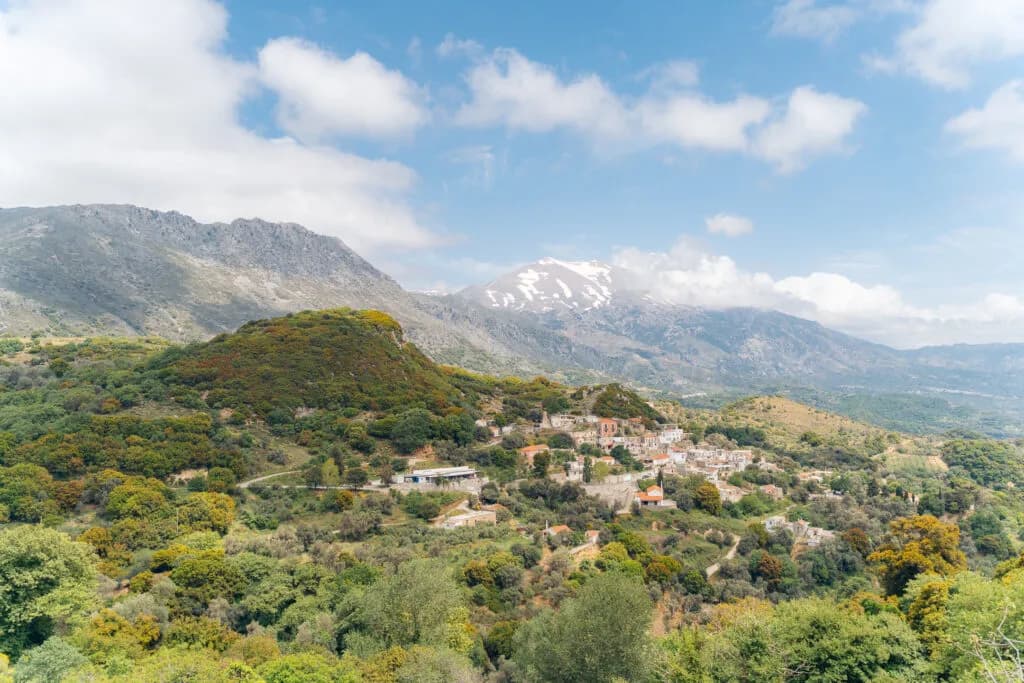
Located southeast of Amari, in an area distinguished by its natural beauty, lies a fertile valley enclosed by the Kedros, Samitos, and the iconic Psiloritis mountains. This landscape preserves all those elements that make Crete unique: small picturesque villages with traditional architecture, springs, verdant slopes, cultivated fields, fruit trees, and welcoming residents.
Regarding its name, various versions exist, with the most prevalent referring to a Byzantine or Venetian lord named Amari, and another where the word derives from the Latin "amare" meaning "to love."
A Journey Through Time
Touring Amari's villages gives visitors the opportunity to discover unexpected sights, important cultural monuments, and numerous ancient chapels, to admire Amari's magnificent nature through hiking, and to experience the region's rich tradition through festivals and traditional celebrations revived in its villages.
The region's history is lost in the depths of centuries, with settlement evidence from the Elenes settlement reaching back to the Neolithic Era. Human presence and activity in the area has been continuous since 6000 BC, continuing through the Middle Minoan period (2100 to 1600 BC), as understood from archaeological research that has revealed the ancient city of Syvritos in the village of Thronos and building complexes from the same period in the settlements of Apodoulou and Monastiraki.
Ancient Prosperity
During the Late Minoan period, the ancient city of Syvritos was founded, which flourished until the first Byzantine period, dominating as a powerful and independent city due to its geographical position. Its independence is confirmed by the fact that it was one of the first Cretan cities to mint its own currency, while its territory extended throughout the area of the modern settlement, reaching ancient Soulia, likely today's Agia Galini.
In the village of Apodoulou, remains of a Protopalatial center have been uncovered, including building complexes and tholos tombs, while at the location of Kokkinos Harakas in the village of Monastiraki, there are findings from a Minoan palace of the Protopalatial era, revealing the intense social activity and civilization that flourished during that time, with particularly developed agriculture and livestock farming.
Byzantine Legacy
The evidence doesn't stop there, as the region is significantly associated and connected with the Byzantine period, a fact demonstrated by the multitude of Byzantine churches preserved in many settlements and their surroundings. Important monuments that are preserved and testify to the region's history and cultural heritage include the Byzantine church of Saint Anna, which is the oldest dated church in Crete, the Monastery of Kaloeidaina in the village of Ano Meros from the 13th or 14th century, whose history is connected with providing refuge to revolutionaries during the 1821 Revolution.
Other significant monuments include the Byzantine Monastery of Asomaton (330 to 824 AD), which today houses the Agricultural School of Asomaton, as well as the churches of Saint Paraskevi and Keras Panagia. In all the nation's liberation struggles, the region played a special role, participating in numerous uprisings during the Venetian period (1211 to 1669) and the Ottoman period (1669 to 1898), while the area became a center of resistance and refuge for the persecuted and guerrillas during the occupation, when German soldiers burned eight villages.
Frequently Asked Questions
What is the best time to visit Greece?
April to June and September to October offer the best weather, lower crowds, and full restaurant schedules. Summer is peak season. Winter is quiet with great value.