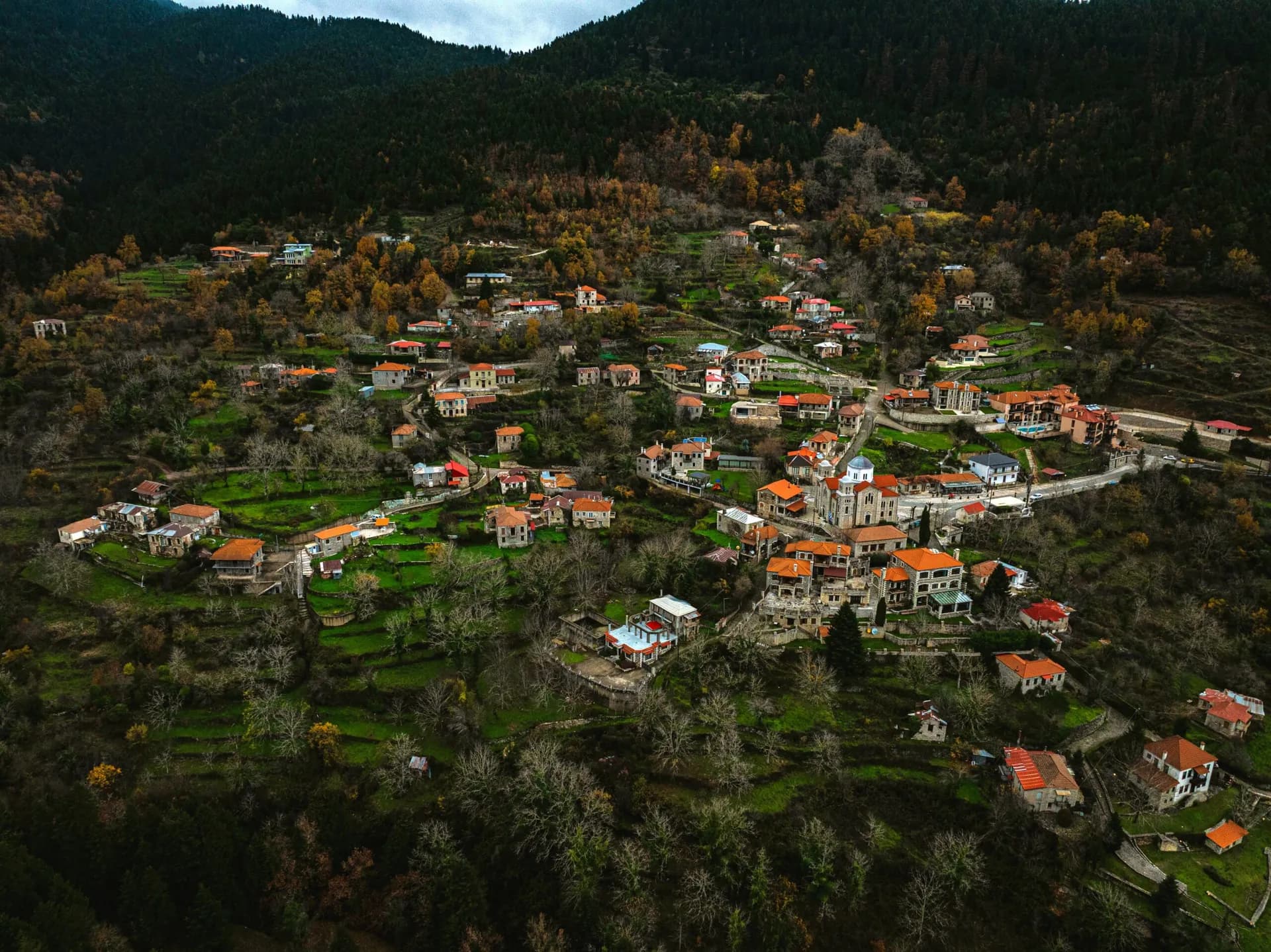
It's almost dark and I'm walking in Litochoro Insider guide by food journalist Dimitris Stathopoulos.
It's almost dark and I'm walking in Litochoro. I've learned that relatively recently, three winemakers joined forces to create a wine bar, Olympus Wines, and simultaneously a cultural space. It's Saturday evening and the place is nearly full. It's the first day of Angeliki Siamou's painting exhibition. I spend some time before the paintings, and afterward, the artist gives us some information. We taste wines from the owners' estates, and then we dedicate some time to a discussion about art, music, and influences.
The distinguished visual artist speaks about her artistic journey and the influences that shaped her. She refers to the decisive role her parents played, cultivating her talent and love for the arts from a young age. Despite her initial music studies, she chose to follow her passion for painting in Paris. There, she experienced immersion in the city's artistic stimuli, exhibitions, and contacts with important creators.
Conversations with Golfinos, Tziotis, Lambert, and other recognized artists, as well as the study of Ancient Greek Literature, were milestones in her journey. At the same time, Xenakis's music and Chryssa's art decisively influenced her work. Today, she draws inspiration from nature and light, while philosophy runs through her thought and life. She seeks to convey through her art the optimism and self-knowledge that lead to spiritual elevation.
When did you start painting?
I painted from very young age with my father in his free time, and it's very important that both my parents had an affinity for the arts. They morally and financially supported all my pursuits.
I took music lessons from age 6 and at 21 was already a graduate of the Thessaloniki State Conservatory. However, my intense interest in painting prevailed over the expected music career. That's when I decided to study painting in Paris at the Ecole Nationale Supérieure des Beaux Arts.
How was the Paris experience?
In Paris my studies were at school but also from the many artistic stimuli at visual, musical, and cultural events and great libraries. These determined my continuation as a person and artist.
Did you make important contacts in Paris?
At his exhibition at les Halles, I met Hans Hartung, and when he learned my status and origin, he recited for several minutes in original verses from the Odyssey. On a trip returning from Greece, I met sculptor Takis. He pointed out the importance of studying Greek literature and urged me to first study the pre-Socratics well and then Plato and Aristotle. I attended all of Iannis Xenakis's concerts. I was able to see art and manuscripts from previous centuries. In the '80s, conversations with G. Fokas, M. Maridakis, G. Golfinos, N. Tziotis, Ch. Lambert, G. Kottis, P. Samios and occasionally A. Fassianos, Pavlos, Theodoros, are formative experiences tied to concerns and current trends in what was happening.
Describe your creative process.
Each of us is structured like an entire universe that can continuously be co-shaped with our choices and actions. In this universe, there's convergence of microcosm and macrocosm. Each person's discernment is what differentiates them, as well as the degree of its conquest, achieved through persistence and laborious personal work. This is the work, and from it all we have to give is presented.
Where do you draw your inspiration?
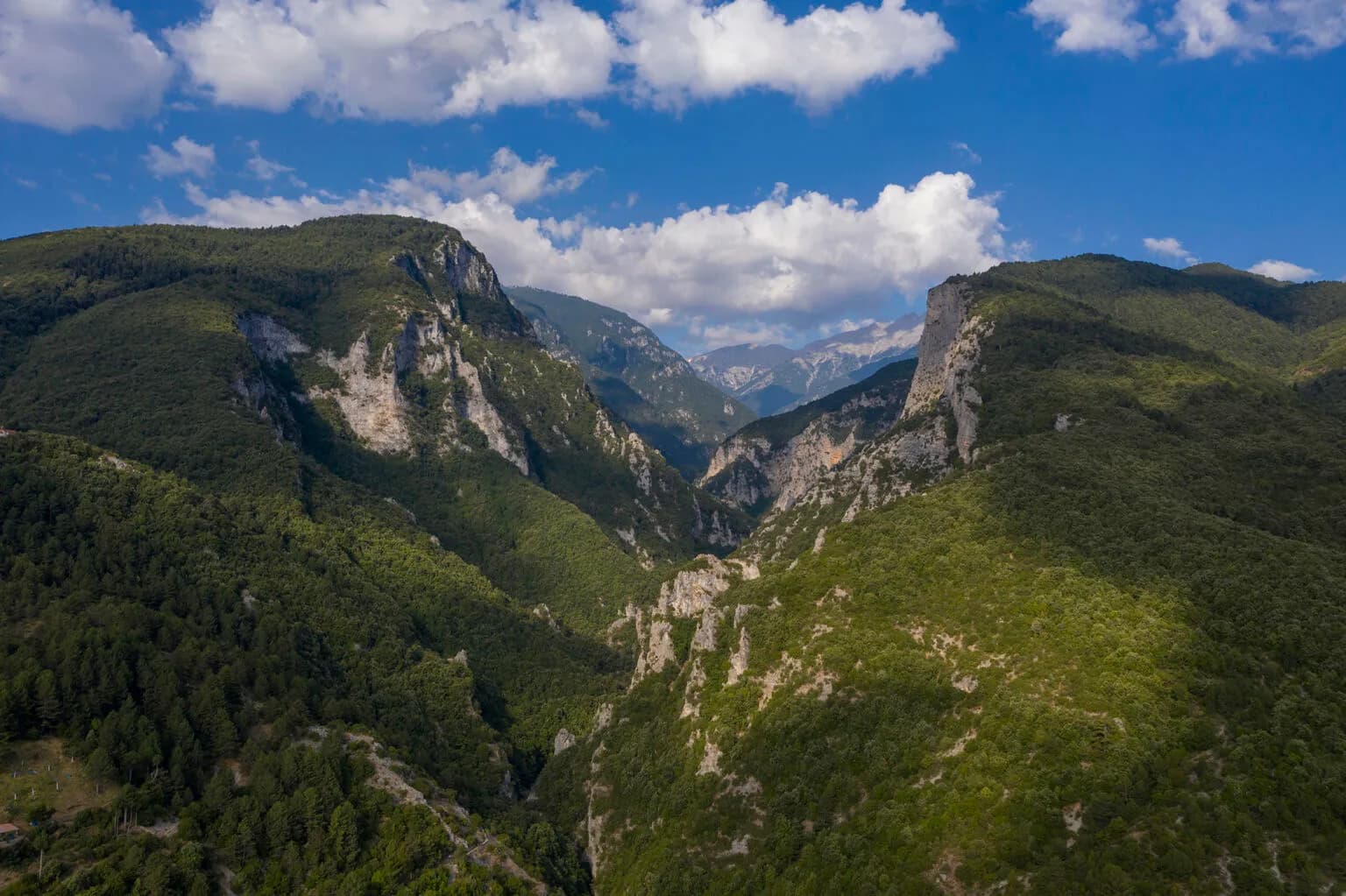
Inspiration? I chose to be in Litochoro, Pieria, and see Mount Olympus up close.
What's your favorite painting technique and why?
Mixed technique. Pencils, pastels, and acrylics to have possibilities for quick transformation and intervention in the work's next stage. Sometimes collage with objects, papers, and metals.
Are there artists you admire who have influenced your work?
When I was studying in Paris, as I already told you, I attended all of Iannis Xenakis's concerts and when I painted I listened to his music. Chryssa was also the artist I zealously followed.
What does it mean to exhibit your works in Litochoro, where you live?
I'm happy when I present in Litochoro because it's now also the space where all this is created. The warmth of the people and their interaction with the exhibits moves me and binds me even more to this place.
What messages or emotions do you want your works to convey to viewers?
What concerns me is philosophy both at the thought level and in life, light and positive approach to daily flow. I don't place titles to give freedom, through what I've processed, for each person to receive what they need.
Do you have any upcoming plans or works you're working on currently?
From the early stages of my work, nature's elements occupied me as idea separately and as matter. Sometimes still like a celestial world and then in a flow giving impetus to dreams. These occupy me now and continuation follows.
What advice would you give to a young artist wanting to follow their dream in painting?
To meet themselves and speak internally. To believe and become better every day because the artist influences.
Common Questions
Where can I find this in Athens?
The Central Market (Varvakios Agora) on Athinas Street is the best starting point for any serious ingredient hunt in Athens. It's open weekday mornings and is genuinely one of the great food markets of Europe — chaotic, loud, and completely authentic. Go with a local if you can. I take people there on my Athens food walk.
What makes Greek versions of this different from what I've had elsewhere?
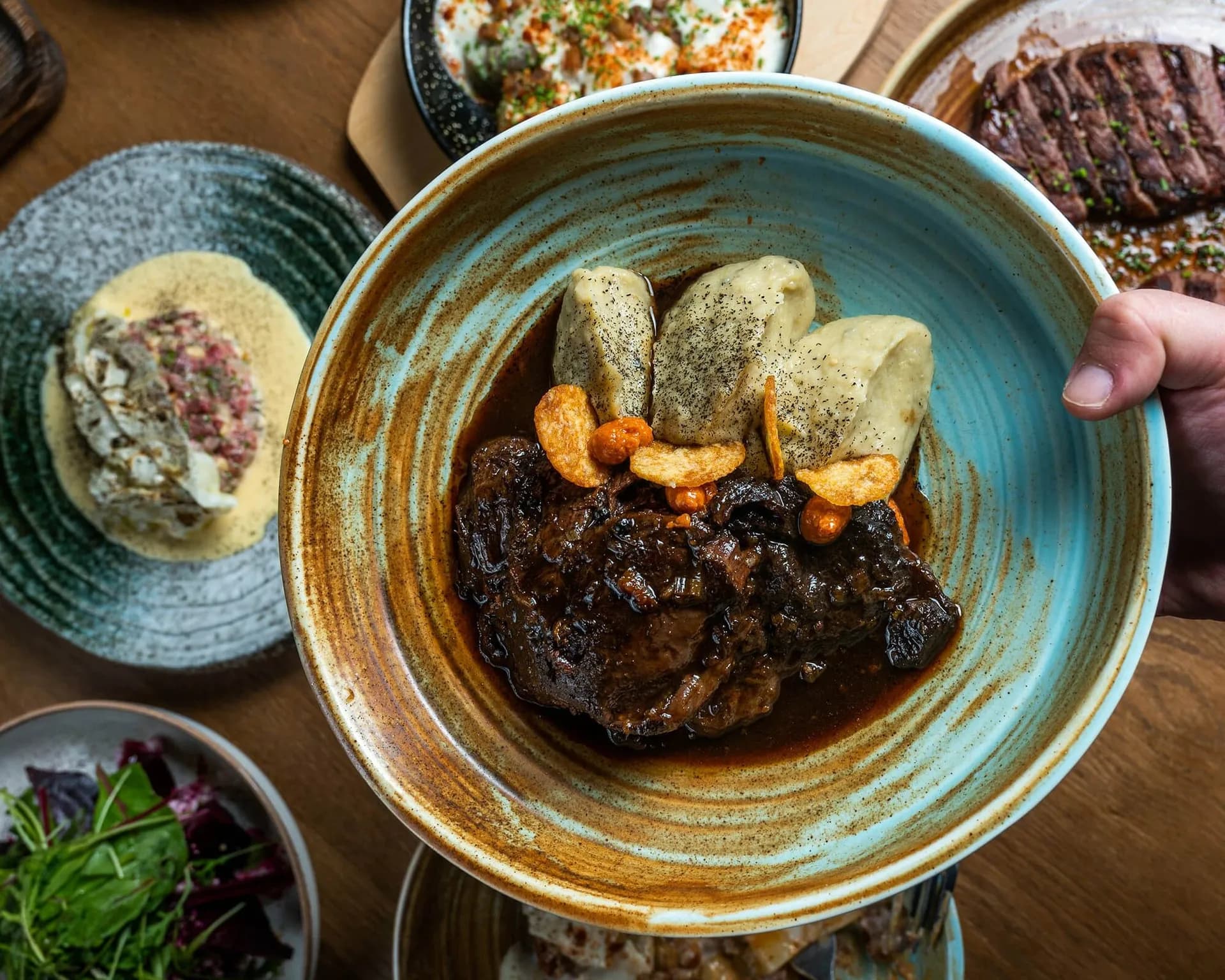
Greek cooking is obsessed with quality of ingredients, not complexity of technique. The olive oil is better. The tomatoes taste like tomatoes should. The feta is brined in whey, not plastic brine. When you eat the same dish in Greece vs. a Greek restaurant abroad, you're eating fundamentally different food.