Journey to a beautiful traditional settlement in Elis with picturesque alleys, nestled in nature and rich in history Insider guide by food journalist Dimit
Journey to a beautiful traditional settlement in Elis with picturesque alleys, nestled in nature and rich in history.
As we move along the main road connecting Kyparissia with Pyrgos in Elis, the characteristic brown sign from the Ministry of Culture informs us of the direction to the traditional settlement of Ano Taxiarches.
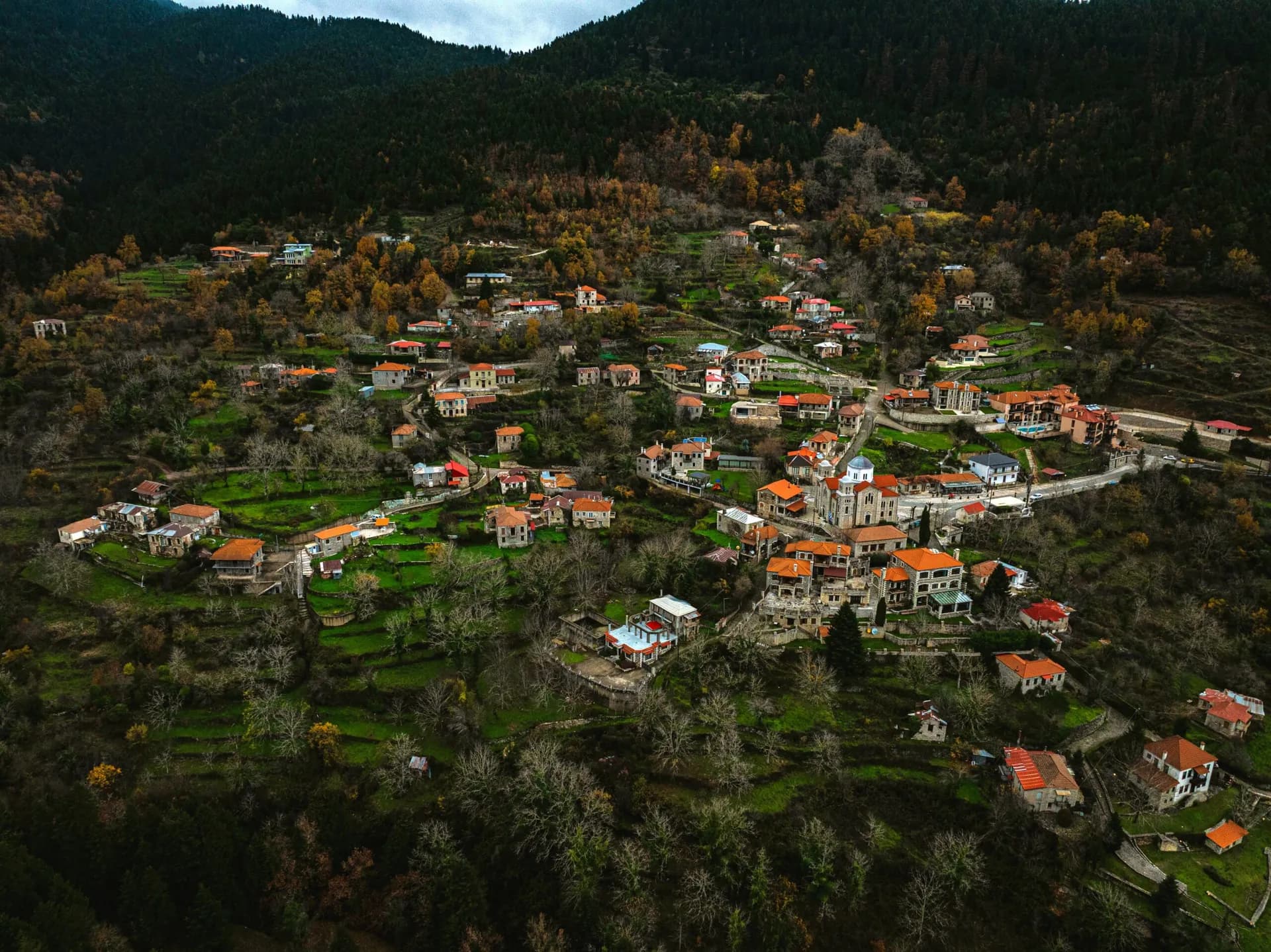
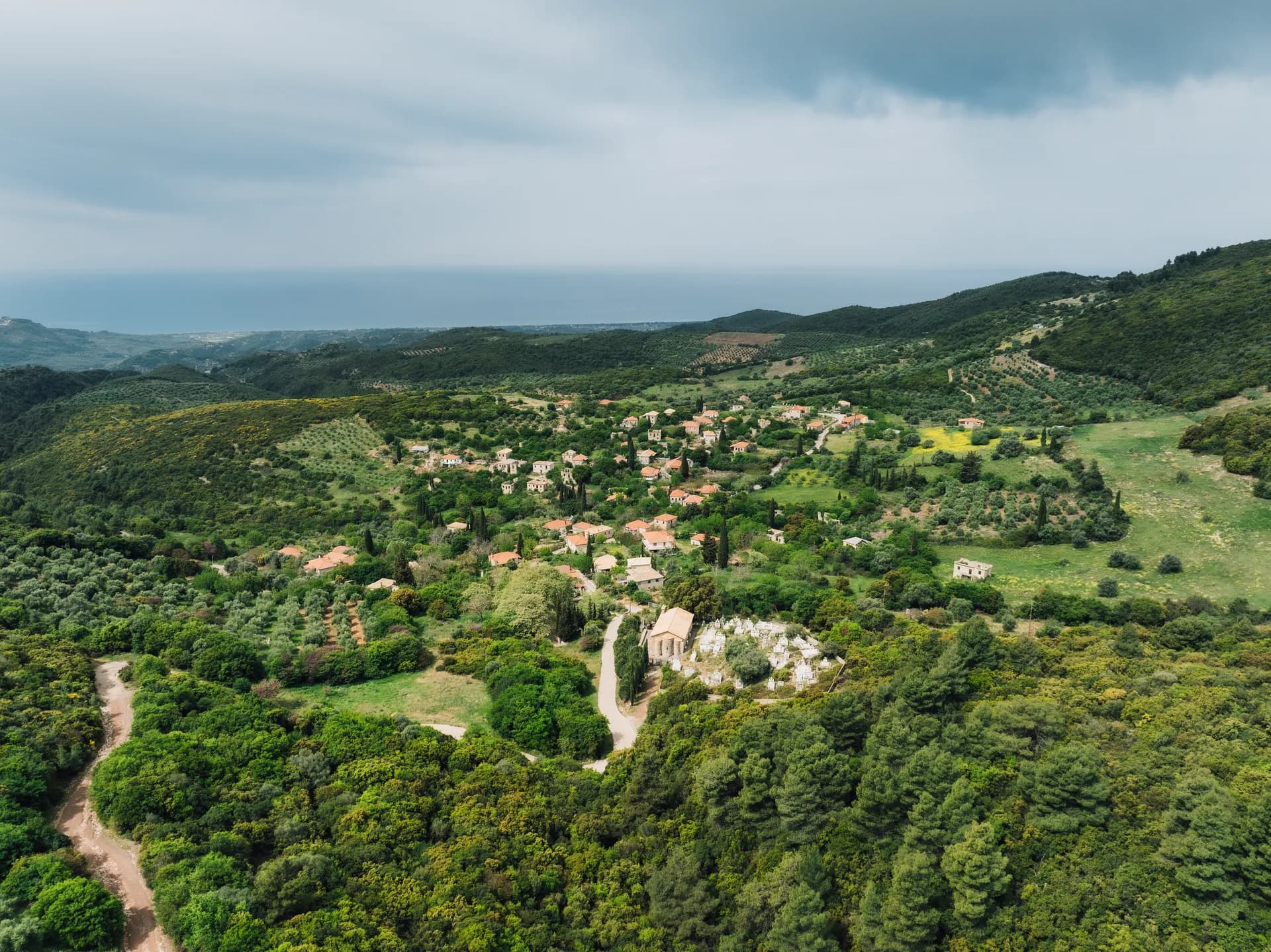
Reaching Lepreo, we follow a completely closed turn, and after almost ten minutes we arrive at the village. From the plants gradually covering the road's sides, one easily realizes this road doesn't have much traffic. After a few minutes, we're already at the settlement's entrance. Nothing can be heard. We leave the car at the entrance and start walking. A settlement drowned in green. Opposite, the characteristic stone houses are visible.
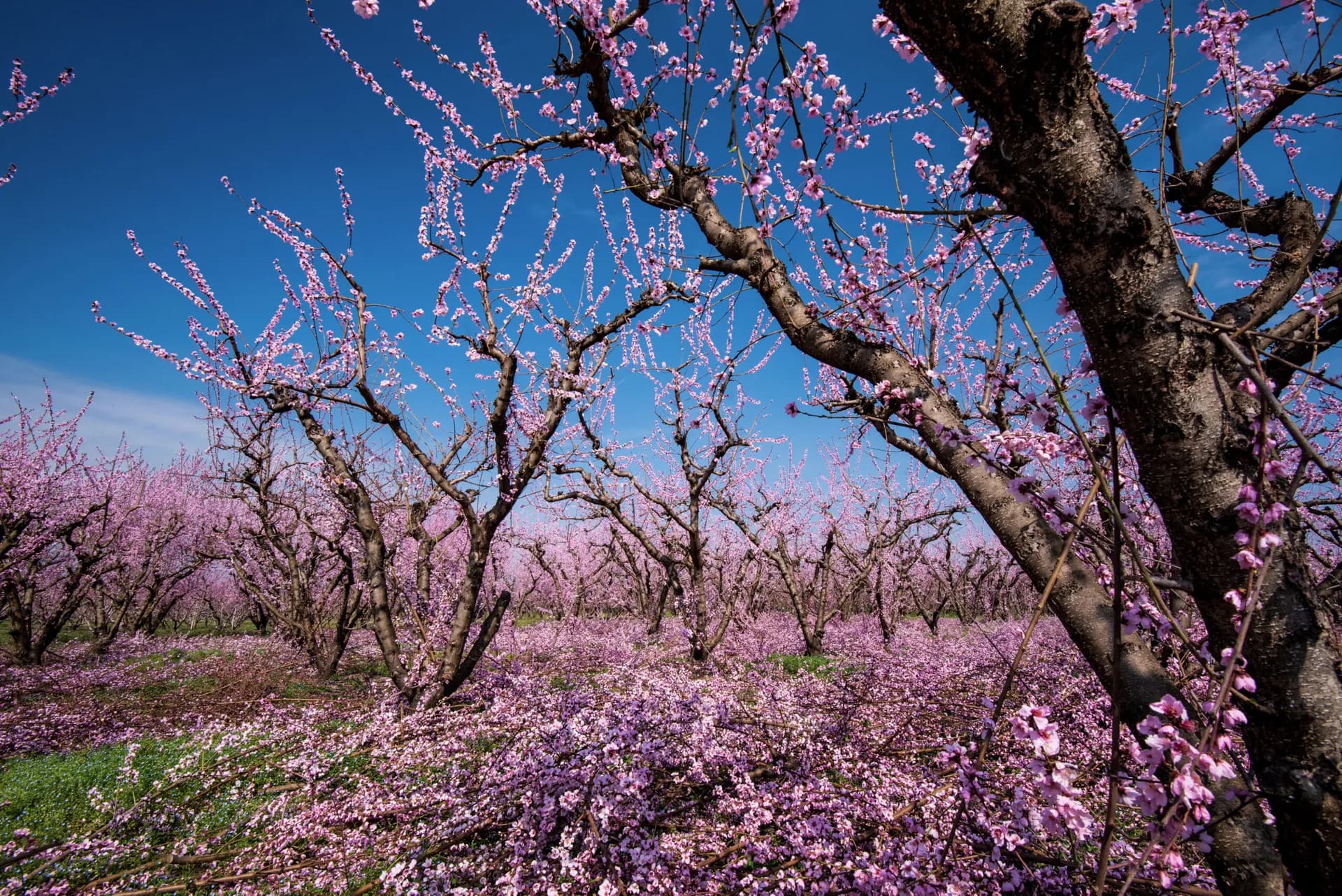
They're two-story with tiles on the roof. Some of them are ruined, others have been renovated carefully and based on regulations protecting their appearance. A bit further down, the road is paved with the purple flowers of Judas trees. Even the neighboring house's roof has also changed color. I observe the courtyards. In one house, food for the cats is in the bowl, waiting. Someone must have been there a short while ago. Although we haven't yet seen a person, the village's image gives you the sense that there's activity. You see everything tidy and organized, as if someone passed by just moments ago.
Taxiarches's old name, until 1931, was Mofkitsa, and it's at 1,673 feet elevation. The history of Taxiarches begins in ancient times, as ruins of Roman and Byzantine settlement have been located in the area. During Turkish rule, the village experienced difficult periods, with residents suffering heavy taxation and oppression. Nevertheless, residents managed to maintain their faith and traditions.
Today, as we said above, visitors can admire the village's traditional stone houses, which have been preserved to a large degree in their original form. The houses are two-story or single-story, with spacious courtyards and covered balconies. Of special interest is the church of Pammegiston Taxiarchon, which dates to the late 13th to early 14th century.
Taxiarches has been characterized as a traditional settlement by the Ministry of Interior, constituting the only settlement in Elis with Protection Grade 2, due to its notable architecture. The village's few residents are mainly engaged in agriculture and livestock farming, utilizing the area's fertile soil.
A walk on the village's picturesque cobblestones and a visit to the stone fountain and the Church of the Dormition of the Theotokos will transport visitors to another era. Taxiarches constitutes a destination combining nature's beauty with rich history and traditions, offering a unique experience to those who decide to visit.
The settlement's historical journey is closely connected with the wider region's adventures. From pirate raids and Turkish rule's trials to the 1821 Revolution and World War II, Taxiarches's residents displayed a spirit of resistance and solidarity.
The church of Pammegiston Taxiarchon Michael and Gabriel is located on a hill above the settlement and dates to the late 13th to early 14th century. It belongs to the architectural type of single-aisled cruciform inscribed with a dome. Despite the damage it suffered over time, it still retains noteworthy elements such as the built Holy Table, the mouths of acoustic vessels at the dome's base, and the special floor with black-and-white tiles and colored floral motifs.
Restoration work completed in 2019 included, among other things, masonry stabilization, replacing the dome's cement roof, and cleaning the monument. Thanks to archaeologists' and conservators' careful work, the church of Pammegiston Taxiarchon can now welcome visitors again and testify to the region's important Byzantine architectural heritage.
Today, despite the gradual population decline due to urbanization, the village remains alive thanks to residents' devotion to their place's traditions and history. Taxiarches constitutes an ideal destination for those wishing to know firsthand the genuine beauty of Greek countryside and enjoy nature's tranquility.
Common Questions
Where can I find this in Athens?
The Central Market (Varvakios Agora) on Athinas Street is the best starting point for any serious ingredient hunt in Athens. It's open weekday mornings and is genuinely one of the great food markets of Europe — chaotic, loud, and completely authentic. Go with a local if you can. I take people there on my Athens food walk.
What makes Greek versions of this different from what I've had elsewhere?
Greek cooking is obsessed with quality of ingredients, not complexity of technique. The olive oil is better. The tomatoes taste like tomatoes should. The feta is brined in whey, not plastic brine. When you eat the same dish in Greece vs. a Greek restaurant abroad, you're eating fundamentally different food.