An ancient town filled with colorful mansions, charming alleyways, and traditional churches Insider guide by food journalist Dimitris Stathopoulos.
An ancient town filled with colorful mansions, charming alleyways, and traditional churches.
"This is the kind of place we'd love to live." That's the phrase you hear most often from visitors to this stunning village in the Heraklion region. A model settlement that looks toward the future while maintaining strong ties to its past.
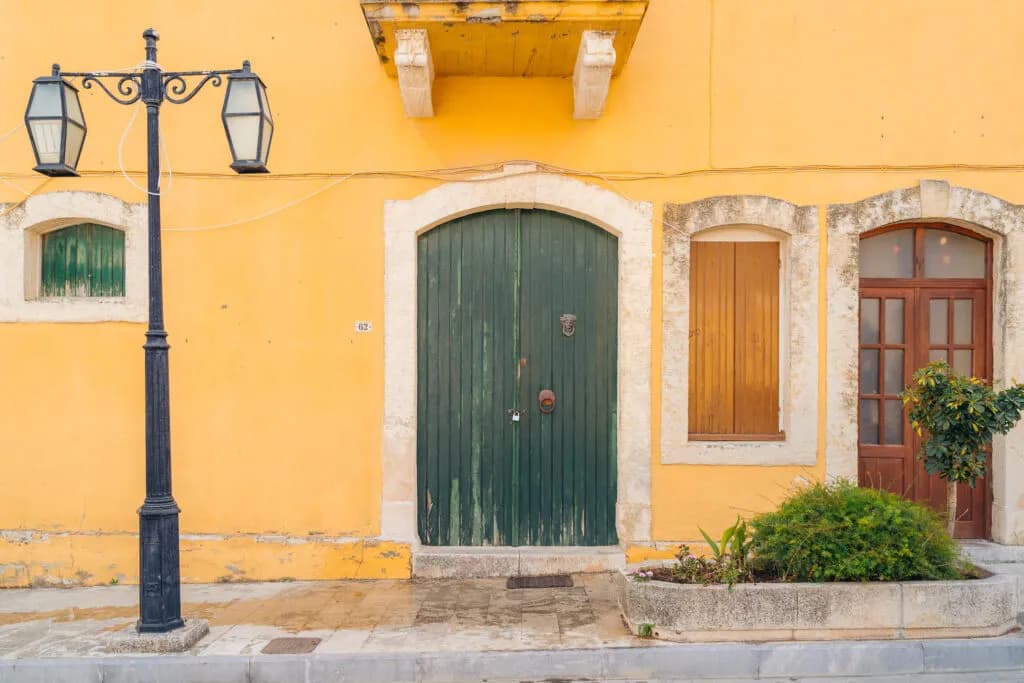
Beautiful neighborhoods with well-maintained houses painted in bold, vibrant colors, flower-filled terraces, and atmospheric enclosed courtyards create a unique setting. Retro streetlamps, marble fountains, carved door lintels, polished knockers. Everything speaks to a community that's meticulous and accomplished, one that loves its home and keeps it alive. Archanes is one of the few settlements in Greece with underground power cables and has received numerous European-level awards as a model traditional settlement.
At an altitude of 380 meters, in a closed valley crossed by the Kairatos torrent, surrounded by lush vineyards and olive groves, the settlement of Archanes has a long history and beautiful archaeological sites to tell it. The ancient Minoans recognized the uniqueness of this place and settled in the area. The Minoan necropolis at Fourni gives us valuable information about the organization of life during the famous "pax minoica" era. Soon a palatial complex was built, in today's neighborhood bearing the name Tourkogeitonia, while important information about the inhabitants' religious practices comes from the sanctuaries found at the peak of Juchtas and Anemospilia.
In the Classical period we have the first evidence of the name Archanes, and we know that during the Roman period the settlement belonged to the region of Knossos. The Morozini fountain shows that Archanes impressed the Venetians of the island, while the Ottomans who followed made the settlement a seat of Turkish officials.
In the Archaeological Museum of Archanes, in the building that once housed the settlement's elementary school, finds from the wider area are now preserved. Notable are the wine pithoi, the ceramic presses for treading grapes, and dozens of vessels that illustrate everyday life in a Minoan house in the area.
During the years of the Cretan State, trade in excellent wine, raisins, and oil brought wealth to the settlement. The people of Archanes, wanting to declare their desire for union with Greece, built neoclassical mansions according to the dominant architectural trend of the era in liberated Greece. Today, many of these mansions beautify the town and, alongside traditional Cretan houses, tell unique architectural stories.
Beyond the residences, numerous churches beautify the place. At the entrance to the settlement, the Venetian Church of Panagia Kera or Faneromeni is one of the most beautiful churches. Its stone bell tower, built in 1857, and the adjacent clock from 1930 (built with donations from Archanes residents in New York and Boston) complete the picture.
In the village square, under thick plane trees, tavernas and cafes serve local cuisine and delight visitors. Small delicatessens hide tasty surprises. At the settlement's rakadiko you'll savor the local raki accompanied by Cretan mezedes. Traditional mansions have been converted into excellent accommodations offering authentic Cretan hospitality. The women's cooperative "Archanes Tastes" makes traditional rusks with herbs, kaltsounia, jams and spoon sweets with fruits from neighboring gardens, and the famous petimezi from the region's grapes.
Frequently Asked Questions
What makes Greek food unique?
Greek cuisine is built on simplicity and quality ingredients. What makes it distinctive is regional variety — every island and mountain village has its own flavors, often unchanged for centuries.