In the shadow of Mount Taygetos, a cafe continues to believe in the value of community Discover Greece with a local expert.
In the shadow of Mount Taygetos, a cafe continues to believe in the value of community.
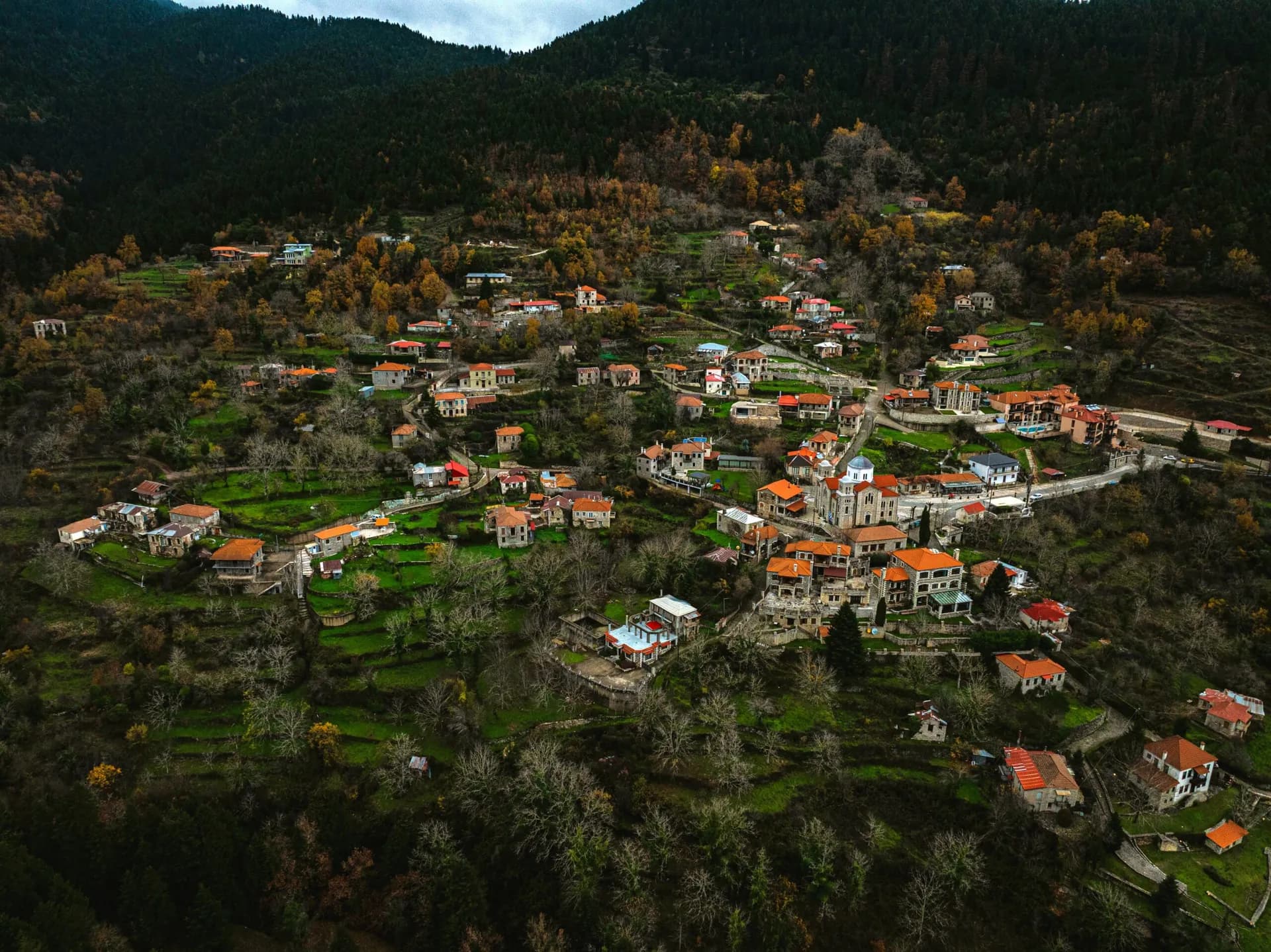
The old National Road connecting Kalamata with Sparta unrolls before me like a ribbon between the slopes of Taygetos. As the car turns through the curves toward Artemisia, time seems to slow. Here, in this small mountain village about 35 minutes from Kalamata, someone decided to rewrite the story of the Greek kafeneio.
We arrive in the village as the sun disappears behind the peaks. Denthis, the beautiful new hotel that's been operating for two years, has brought some rejuvenation to Artemisia. We leave our things and go out for a walk in the streets that night begins to cover.
Climbing the uphill toward the square, something catches our attention. On our left, a shop with the simplicity of another era invites us to sit. Above the door, the sign reads: "Stou Michali."
The owner hasn't yet turned thirty. But when you see him moving through his cafe's space, you understand he carries within him something of the wisdom of earlier generations. In 2023 he decided to leave his permanent residence in Kalamata and return to his roots in Taygetos.
"I went to school and lived in the city," he explains to us the next day, as we have our morning coffee. "But something pulled me back here. The village needed a kafeneio, and I needed to find my place." In this effort, his mother, Mrs. Dimitra, stands as a strong supporter, giving her own mark to the shop and devotedly supporting her son.
"Stou Michali" is a faithful recreation of old Greek kafeneia, when they were much more than a place for coffee. Entering, you find on the right a space full of fresh vegetables: tomatoes that smell of summer, garlic from surrounding fields, watermelons and lemons, peppers, melons.
In a separate room at the back, the grocery store operates. Here you'll find all the necessities for a household, from laundry detergent to canned goods and essentials. On a table in the main hall, a handwritten sign on a piece of cardboard simply identifies: "Post Office." There all the village's mail is collected, and residents come by to pick up their letters, another service that makes the kafeneio the heart of the community.
The morning we go for coffee, a lady from the village comes hurrying to get detergent. She wants to go back quickly because she has food on the fire. She greets with the sweetness that characterizes people of Greek villages. A little later, a man stops for fresh vegetables. The kafeneio pulses with life.
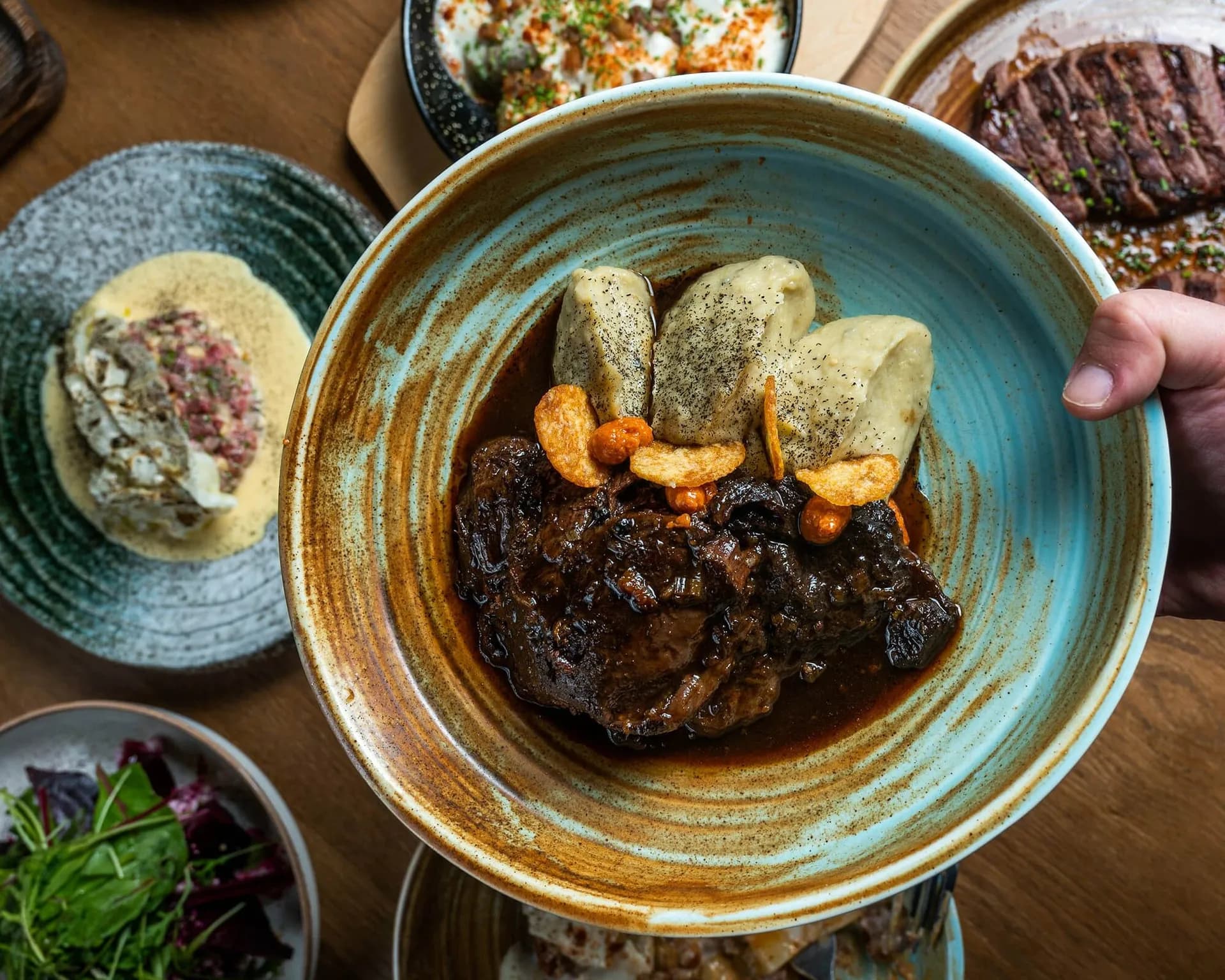
The kitchen offers simple, authentic flavors. We order meatballs and soutzoukakia that come with a red sauce that could feature in any Athens restaurant. The village salad comes with feta that fills the mouth with pastoral flavors, and the bread is so fresh it still warms the fingers.
"I try to buy as much as I can from the surrounding area," the young owner explains. "I go down to Kalamata only when necessary. Here we have everything: good meat, fresh vegetables, people who know their craft."
Today, Michalis lives permanently in Piges, the neighboring village, and comes down every day to open the kafeneio. His decision to leave city life and return to the mountains wasn't easy, but as he says: "Here I found myself."
As I sit in the kafeneio and watch the locals coming for their daily coffee and small talk, I understand he didn't just open a shop. He created a space where the community meets, where traditions are maintained, where authentic Greek life continues dynamically.
The kafeneio "Stou Michali" is a promise that there are still people who believe in the value of community, in the power of tradition, in the beauty of simplicity. In a world racing toward the future, Michalis reminds us that sometimes progress means looking back and keeping what's best from the past.
As we leave Artemisia, having taken with us honey and rusks, in the mirror I see the kafeneio's light shrinking. But the image of the young owner, guardian of an old tradition, will follow me for a long time. In Taygetos, the story of the Greek kafeneio continues to be written.
Address: Artemisia Messinia, Taygetos, Tel.: 27210 76585
Common Questions
What is Messinia known for in terms of food?
Messinia produces some of Greece's finest olive oil, incredible figs, and a style of cooking that is simultaneously rustic and refined. The local kalamata olives you've been eating your whole life come from here — tasting them in their origin region is genuinely different. The tavernas in Koroni and Stoupa are among my favorites in all of Greece.
How do I get to Messinia from Athens?
It's a 3-hour drive south on the E65 — easy and scenic through the Peloponnese. The coastal road near Kalamata is particularly good. I recommend renting a car; public transport gets you there but won't let you explore the villages properly. Day trips from Athens are possible but overnight is much better.