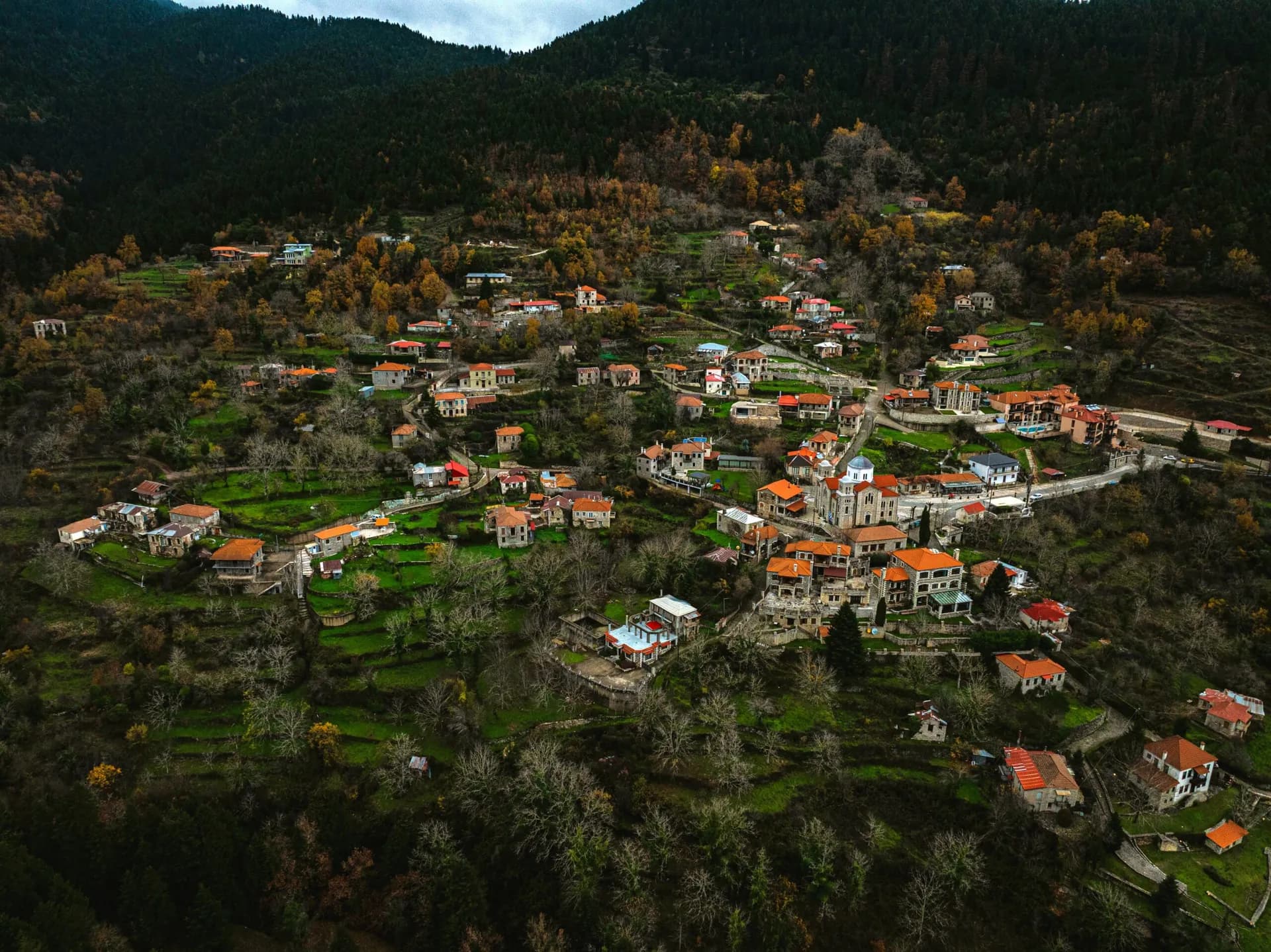
Avdou sits in the lush green Lagada valley, surrounded by olive groves, vineyards, and orchards.
A hidden secret in the heart of Crete. At the foothills of mythical Selena, at 230 meters altitude, lies Avdou. In the lush green Lagada valley formed by the Aposelemis River, surrounded by olive groves, vineyards, and orchards.
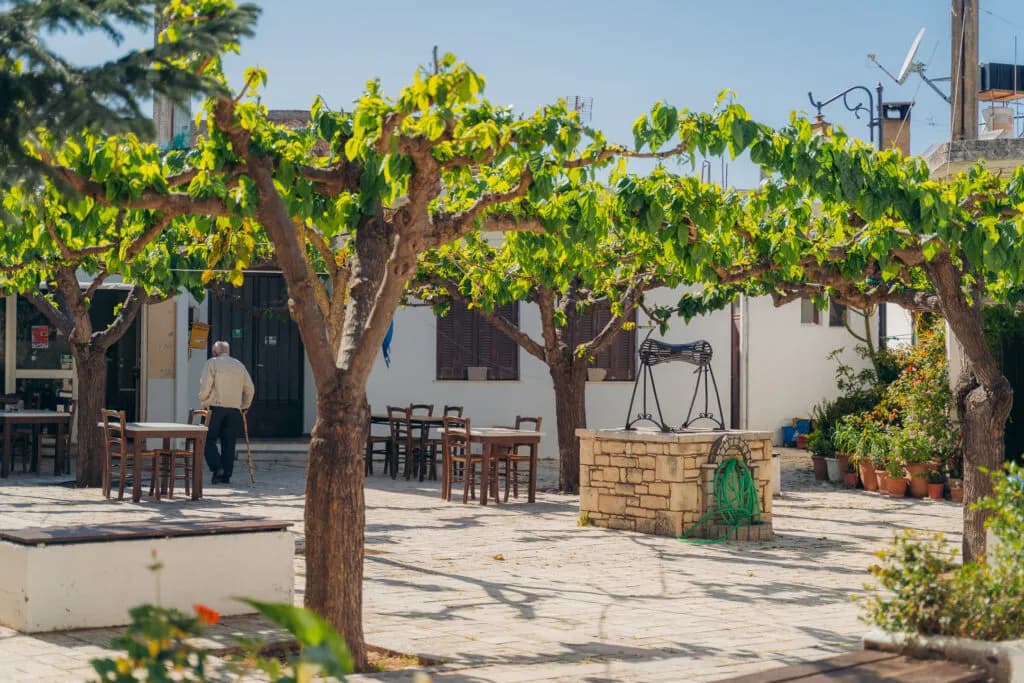
According to prevailing opinion, the village took its name from the prophet Obadiah, a disciple of the prophet Elijah who lived around 800 BC. Tradition maintains that on the village's outskirts, at the location Kontaria or Lines, there was a temple dedicated to the prophet Obadiah. The village has a long history, and the earliest recorded evidence is found in a Venetian document from 1381, where it's mentioned as a feudal estate. Its narrow streets, traces of fortification architecture, enclosed courtyards (remnants of the Ottoman period), squares, and clearings formed at three-way intersections compose a charming picture.
The journey into the past is intensified by tastefully designed wooden signs marking all the village's old activities. The cobbler's workshop, the blacksmith, the old grocery store and butcher shop, the barbershop, the tinsmith's shop, the carpentry shop, the seat of the kyratzi (the muleteer), all marked with the names of the people who served these posts and often with the dates when the shopkeepers and craftsmen practiced their profession. A clever initiative by the village's active Cultural Association that brings memories to life and recalls the past, making it part of today.
History strolls through the narrow streets of Avdou and surrounding areas. A short distance from the village, two caves (Agia Fotini and Faneromeni), the foundations of early Christian temples, Byzantine and post-Byzantine churches bear witness to the centuries when the area pulsed with life. One of the most beautiful churches is Saint Constantine. The founding inscription states the construction date as 1445. It's a humble single-nave church in nature hiding beautiful frescoes. Some bear the signature of Ioannis Fokas, who along with his brother Emmanuel was among the main representatives of Constantinopolitan art in Crete. Their technique, with composition simplicity and balance, ranks them among the important precursors of the famous Cretan Iconographic School.
Very close to the village, on the road to the monastery of Saint John and Saint Anne, a forest of holm oaks, azilakous, and maples beautifies the landscape. The forest reaches 700 meters altitude, a point where threshing floors once existed for winnowing and has panoramic views of the entire area.
Avdou is also known for its revolutionaries and captains. The Keras Kardiotissa Monastery was the church where local warlords gathered to devise their plans and swear loyalty to the struggle. That's why the village is often called Kapetanochori (Captain's Village). The village today has around 300 permanent residents. Locals love their beautiful place. In summer, the narrow streets and squares fill with groups and children playing. With every opportunity (events, concerts, revivals of traditional customs), Avdou's former residents return to their village and fill their lungs with the clean air of a place with human rhythms.
Frequently Asked Questions
What is the best time to visit Greece?
April to June and September to October offer the best weather, lower crowds, and full restaurant schedules. Summer is peak season. Winter is quiet with great value.