Two Arcadian villages bursting with color, natural beauty, rich history, and unforgettable landmarks Discover Greece with a local expert.
Two Arcadian villages bursting with color, natural beauty, rich history, and unforgettable landmarks.
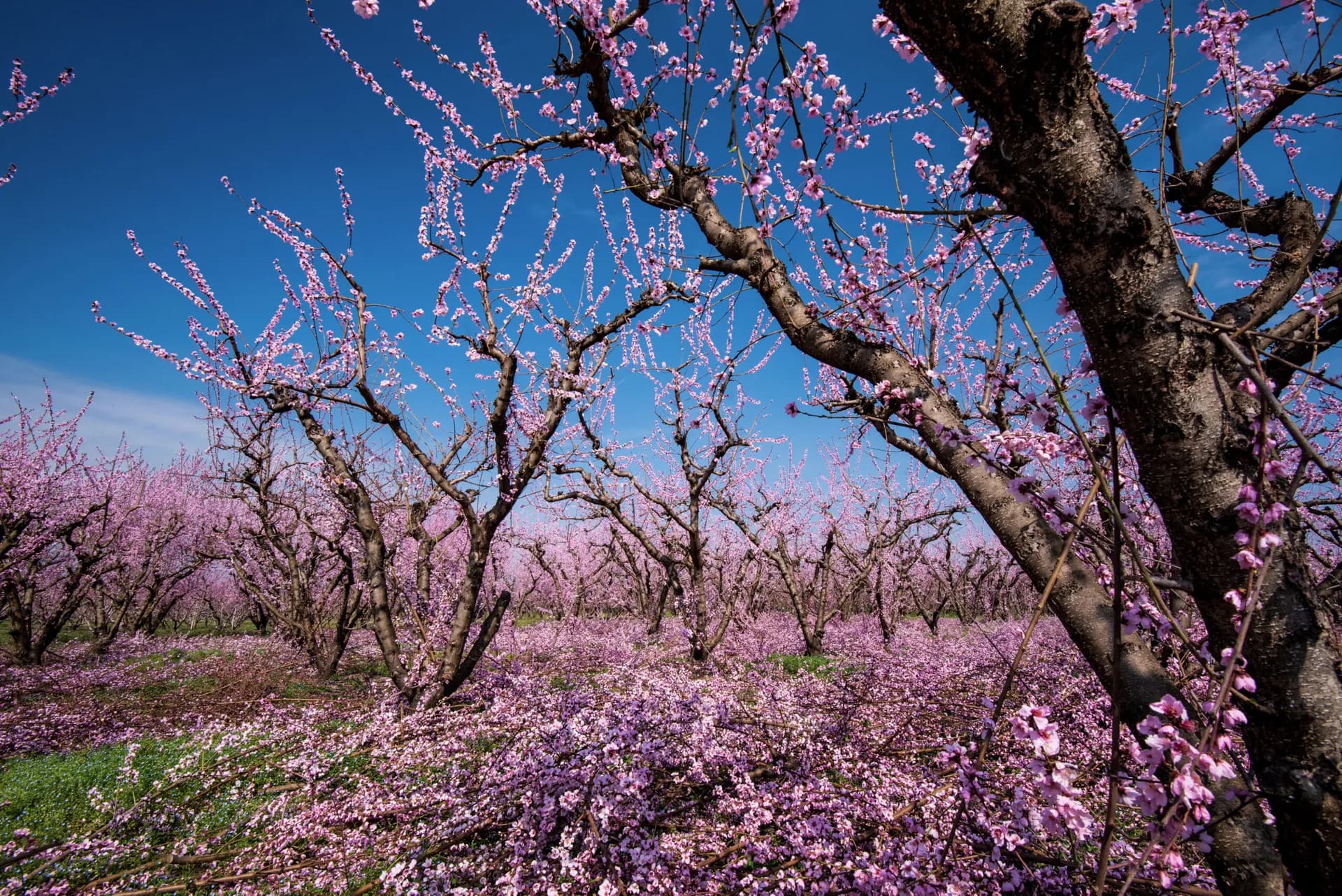
Just as the Judas trees take on their most brilliant purple hue, orange and lemon blossoms perfume the air, and the days stretch long and bright, we head to the eastern coast of Arcadia. These two villages offer unique character, beauty, and distinctive history that make them ideal springtime destinations.
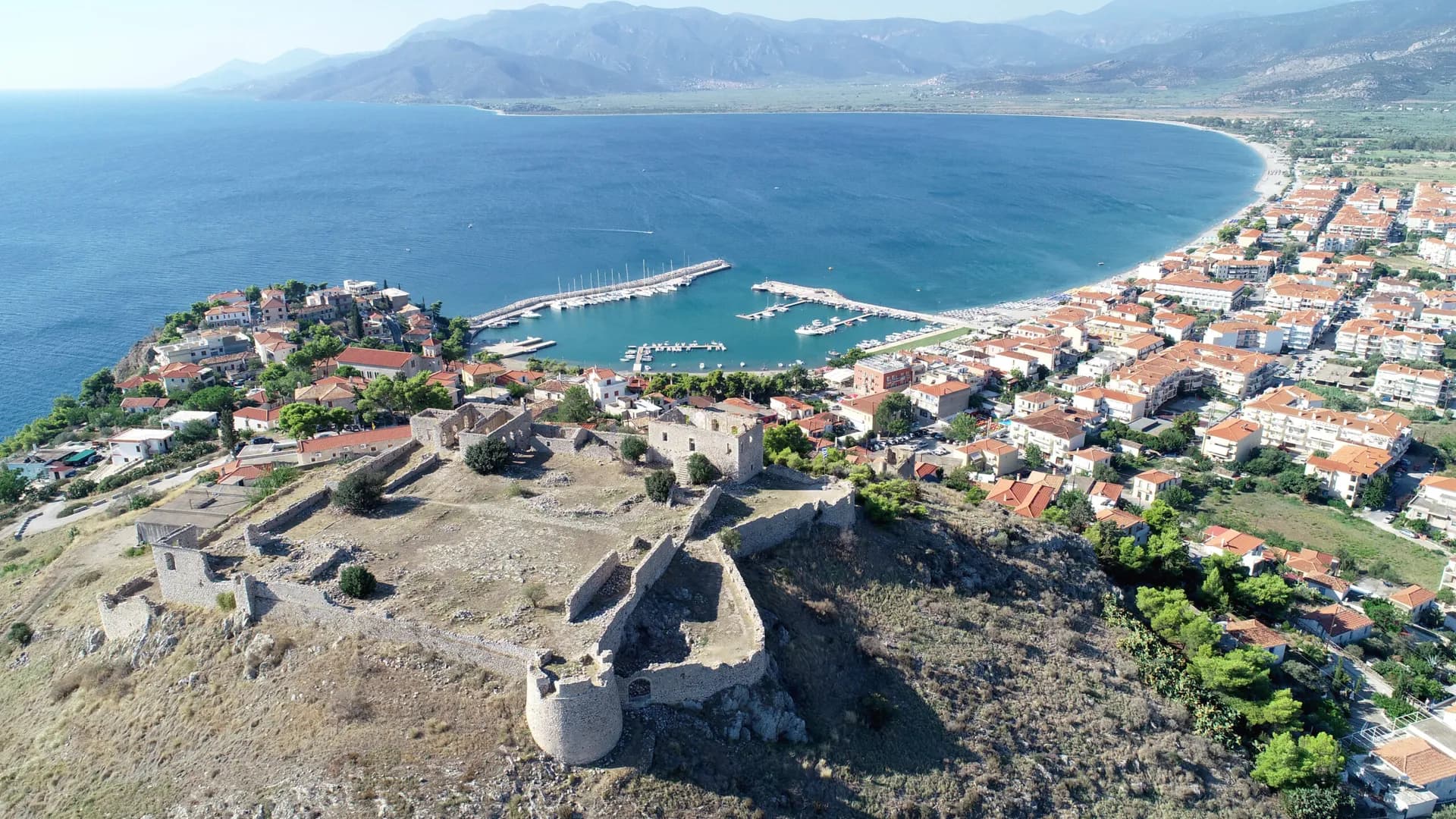
Paralio Astros sits on the western edge of the Argolic Gulf, where every view is nothing short of magical. The sea wraps around the entire settlement, and the most beautiful walk leads up to its crowning jewel: the Castle. Don't let the uphill climb intimidate you. You can drive almost right to the castle entrance, making the visit easy. The freshly whitewashed Church of Evangelistria, flanked by cypress trees, greets you first. At the back of the church courtyard, a small door opens into the heart of the castle.
According to the Chronicle of Morea, one of the most important sources for medieval Peloponnesian history, the castle was built in 1256 by William II of Villehardouin, Prince of Achaea, to subdue the local population. Its original name was Castello della Estella, or Castle of the Star, after the star-shaped terrain on which it was built. The castle played a crucial role in the 1821 revolution, and in 1826, the fortified soldiers defeated Ibrahim Pasha's vastly larger army.
Today, ruins of three houses remain, characteristic examples of the region's pre-revolutionary architecture. The view from the castle is breathtaking. The entire Argolic Gulf spreads before you, Kranidi visible on the opposite shore, the faint outlines of Spetses in the distance, and the green expanse of the Thyrea plain, thick with olive groves and vineyards, completing the blue seascape.
Less than an hour from Astros, you'll reach Leonidio. This settlement was wisely designated as a traditional village early on, sparing it from the damage of modern development. Stone captain's houses, neoclassical mansions, cobblestone streets, spacious squares: everything speaks of a glorious past and a present filled with beauty and grace. The village sits beneath an impressive 250-meter vertical cliff face, the famous Kokkino Vrachos (Red Rock). This cliff represents one of the Peloponnese's most renowned climbing areas, now featuring over 1,000 routes of varying difficulty. Throughout town, we encountered dozens of climbers from across Europe, enjoying the village's beauty and preparing for their ascents.
Even if you're not a climbing fanatic, the village's charm will reward you. Every narrow street reveals an ornate courtyard gate leading to a stunning mansion. Two and three-story homes built mainly in the 19th century, with cobblestone or pebble courtyards, tile-roofed verandas, and enclosed yards, whisper stories of a significant maritime power and a flourishing shipping world. Three of the most magnificent pre-revolutionary monuments in the Peloponnese stand in Leonidio: the Tsikalioti Tower, built in 1808, the Polytimos Mansion from 1816, and the Katsikogianni Mansion at the village's northern edge, all keeping alive a world from the past. Beyond the architecture, the famous Tsakonian dialect, visible on signs and heard in conversations at cafes and village squares, is a genuine surprise.
Eastern Peloponnese Coast: Ancient cities beneath the waves, gorgeous beaches, and picturesque villages
Journey to Arcadia-Elis: The Temple of Epicurean Apollo and historic Andritsaina
Frequently Asked Questions
What is the best time to visit Greece?
April to June and September to October offer the best weather, lower crowds, and full restaurant schedules. Summer is peak season. Winter is quiet with great value.