Charalampos shares stories of everyday life in Evrytania By food journalist Dimitris Stathopoulos.
Mr. Charalampos shares stories of everyday life in Evrytania.
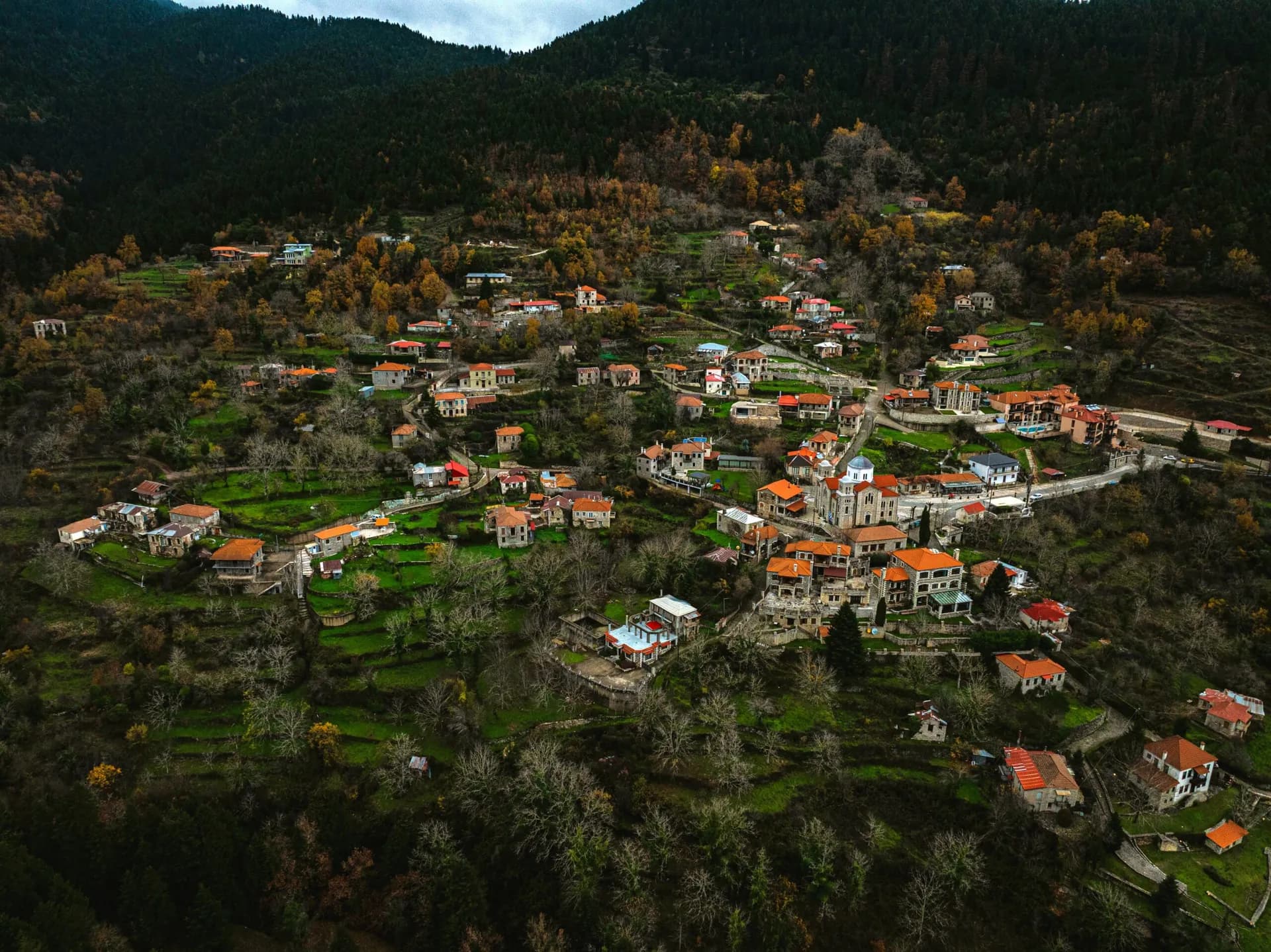
We left Karpenisi early and, together with our photographer, took the road climbing through a lush landscape full of fir trees. We passed the Megdova bridge and continued. Our destination was Fragkista, a destination in the heart of the mountains, a unique universe. It took us about an hour and a half. Between East and West Fragkista, at the valley's lowest point, we found ourselves at the water mill.
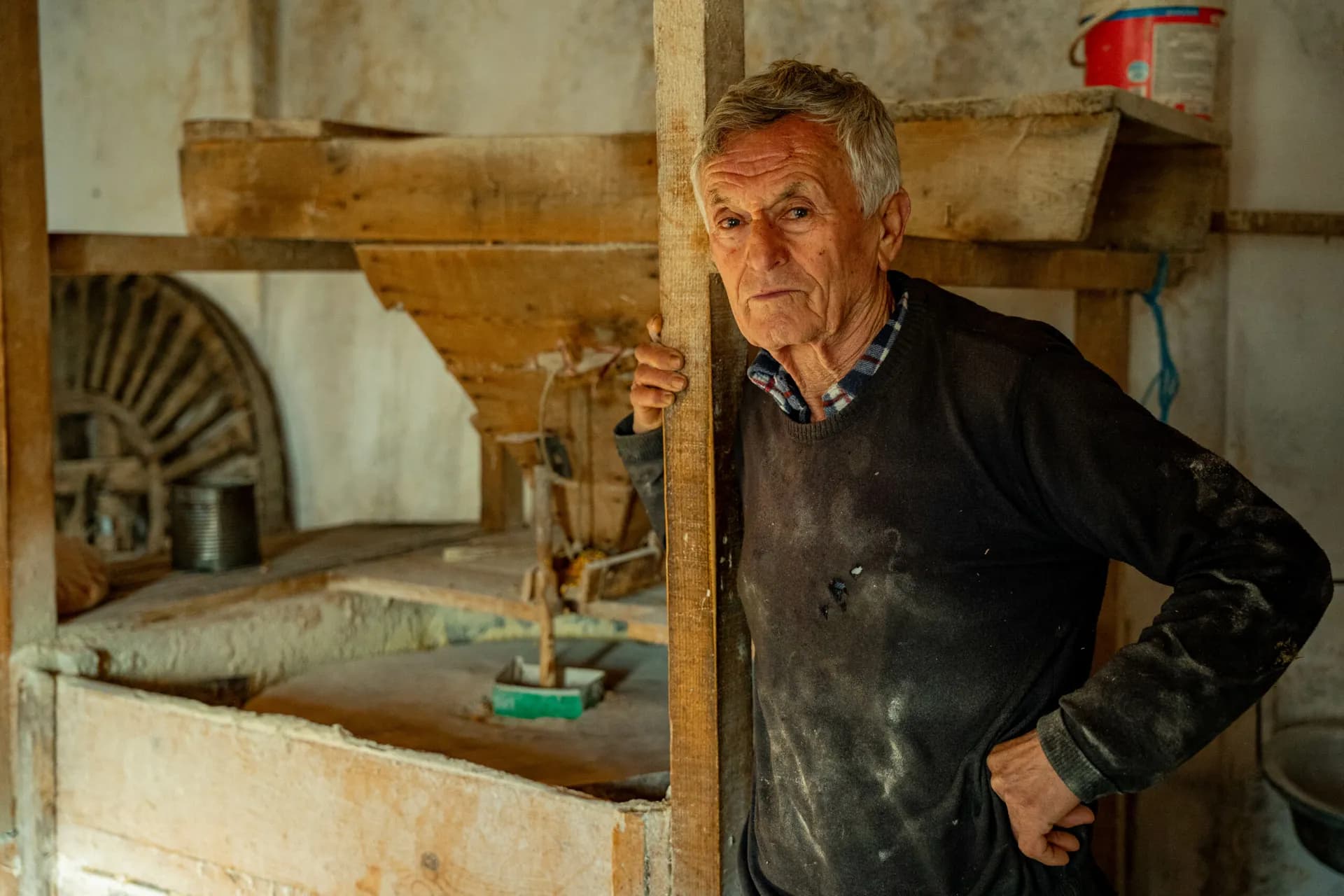
When we arrived, an orange tabby cat welcomed us and played briefly at our feet. The miller, Mr. Charalampos, was grinding corn. The space smelled of dampness, wood, and freshly cracked grain. Without immediately realizing it, I entered another rhythm, ready to observe and, of course, listen to the miller tell us stories.
The millstones turned and you could hear the water's sound giving them motion. Sunlight entered through the windows, creating beautiful light. He welcomed us as you welcome people who come from far away but aren't strangers. "Come in," he said, and began guiding us as if opening his home.
"The mill is built to listen to the water," he told us. The stream passes alongside and, with a large pipe, water reaches the turbine without losing its power. We opened the trapdoor. Below our feet appeared the turbine. There you understand how the mill works. Water hits the blades, motion rises through the shaft, and the millstones begin turning. Corn or wheat, or any other grain, becomes flour. Grinding is slow, and you watch flour gradually fall into the container.
On the walls, wood has darkened through the years. Stones bear marks from thousands of cycles. Everything is in its place because it needs to be there. The miller speaks little and lets everything else speak more. Water, he says, does all the work: man simply guides it.
In one corner, leaning against the bench, we saw wooden objects. The miller engages in woodcarving during hours waiting for grinding to complete. He showed us his works: a special wooden construction, a collar placed on the animal's neck from which its bell hangs, shepherds' crooks with simple decoration, tools made for use.
A bit higher, following the water, we reached the water-powered washing station. There, a woman washed quilts. Water entered forcefully into the wooden vat, formed a whirlpool, and fabrics turned slowly, as if breathing. Washing here is something special and doesn't resemble routine work. Water cleans and that suffices. Quilts come out lighter.
Outside the washing station, the miller cultivates corn. Among them, beans, in companion planting, as in old times. The soil is moist. Nothing is excess. Water moving the mill irrigates plants in summer. And somehow everything ties together. We sat briefly without speaking. Alexandros, the photographer, set his camera down. Mr. Charalampos had gone outside and was cutting wood to light the stove later.
The water mill between East and West Fragkista is a place worth visiting. A living organism still working because someone learned to listen to water and give it space. Leaving, the light had changed. The valley was gradually shadowing. Behind us, the turbine continued turning. And importantly, as for so many years, it will turn when we're no longer there. Because it's managed to remain part of residents' daily life and not a tourist attraction.
Journey to Evrytania: Fidakia road trip with views of the thousand-fjord lake
Journey to Evrytania: Buggy ride through Tymfristos's fir forests
A sweet, a place, a family: Tasting galaktoboureko with history in Evrytania's heart
Frequently Asked Questions
What makes Greek food unique?
Greek cuisine is built on simplicity and quality ingredients. What makes it distinctive is regional variety — every island and mountain village has its own flavors, often unchanged for centuries.