Eirini, at the Maniatakeio Foundation facilities in Koroni, prepared the famous tiganopsomo for us By food journalist Dimitris Stathopoulos.
Mrs. Eirini, at the Maniatakeio Foundation facilities in Koroni, prepared the famous tiganopsomo for us.
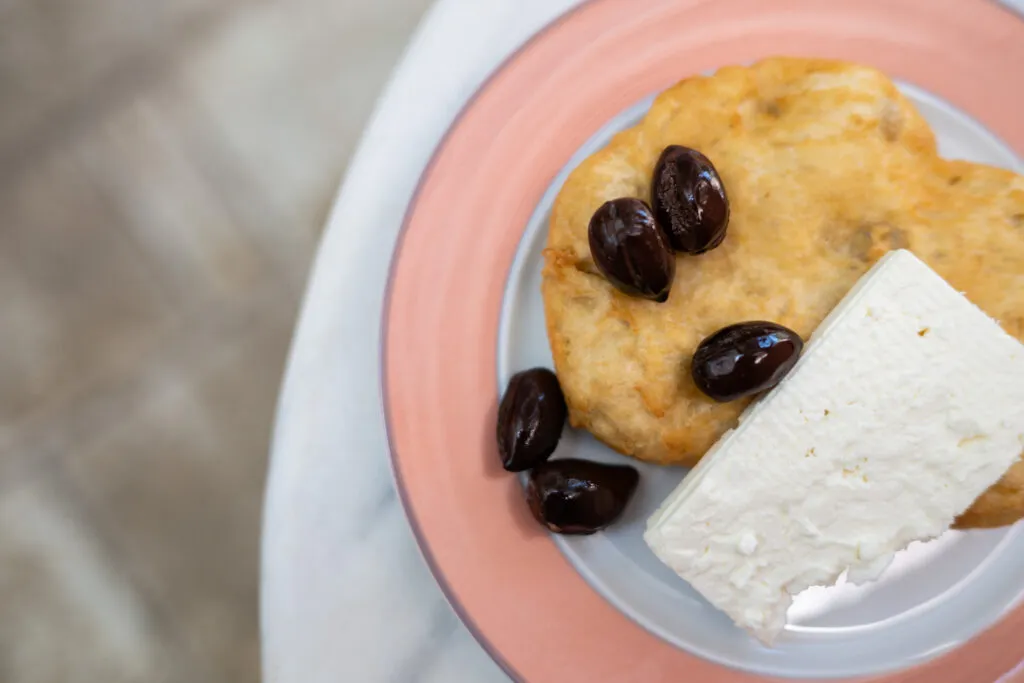
Some flavors work like a time machine, transporting us to other eras with a single bite. The tiganopsomo we tasted on our latest trip to Messinia was exactly such an experience. Mrs. Eirini, at the Maniatakeio Foundation facilities in Koroni, prepared the famous tiganopsomo for us.
As the warm piece melted in my mouth, memories sprang vividly from childhood's depths. Those Fridays, while my mother kneaded bread for the week, she always kept a little dough aside. This small piece of dough magically transformed into tiganopsomo, or "lalagopsomo" as we also call it in western Messinia.
Authentic tiganopsomo is typically round and thin, designed so that when fried it acquires that distinctive crispy texture characterizing it. However, it's not uncommon to encounter it with thicker dough and smaller in size: each house has its own tradition.
The secret, though, lies in the olive oil. It must be good quality, extra virgin, and, most importantly, plentiful in the pan. When you put tiganopsomo in to fry, it shouldn't touch the bottom but should float. Only then will it become what it should: fluffy, without absorbing excess oil.
Ways to enjoy it are endless. With feta cheese, whose saltiness creates perfect contrast with the bread's neutral flavor. With armi, Messinia's creamy traditional cheese that imparts a deep, earthy taste. Or even with sugar or honey, transforming it into an ideal sweet snack.
I remember during olive harvest times: tiganopsomo was the ultimate food for those days. Easy to transport, delicious cold, it was often the mid-morning snack around eleven o'clock, alongside feta cheese, olives, and fried eggs. Many times it even took the role of breakfast.
Tiganopsomo's beauty lies in its simplicity. In a bowl, you put flour, water, a little olive oil, salt, and a pinch of yeast. You make the dough and can almost immediately shape the small pieces and fry them. Simplicity doesn't mean lack of flavor: on the contrary, it forms the base for a canvas that can welcome infinite taste creations.
In Greece, tiganopsomo appears in all regions with countless variations, each with its own history and characteristics. Its difference from tiganites (which in some regions are called koutalides or koutalites) is crucial: tiganopsomo is made with firm dough, while tiganites are made from batter.
Every bite of this humble yet flavor-rich dish is a reminder that true gastronomy doesn't need complexity: it only needs love, tradition, and the best ingredients the land can offer.
Travel journey to Messinia: The travel virtues of Koroni
Journey to Messinia: Voidokilia, Glossa, Golden Beach: Diving into 3 heavenly beaches
Journey to Messinia: Discovering Kalamari Waterfall
Frequently Asked Questions
What makes Greek food unique?
Greek cuisine is built on simplicity and quality ingredients. What makes it distinctive is regional variety — every island and mountain village has its own flavors, often unchanged for centuries.