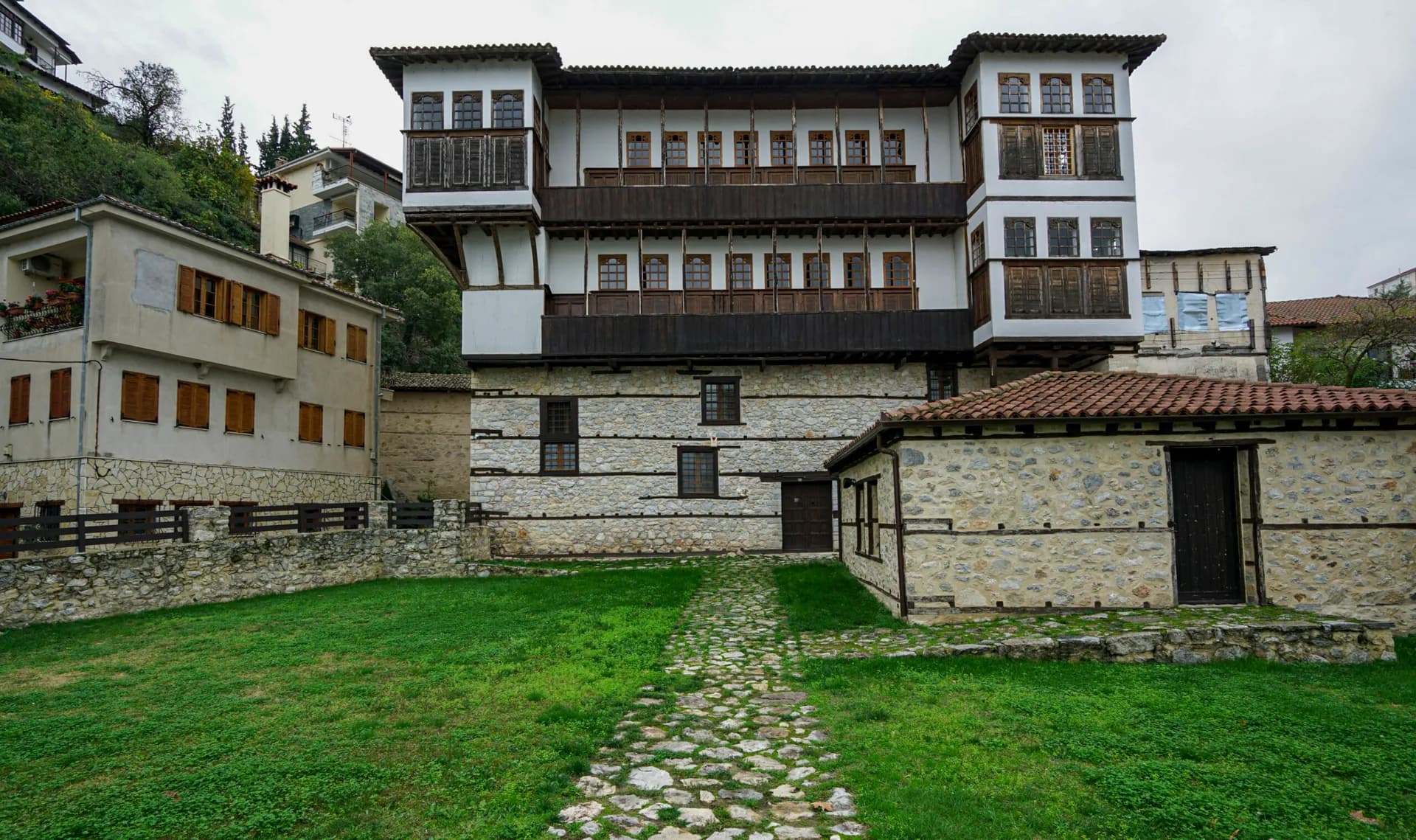
The Tsiatsiapa Mansion stands proudly, waiting for visitors to tell stories of old Kastoria.
I stroll leisurely by Lake Kastoria. The slow flight of birds calms me. My gaze follows the line they form on the horizon in flocks. An entire universe that sets the rhythm for the whole city. I turn my gaze to the urban fabric, and from the grandeur of nature, I face the grandeur of human creation. The Tsiatsiapa Mansion stands proudly, restored and open to visitors, ready to whisper to me the stories of old Kastoria.
Right in front of the lake, in the Apozari neighborhood, in 1754, as a stone on the southwestern side of the house testifies, a Kastorian lord, Moralis, founded this magnificent building. Approaching, it's as if I hear the hubbub from the times when the house had life. On the mansion's ground floor, the steward would check the storerooms for food and produce. He would note in his ledger the needs and quickly, even though it's still morning, would taste a little wine from the wooden barrels. On the mezzanine, in the auxiliary spaces, the servants who had woken before dawn would have started their work.
Architecture and Daily Life
On the mansion's two floors, the family would organize the day's activities. Someone important of the era would surely have scheduled a visit. Sounds from glassware and silverware, brought from Vienna, would fill the kitchen. A servant would go in and out of the rooms, feeding the braziers to keep the spaces warm.
Moralis surely assigned the building of his mansion to the best craftsmen. And they, following the models of Macedonian mansions of the 18th century, made a house with a "heliako" (the open wooden balcony of the second floor), "sachnisia" (architectural protrusions), stone in its lower part and wooden in the two floors, so that the construction would be lighter. Inside it, large spaces for rest, receiving guests, and entertainment succeed the sleeping and resting spaces of the family.
As soon as the house was finished, top painters and famous woodcarvers arrived with their crews and got to work for months. The house had carved and painted ceilings and rich painted decoration on its walls and interior doors. Fortunately, especially on the second floor, a large part of the painting has been preserved, which is an excellent example of eclecticism. Strong elements from Eastern art are combined with Western-style baroque and rococo rhythms that dominated the capitals of Western Europe frequently visited by Kastorian merchants. All the artistic choices in the mansion declare the family's economic prosperity and cosmopolitan character. At some point, the mansion came into the hands of D. Tsiatsiapas and took his name.
A Living Museum Today
The Ministry of Culture declared it a protected monument, and since the restoration and conservation work was completed, it is open to visitors and hosts exhibitions and cultural activities. On the ground floor of the space, a permanent exhibition with excellent models from Kastoria's dozens of mansions gives us a full taste of the city's architectural history and at the same time testifies to its social and economic history.
Don't fail to visit, right behind the Mansion, the Byzantine Church of Eisodion tis Theotokou, with wonderful frescoes.
Tsiatsiapa Mansion: 114 Nikis Street, Kastoria, Tel: 24670 28150
Frequently Asked Questions
What makes Greek food unique?
Greek cuisine is built on simplicity and quality ingredients. What makes it distinctive is regional variety — every island and mountain village has its own flavors, often unchanged for centuries.