Nature imposed its own narrative on us, a wordless narrative written with the ink of falling leaves By food journalist Dimitris Stathopoulos.
Nature imposed its own narrative on us, a wordless narrative written with the ink of falling leaves.
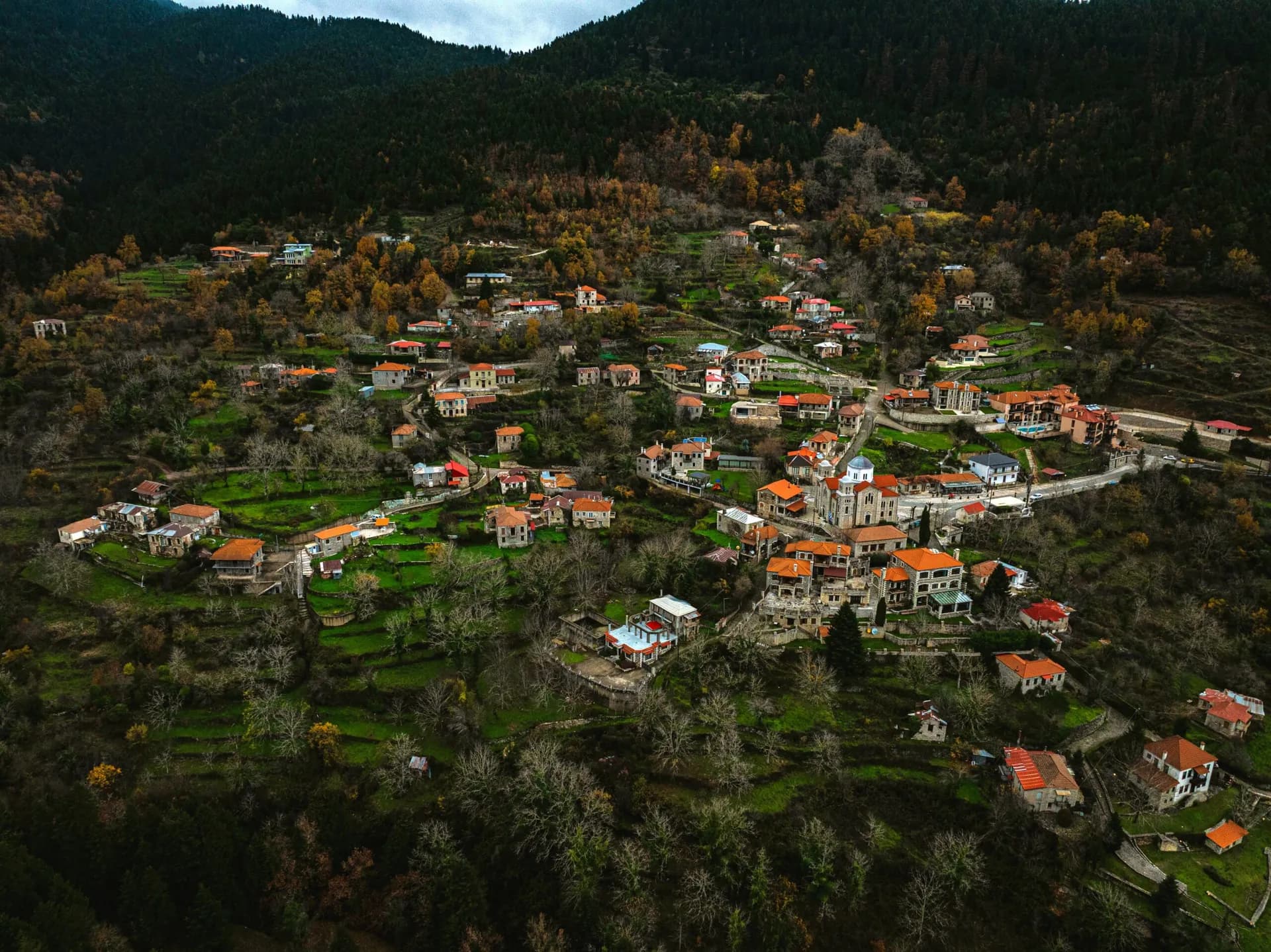
On the slopes of Epirus, nature composes its most dazzling ode. This is the first glimpse from travel's journalistic mission to an untouched place, dressed in the colors of an inner flame. As the road climbed toward the northwestern borders of Ioannina prefecture, every kilometer toward Pogoni felt like an approach to another time. A breath away from Albania, the familiar green began to recede, surrendering the scene to a blinding explosion of colors. It was as if the earth itself had caught fire, a silent conflagration of ochre, green, brown, and gold sweeping the slopes under autumn's low light.
Our journey with photographer and drone pilot Alexandros Potamoula aimed to capture the soul of Pogoni. However, nature captivated us before we could set up the camera. It imposed its own narrative on us, a wordless narrative written with the ink of falling leaves. This text is a necessary prologue, a reference to the setting that will host the stories of the place's people.
Proximity to the border here isn't just a geographical condition. It's an atmospheric quality. The mountains rise indifferent to human dividing lines, creating a unified natural kingdom. Relative isolation and the absence of mass tourism functioned as a protective shield. The ancient forests creating this autumnal spectacle remained untouched, not by design but by fortunate historical circumstance. Pogoni's value springs precisely from the fact that for years it remained on the periphery. Perhaps the time has come for this place to enter planning and, while maintaining its core characteristics and uniqueness, become a place that can keep its people close.
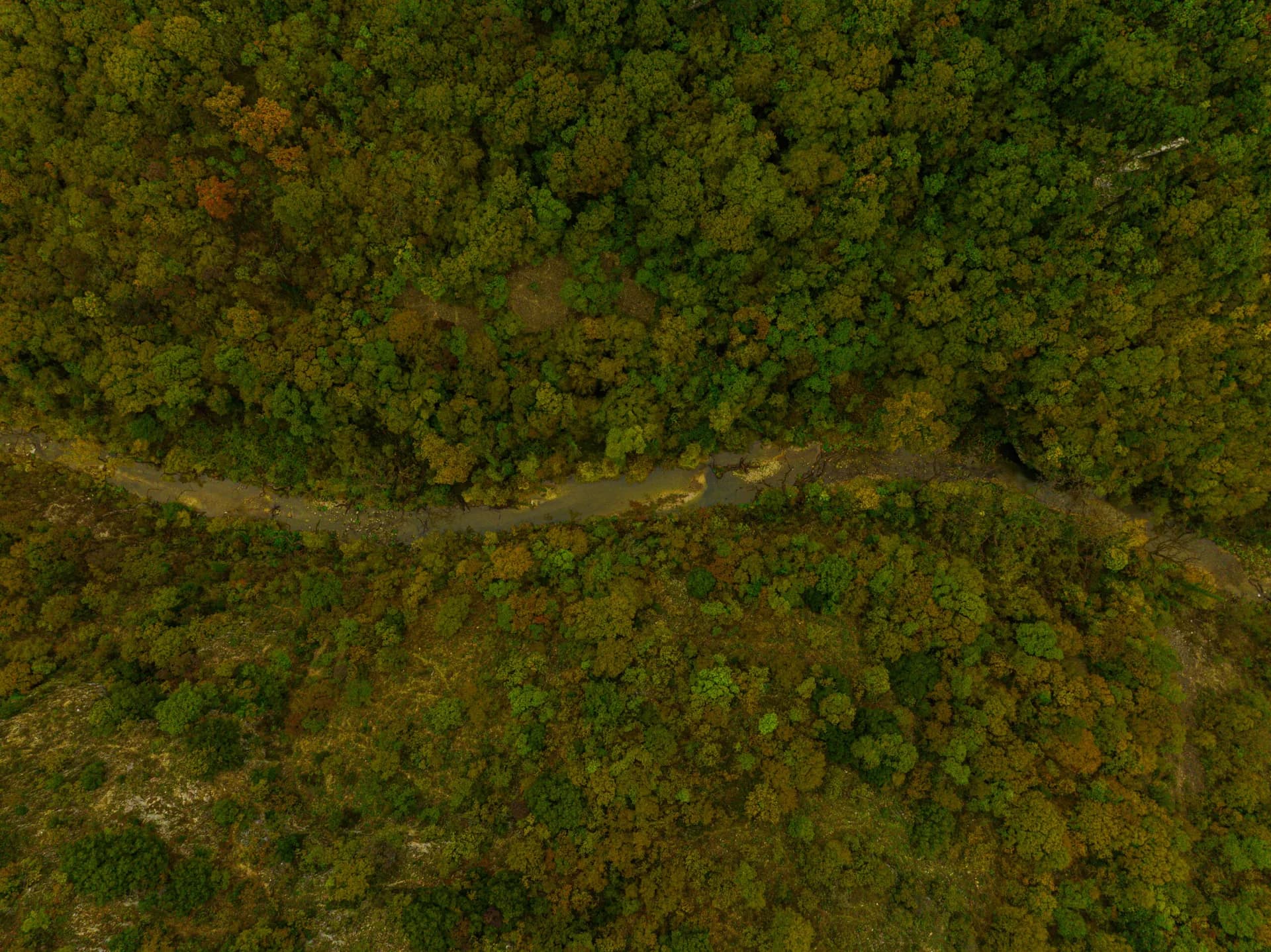
To understand Pogoni's autumn image, one must walk through its forests. This isn't a one-dimensional color change but a multilevel symphony where each tree species contributes its own tonality. The centuries-old oak trees covering vast expanses don't just turn yellow. Their leaves take on deep, metallic copper tones, as if rusted by time. The light passing through is warm, and walking on fallen leaves produces a muffled sound, like footsteps on an old carpet.
Among the oaks, chromatic explosions of mixed forests burst forth. Maples transform into flames of intense yellow and orange, while shrubs add gentle, earthy tones. Along the rivers, plane trees form golden arcades over the water, their leaves floating like small boats in the current. This is the symphony: the heavy strings of the oak converse with the bright winds of the maple.
This beauty isn't accidental. It's the visible expression of the region's deep ecological health. The area counts over 1,700 plant species, among them rare and endemic ones. Pogoni's spectacle is possible because it hosts this enormous variety of deciduous trees. The riot of colors is a living diagram of the place's ecological resilience.
Pogoni's autumn composition wouldn't be complete without water and stone. The Gormos river and its tributaries are liquid mirrors that double the landscape's beauty. In their calm curves, they reflect with absolute clarity the flaming colors of the trees, creating an impressionist painting. A bit further, Lake Zaravina, a microscopic blue gem and protected habitat, offers relieving contrast to the hills' warm palette.
If water is movement, stone is stability. Pogoni's villages don't seem to have been built on the earth but to have sprouted from it. The dry stone walls and gray slate roofs are made from the same material as the mountains, creating absolute visual harmony. This architecture is the legacy of a civilization that learned to survive using the place's resources. In autumn, the cold tones of stone function as the ideal canvas for the warm colors of trees. The villages stand silent, like gray islets, witnesses to a seasonal cycle repeating unchanged for centuries.
As the day fades, we stand gazing toward the endless horizon. Mountain peaks undulate one after another. The feeling isn't of an ending but of a beginning. This landscape isn't the destination. It's the first page of a much larger and more complex story.
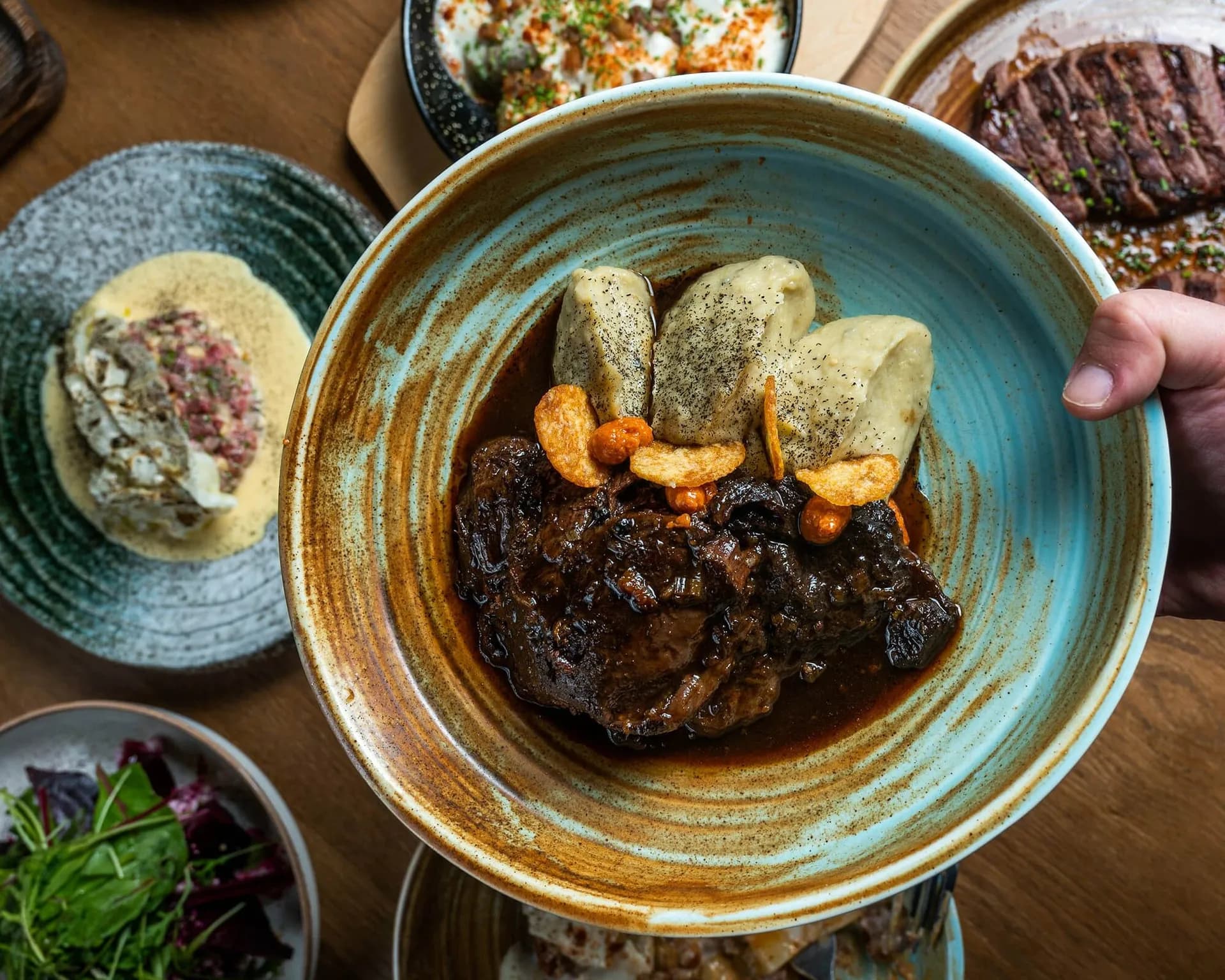
Our journey didn't end with recording these images. We walked the cobblestone paths, sat in the cafés, listened to the stories of the border people, and tasted the wisdom of a cuisine born from this land. Pogoni slowly revealed other aspects to us, more human, equally captivating.
This gallery of autumn fire is only our introduction to Pogoni. In the weeks to come, we'll share the rest of our journey. We'll delve into the stories carved into the walls, listen to the voices echoing in the valleys, and explore the resilient civilization of this exceptional corner of Greece. For now, we leave you with these unique images and the promise of stories waiting to be told.
Frequently Asked Questions
What makes Greek food unique?
Greek cuisine is built on simplicity and quality ingredients. What makes it distinctive is regional variety — every island and mountain village has its own flavors, often unchanged for centuries.