There, two lit fireplaces will be waiting to warm you Insider guide by food journalist Dimitris Stathopoulos.
There, two lit fireplaces will be waiting to warm you.
We arrived in Kato Meropi in Pogoni as the light died behind Nemercika's peaks. The traditional café "Kato Meropi" opened its door to us with two fireplaces burning. Two, because someone had taken care beforehand. They had lit fires, had thought of the person who would enter. There you understand what passion means.
Stavros and his son Thanasis welcomed us. Two generations, two different stories meeting in the same endeavor. Stavros worked in Ioannina. In 2014, however, he made a decision that would seem irrational to many: to take over the café in his wife's village, a border village 65 kilometers from the city, at the edge of the map.
Thanasis, who studied business administration, has been actively involved with the café for the last two years. And when Stavros talks about their effort to give life to the village, you understand this isn't just a business venture. It's an act of faith. In a region that doesn't have many options, this café is a living cell refusing to go dark.
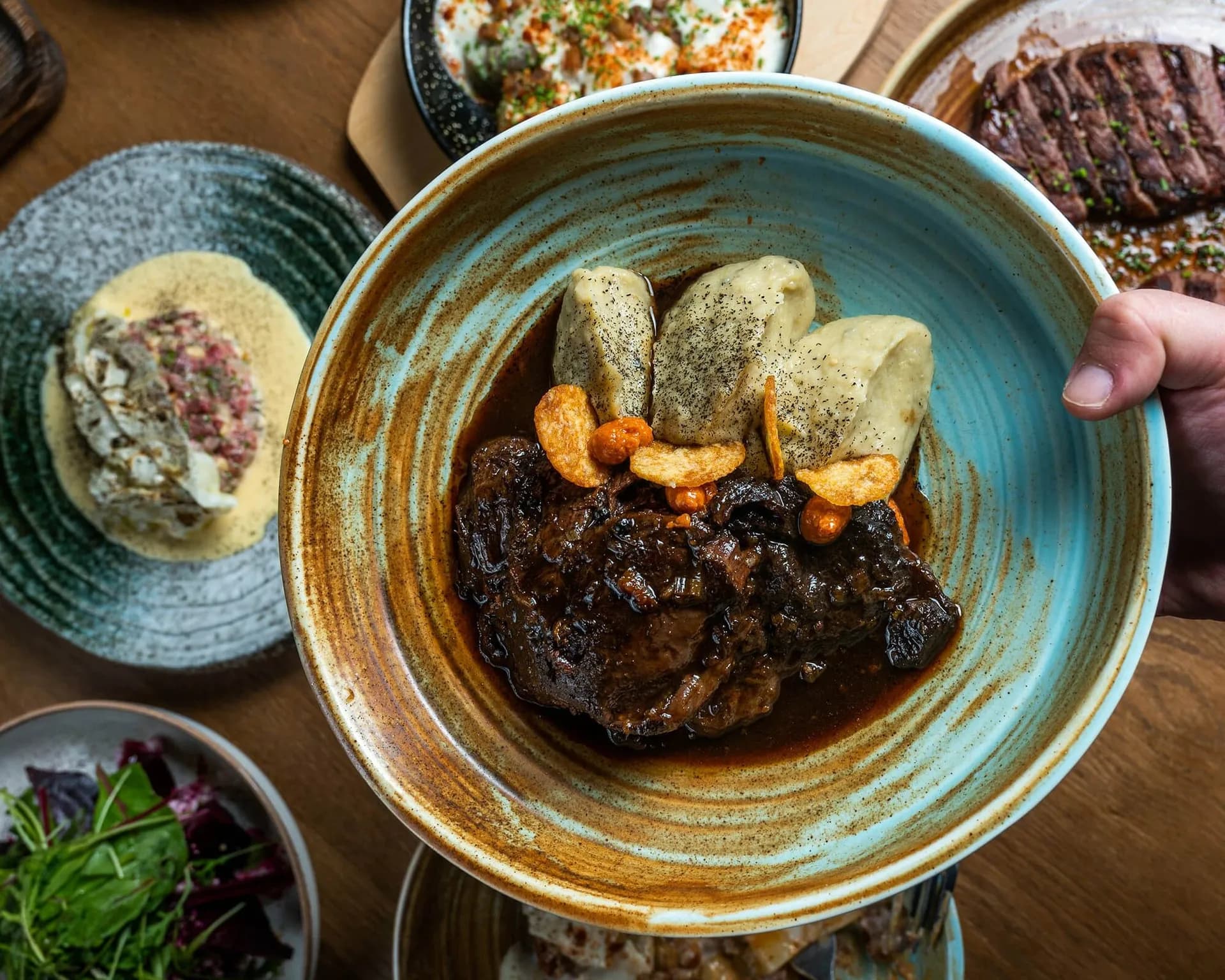
Stuffed cabbage rolls, pieces of tradition. Boiled goat cooked with hours of patience. Tripe soup for cold days. Mushroom pies with mountain mushrooms. Galaktoboureko that closes the meal with sweet nostalgia.
We that evening tried another dish that impressed us: chickpeas with eggplant. Simple, filling, delicious in a way that makes you feel you're eating something real.
We sat in the small lounge, in front of the fireplace. The fire burned with that familiar sound that pulls you out of time. On the walls, old images, faces and moments from lives that once filled the village. In display cases, old objects full of memories.
As night progressed, some locals began arriving. They entered with the familiarity of "their home," sat down, drank a glass of wine. And then I understood what this café truly means: it's not a business for tourists that keeps the village alive as a side benefit. It's the heart keeping the village alive, and visitors have the privilege of sharing it.
A bit later, we all sat together to watch soccer. The TV came on, wine passed from hand to hand, and for those hours, every distinction between visitors and village people disappeared.
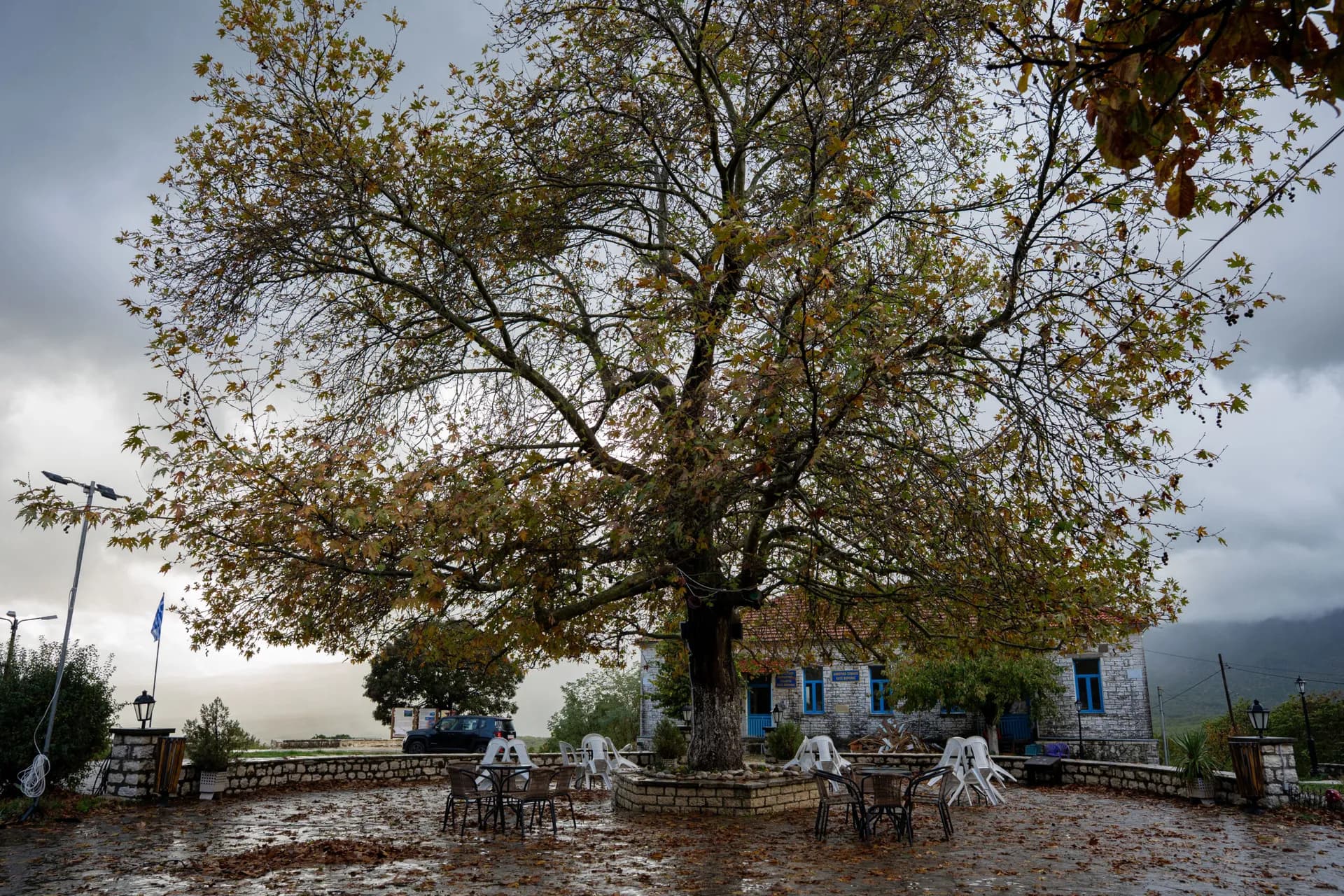
We went back the next morning for coffee. We took a walk in and around the village. At first it rained. That dull, persistent mountain rain. But quickly the weather cleared, as if it wanted to show us the landscape in its clearest form.
We ate an omelet made with local eggs, cheese and feta from the Poriki dairy just outside the village. No pretension, no attempt to impress. A dish that reminds you how delicious simplicity can be when it has quality.
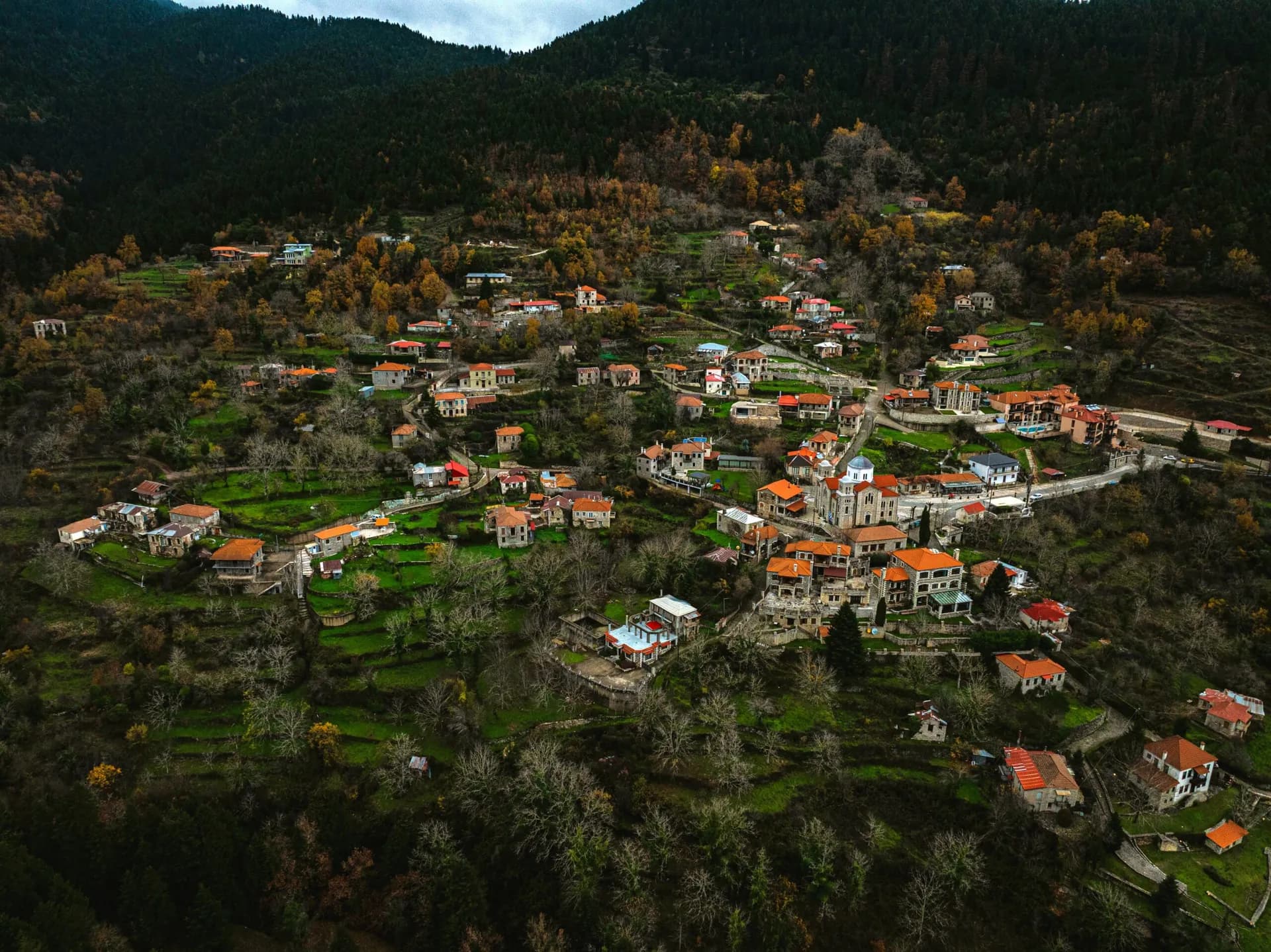
Kato Meropi, with its old name "Frastana," is a village carrying heavy history. It's located at 750 meters elevation, at Nemercika's foothills, 65 kilometers from Ioannina. Its permanent population has decreased noticeably in recent decades, as happens in so many Epirus mountain villages and much more so here in Pogoni.
But the history this place has lived refuses to fade. Walking through the village and just beyond, you encounter three important monuments: The Holy Church of the Dormition of the Theotokos with frescoes from the late 15th century by painter Xenos Digenis. The Holy Church of St. Athanasios from 1585. And the Holy Monastery of John the Baptist, founded in 1614, built on a hill with a breathtaking view, surrounded by forest with centuries-old oaks.
Here where abandonment threatens daily, two people refuse to let a place go dark. They don't wait for some program, some subsidy, some planning from above. They light two fireplaces every day, cook with local products, care for every detail.
When you leave Kato Meropi, you take with you proof that resistance to abandonment is possible. That a café can be much more than a space serving coffee. It can be the reason a village continues to breathe. It can be the space where the stranger becomes a guest, where the visitor shares the same glass of wine and the same screen with locals, where the difference between "ours" and "stranger" disappears before the fireplace's fire.
And perhaps this, ultimately, is Kato Meropi's greatest lesson: that a place's survival isn't a matter of numbers and statistics. It's a matter of will, passion, and the conviction that some things (hospitality, taste, community) are worth defending, even when you're at the edge of the map.
Common Questions
Is Ioannina worth visiting just for the food?
Absolutely — and I say this as someone who has eaten across most of Greece. The Northwestern Greek kitchen is the most underrated in the country. Lamb cooked over wood, pies made with hand-rolled phyllo, freshwater fish from the lake, and bougatsa that will ruin all other bougatsa for you. Plan a long weekend minimum.
What's the one dish I can't miss in Ioannina?
The lake eel, if you're adventurous — it's been a Ioannina specialty since Byzantine times. If that's too much, then the lamb in garlic sauce at one of the lakeside tavernas. Either way, sit by the water, order local wine, and take your time.