A place that doesn't want to impress you, but to change you. The most authentic travel experience you can have in our time.
A place that doesn't want to impress you, but to change you.
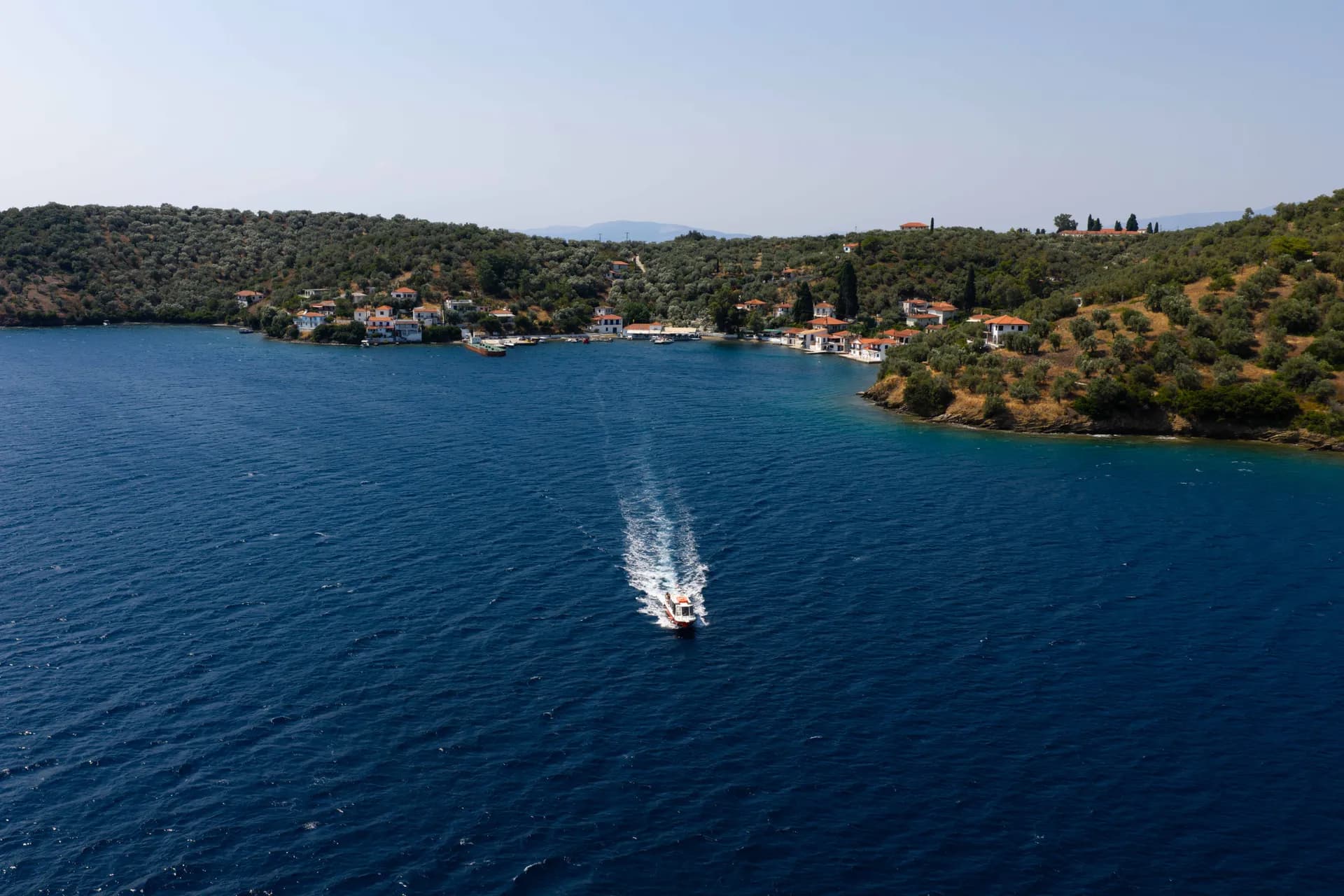
The sea is calm as the water taxi carries us from Alogoporо to the small harbor of Paleo Trikeri. Less than ten minutes' journey proves sufficient to enter another island universe, one oriented toward simplicity and the sovereignty of nature. The captain gives us some useful information about the island and very soon gives us a general tour. Before us, Paleo Trikeri emerges from the turquoise waters of the Pagasetic Gulf like a forgotten page from a Grimm fairy tale.
This tiny islet, just 2.5 square kilometers, hides a world that seems to have stopped in time. Here, at the southern ends of Pelion, the few permanent residents still live as their ancestors did: without cars, without haste, with the sea as their only road to the outside world.
As I step onto the island's soil for the first time, a strange feeling overtakes me. The narrow alleys of the sole settlement whisper breathtaking stories. From 1948 to 1953, this idyllic place became an exile location for over 5,000 women with leftist political beliefs. In the cells of the Evangelistria Monastery, which dominates the highest peak at 129 meters, they lived through the difficult years of the civil war.
Today, with our companion, local Eleni Psychouli, and with photographer Kostis Angelopoulos's eye, as I climb the path to the monastery among centuries-old olive trees, I think of these women who traversed the same route every day. Children were born here, teenagers grew up, mothers taught. They created workshops, organized performances in the outdoor theater whose ruins still survive. Within misfortune, they created life.
The Evangelistria Monastery, built in 1837, impresses from first sight. Externally it truly resembles a fortress, almost incongruous with the green landscape surrounding it. Entering the cobblestoned courtyard, full of pots with wild flowers, I feel the sacredness of the space but also its heavy history.
The abbot no longer exists. The island's women care for the monastery, keeping it clean and well-maintained. Some of the old cells function as a guesthouse for the few visitors: 15 euros per night, with shared toilets and a unique breakfast in the cool courtyard. They say Greta Garbo once stayed here in the late '60s, when legendary Austrian Alfons Hochhauser hosted prominent personalities on the island. Maybe!
We continue walking the island's paths. Within three hours of leisurely hiking you can circle it entirely. We stop constantly because there's always something else to catch our attention. The sound of leaves in the olive trees, the scent of thyme, the silence broken only by birdsong: all these make you forget modern life's rush.
Green Sand is perhaps the most impressive of the island's four beaches. Its name is justified by the green tint the sand takes from seaweed and reflections from the dense foliage. The waters are so transparent you can see every pebble on the bottom. Access is via a demanding path that rewards you with a view worth every effort.
At Agia Sofia beach lie the ruins of the early Christian church, a three-aisled basilica that the sea has begun to devour. It's moving to see how time and the elements reclaim what was once built by human hands.
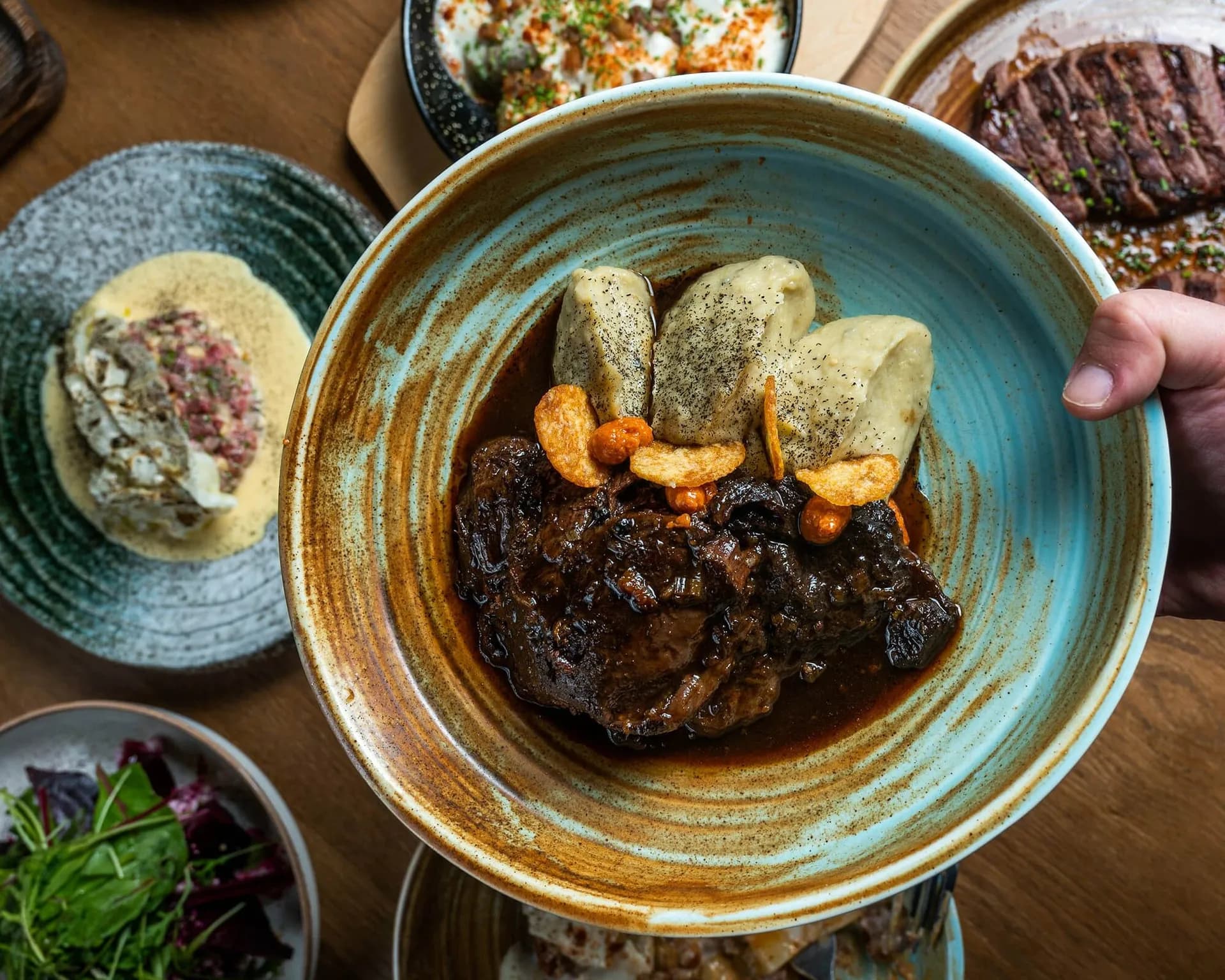
The afternoon finds me at the small harbor. Here the tradition of tsipouro with meze takes on another dimension. Each shot glass comes with a different meze: wine-braised octopus fragrant with basil, steamed salachi, acidic tsitsiraula (Magnesia's famous greens), and the mythical fouskes (shells that are difficult to harvest and served here like exotic sea nectar).
The fisherman bringing freshly caught koulouri explains how the fishing boats go out every morning to the same spots their fathers fished. Tradition here isn't a museum exhibit: it's living, daily reality.
As our boat returns to Alogoporо, I look back at the islet shrinking on the horizon. Paleo Trikeri doesn't have modern resort comforts, doesn't offer cosmopolitan nightlife, doesn't have extensive sandy beaches. But for those seeking authenticity, healing quiet, connection with a disappearing Greece, this small islet offers something invaluable: time.
Time to breathe, to think, to connect with nature and history. Time to remember that beauty isn't always spectacular, sometimes it's simply true. Paleo Trikeri remains one of Greece's last hidden treasures. A place that doesn't want to impress you, but to change you. And that, perhaps, is the most authentic travel experience you can have in our time.
Access: From Athens via Volos (about 400 km), then road to Trikeri and Alogoporо. Water taxi 5 minutes.
Accommodation: Evangelistria Monastery (tel. 24230-55207) and a few rooms to rent.
Best period: May through September.
Frequently Asked Questions
What makes Greek food unique?
Greek cuisine is built on simplicity and quality ingredients. What makes it distinctive is regional variety — every island and mountain village has its own flavors, often unchanged for centuries.