A living narrative connecting family history and contemporary local entrepreneurship By food journalist Dimitris Stathopoulos.
A living narrative connecting family history and contemporary local entrepreneurship.
In Evrytania, gastronomy becomes the reason for the journey. The Karveli family's galaktoboureko in Megalo Chorio has become tied to the place and its people, connecting family history, mountain landscape, and contemporary local entrepreneurship.
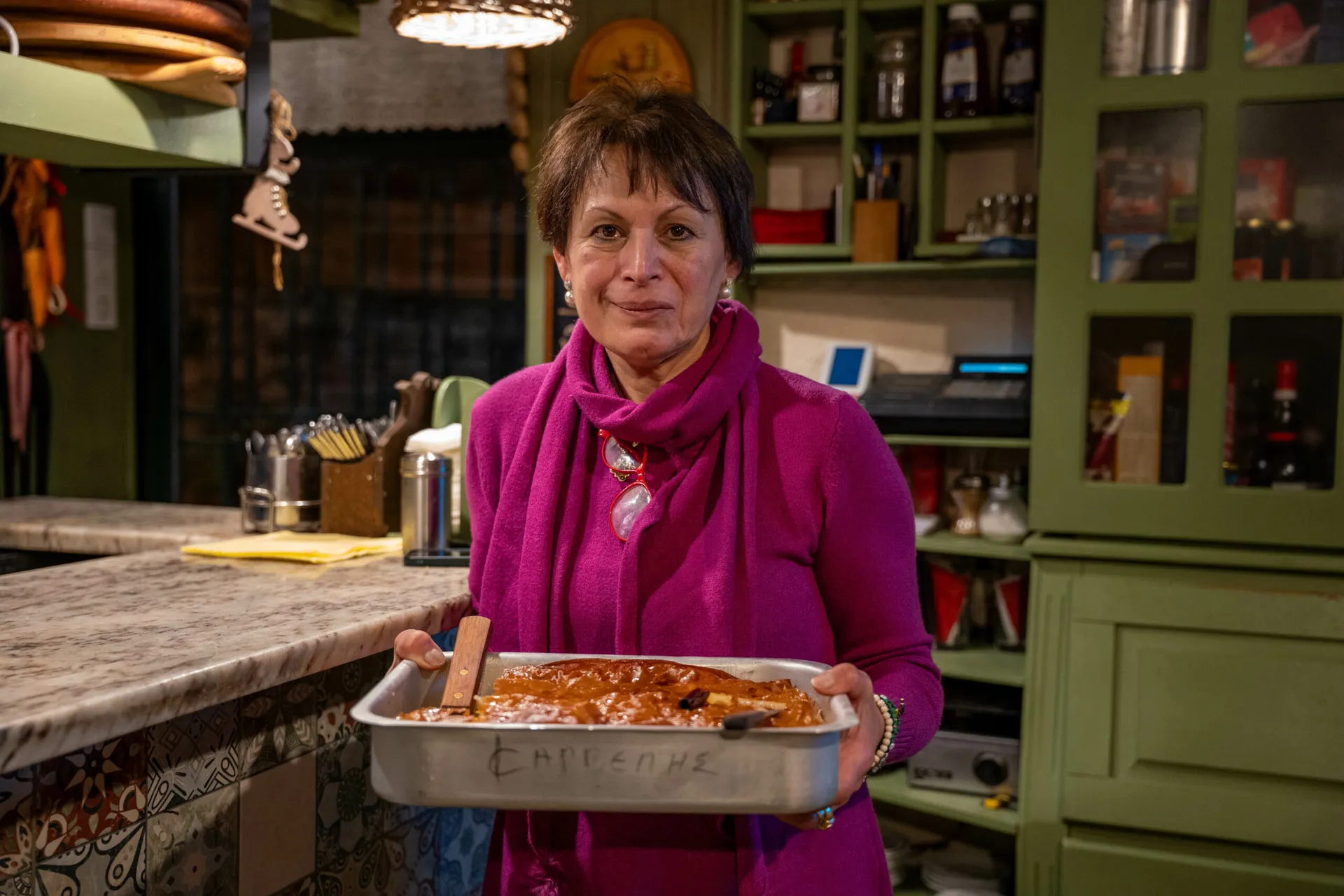
A few days ago, on our trip to Megalo Chorio, we watched Mrs. Gianna Karveli prepare the sweet exactly as she has done for decades: with measured movements and the certainty of knowledge passed from generation to generation.
Beside her, her husband Alexandros, talkative and relaxed, told us about the once-difficult decision to return and put down roots in the village. Today, in the shop next door, their son Thanasis continues the story with "Rakomelo," proving that tradition can evolve without being altered.
The Mountain Context
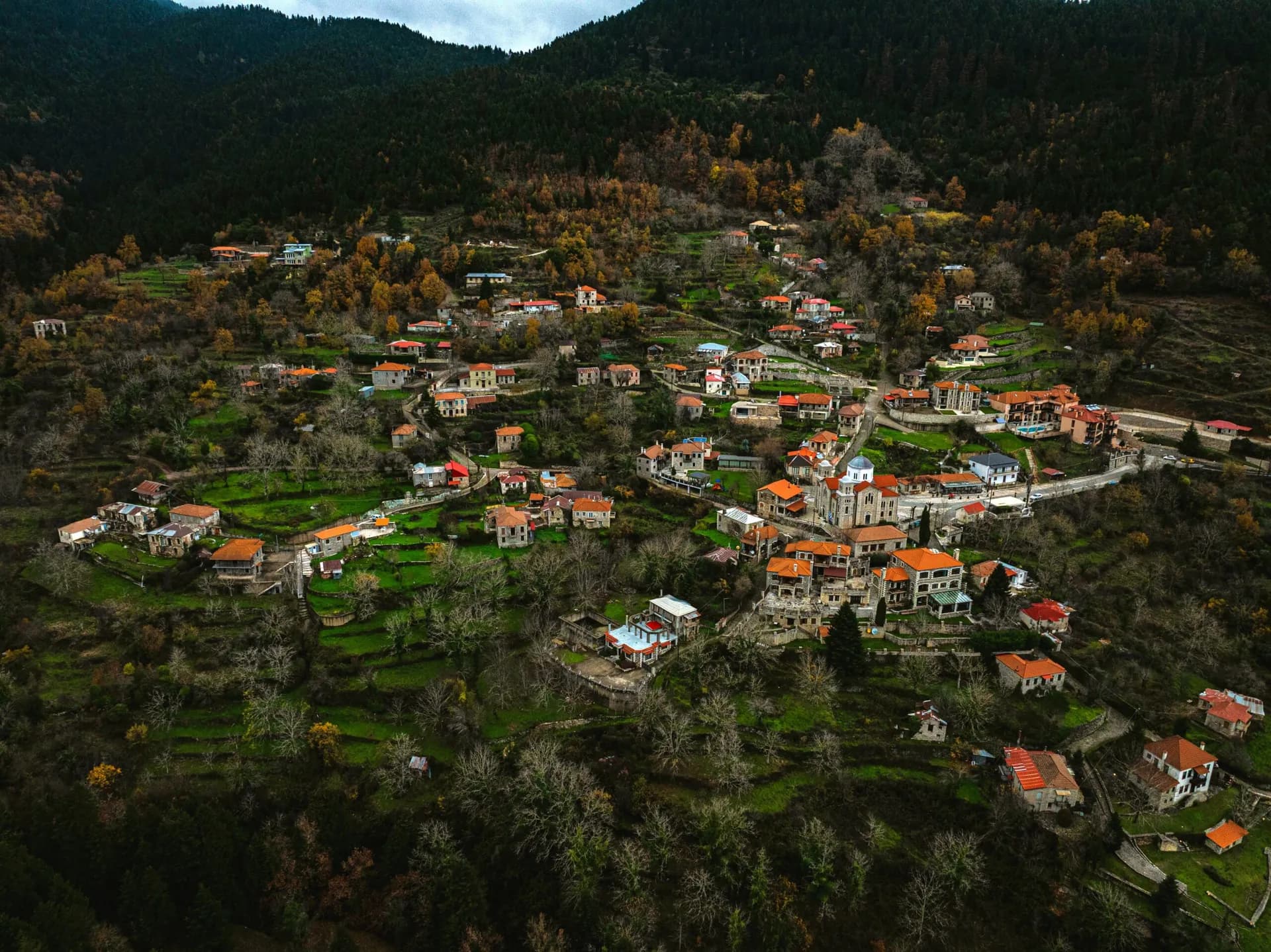
Megalo Chorio is perched on the slopes of Kaliakouda, in an environment that inevitably defines the taste. The milk, sheep and goat, comes from animals grazing on fir-covered slopes, among herbs and wildflowers. This raw material is the basis of the velvety cream that distinguishes Karveli galaktoboureko: rich but not heavy, sweet but with depth.
The sweet, though known throughout Greece, here acquires character. The pastry, thicker and more resistant, withstands the syrup without becoming soggy. The butter, generous, gives aroma and crispness. And the syrup application, hot on hot, seals the texture, leaving the sweet honeyed but never cloying.
The Beginning: Early 1980s
The story begins in the early 1980s, when Gianna Karveli returns to the village and takes over her mother's cafe, the legendary Kyra-Paraskevi. There, in a space that initially hosted coffee and conversation, the galaktoboureko gradually begins to stand out. It wasn't designed as a "trademark," it emerged organically, through demand and reputation that traveled by word of mouth.
Alexandros Karveli stood from the beginning in the role of host. The experience resembled a visit to a home more than service at an establishment. The familiarity, together with the consistency in taste, gave the cafe the character of a destination. For many visitors to Evrytania, "let's go to Karveli's for galaktoboureko" became part of the route.
The Continuation: Rakomelo
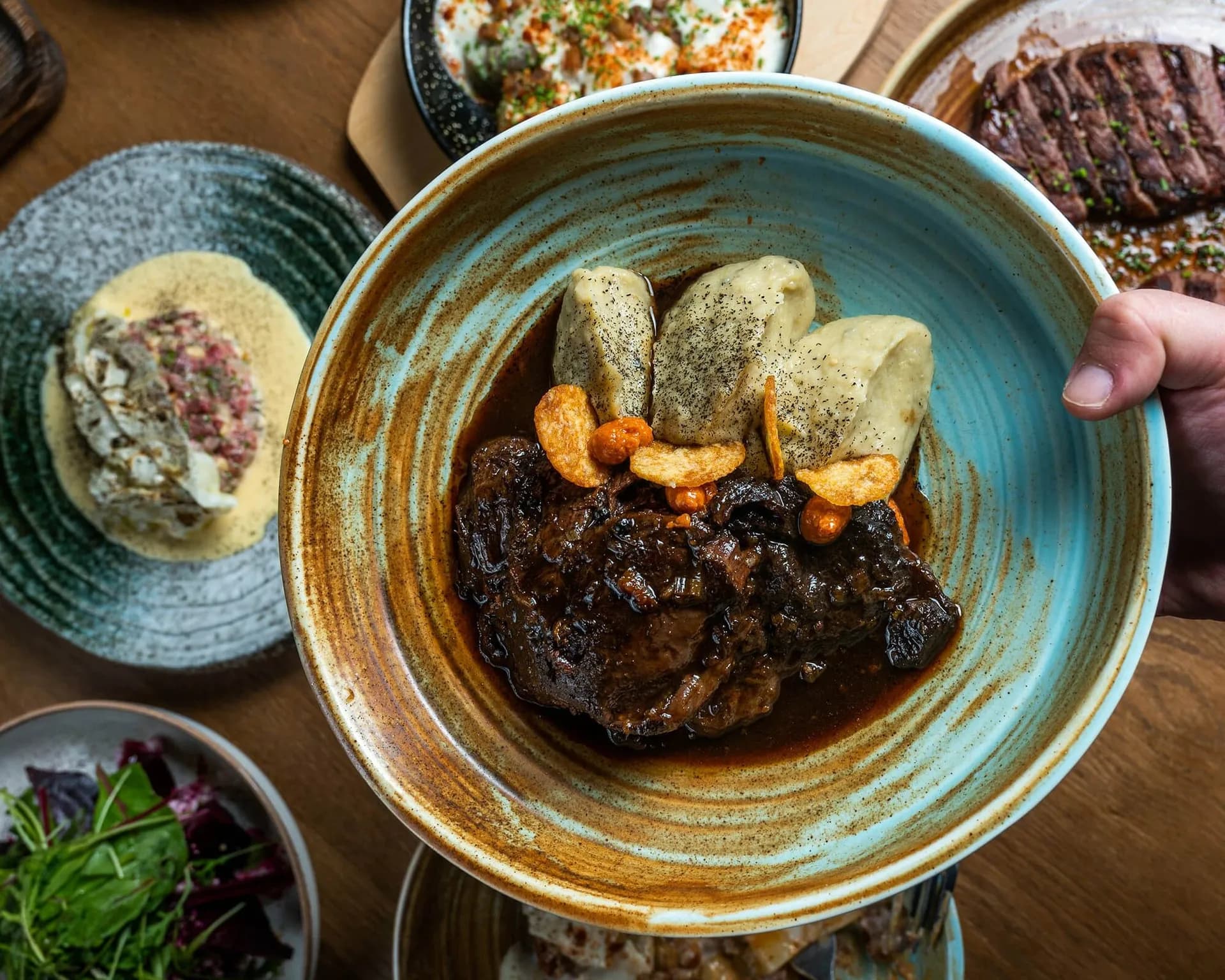
The continuation was written by Thanasis Karveli, their son, who created "Rakomelo," right next to the traditional cafe. The space, more contemporary, with a fireplace, large glass windows and mountain views, addresses today's traveler seeking comfort without losing authenticity. There, the galaktoboureko continues to be served warm, but is now framed by ekmek, rakomelo, and savory flavors.
"Rakomelo" is proof that mountain entrepreneurship can be contemporary, sustainable, and socially vibrant. In the evenings, the village gains pulse, keeping visitors and locals in the same space.
More Than Technique
Karveli galaktoboureko doesn't stand out only for its technical excellence. It stands out because it condenses a place and a way of life. In the spoon, Evrytania's resilience, family continuity, and the choice to stay, create, and evolve in your own place all meet.
Leaving Megalo Chorio, the visitor doesn't take away only the taste of warm cream and butter. They take the image of Mrs. Gianna bent over the baking pan, the conversation with Alexandros about the years of return, and the fire burning at Thanasis's "Rakomelo." It's these details that transform a sweet into a destination and a place into a life experience.
Frequently Asked Questions
What makes Greek food unique?
Greek cuisine is built on simplicity and quality ingredients. What makes it distinctive is regional variety — every island and mountain village has its own flavors, often unchanged for centuries.