We had met him in Argos Orestiko near Kastoria and set a meeting at the Krya Nera settlement, a beautiful settlement with few Insider guide by food journal
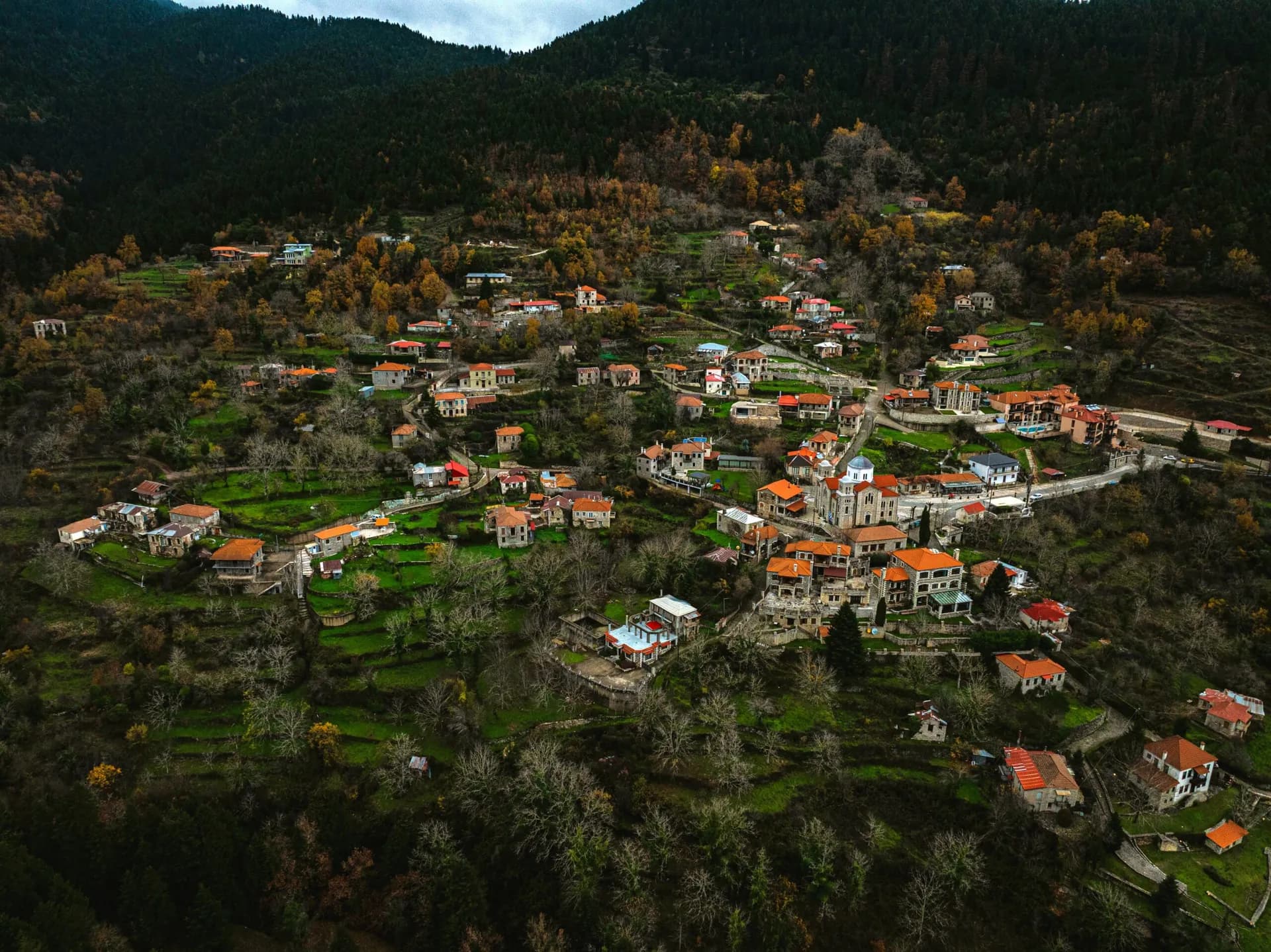
We arrived early. We had met him in Argos Orestiko near Kastoria and set a meeting at the Krya Nera settlement, a beautiful settlement with few residents. There, Savvas Pankoulidis maintains his beekeeping workshop. While we waited for him to arrive, I observed the two-story house with its characteristic brown-red adobe bricks. It's as if you've built a house from earth. You think that if it gets wet, it will fall like a house of cards. Anything but. The association with the famous deserted Korestia Villages is immediate, as there all the houses are made from earthen "cement bricks." Our trip to the Kastoria region included this area as well, so in the text that will follow, we will describe this experience.
Returning to Krya Nera and the beekeeping workshop, we're at the entrance. Very quickly, Savvas arrives, and we start our conversation. It's a small-scale production unit that he started nine years ago. "It reached a point, somewhere around 2015, when things were very difficult, that I was looking to do something new. Until then, my main occupation was plumbing installations, but a series of events led me to stop it," he tells us, only to continue with this: "I decided to deal with bees seeing it as work, and indeed as work that would yield the same time, but I quickly fell in love with bees. I fell in love with the structure of their society. The hierarchy and the way they work." He wanted to learn everything, he wanted to know this unique society of theirs and manage to produce honey with quality as the main characteristic.
From Five Hives to 120
Savvas started by buying 5 hives. Then, he increased them, and today he has reached 120. "It's a quite difficult process and requires patience and training." He started this work without having particular knowledge. However, as he will tell us with emphasis, the one who sold him the first 5 hives was always present to help him and pass on his knowledge regarding honey. At the same time, he read and continues to read, as the aspects of beekeeping are many, and to be able to maintain them and also produce quality honey, much knowledge and great attention are required.
He mainly produces two types of honey. These are wildflower honey and chestnut honey. Depending on the place where you place the hives, you will get the corresponding honey, based on the trees and plants that exist in the area.
"I transport the hives, but at a relatively small distance. I look for areas with suitable plants and trees so that I can produce the honey I want, and always far from pollution sources. When we say, for example, chestnut honey, we don't mean it's 100 percent from chestnut blossoms. We mean it's honey that mainly comes from chestnut."
The Honey-Making Process
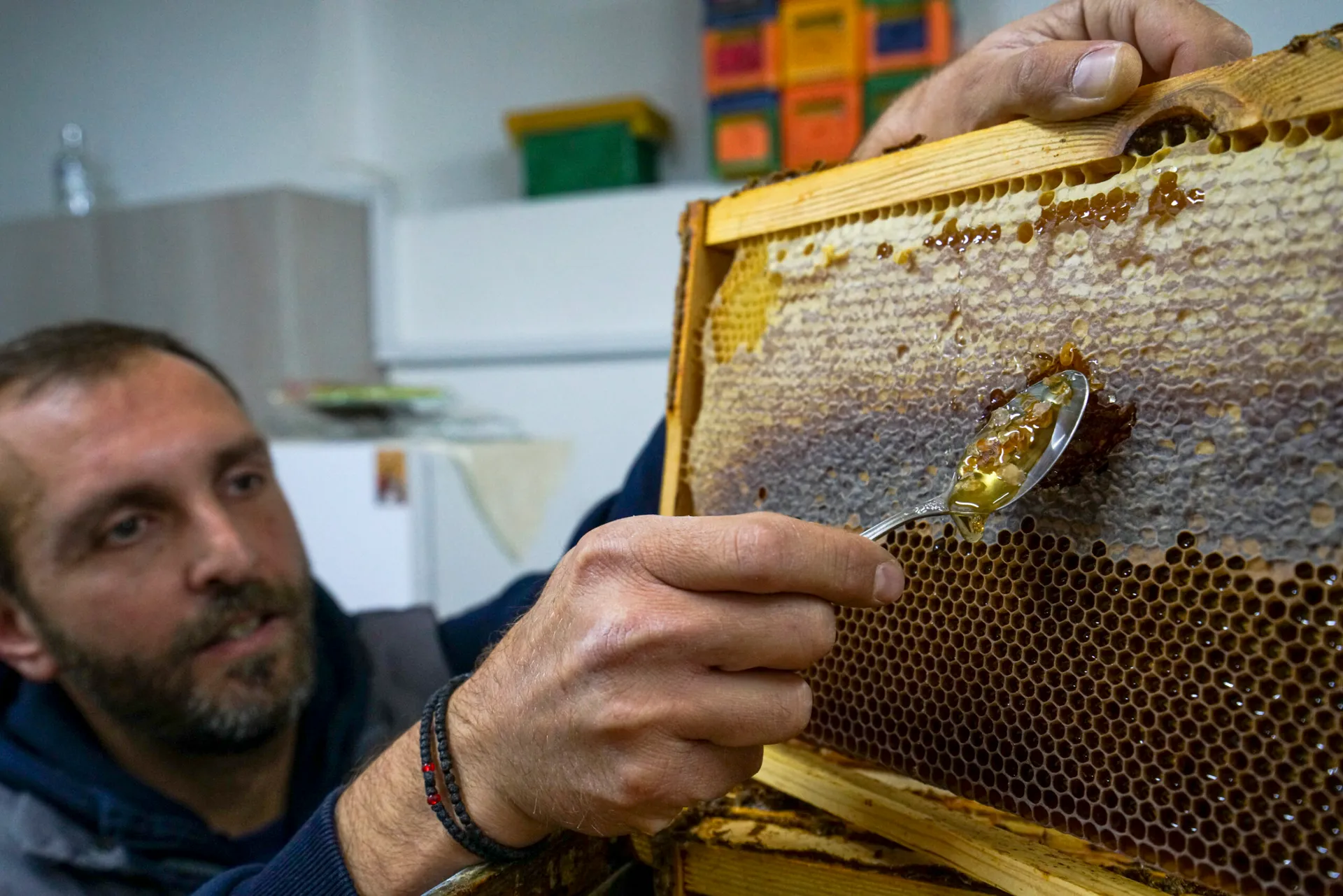
We spend considerable time in the processing facility. He tells us about the hives, about the way honey is produced. He shows us how with centrifugal force he can take honey from the hive frames. We taste honey directly from the hive along with wax. It's a day with great interest, as you enter, even minimally, into a very different world with great interest. It's the world of bees.
Concluding our meeting, it's clear to me why Savvas loved quickly and so much this new occupation of his. As for the formalities and substantively, he maintains all the required permits so that he can process the honey he produces, reaching 1,200 kilos.
Instagram: pagoulidis, Tel.: 6973 571235
Common Questions
Where can I find this in Athens?
The Central Market (Varvakios Agora) on Athinas Street is the best starting point for any serious ingredient hunt in Athens. It's open weekday mornings and is genuinely one of the great food markets of Europe — chaotic, loud, and completely authentic. Go with a local if you can. I take people there on my Athens food walk.
What makes Greek versions of this different from what I've had elsewhere?
Greek cooking is obsessed with quality of ingredients, not complexity of technique. The olive oil is better. The tomatoes taste like tomatoes should. The feta is brined in whey, not plastic brine. When you eat the same dish in Greece vs. a Greek restaurant abroad, you're eating fundamentally different food.