I hadn't adequately explored Southern Pelion on my previous visits By food journalist Dimitris Stathopoulos.
I hadn't adequately explored Southern Pelion on my previous visits. This time, however, I came with a different mindset, determined to get to know it as it deserves, to gain a truly complete picture of a universe that hasn't won over so many travelers by chance. Arriving in the region, we chose to get a first taste of this magical destination. And this initial contact was in Milina and at the mysterious islet of Alatas.
Alatas: A Tiny Island with Giant Stories
In the southeastern part of the Pagasetic Gulf, like a tiny jewel floating in the blue-green waters, lies Alatas (or Galateia, as locals call it). This small land mass, with an area of almost half a square kilometer and a height not exceeding ten meters, hides stories that far exceed its microscopic size.
Its name comes from the traditional salt works that once operated on the opposite coast of Magnesia. Today, this elongated piece of land primarily hosts wild olive trees covering most of its surface, creating a landscape full of greenery that contrasts beautifully with the gulf's blue.
The most important legacy of Alatas is perhaps the Monastery of the Forty Saints, a sacred space that until the early 21st century served as a refuge for a small community of monks. In 2001, the last five monks left the island. According to the last census of 2011, no permanent residents remain here anymore.
Alatas, beyond its tranquility and natural beauty, is also connected to the events of the Greek Revolution. During the period 1822 to 1823, the islet became a point of conflict between Greek revolutionaries and Ottoman forces, with testimonies speaking of Greek victory. This battle, according to historical references, is part of the operations that shaped control of the region during that time.
Milina: Coastal Charm
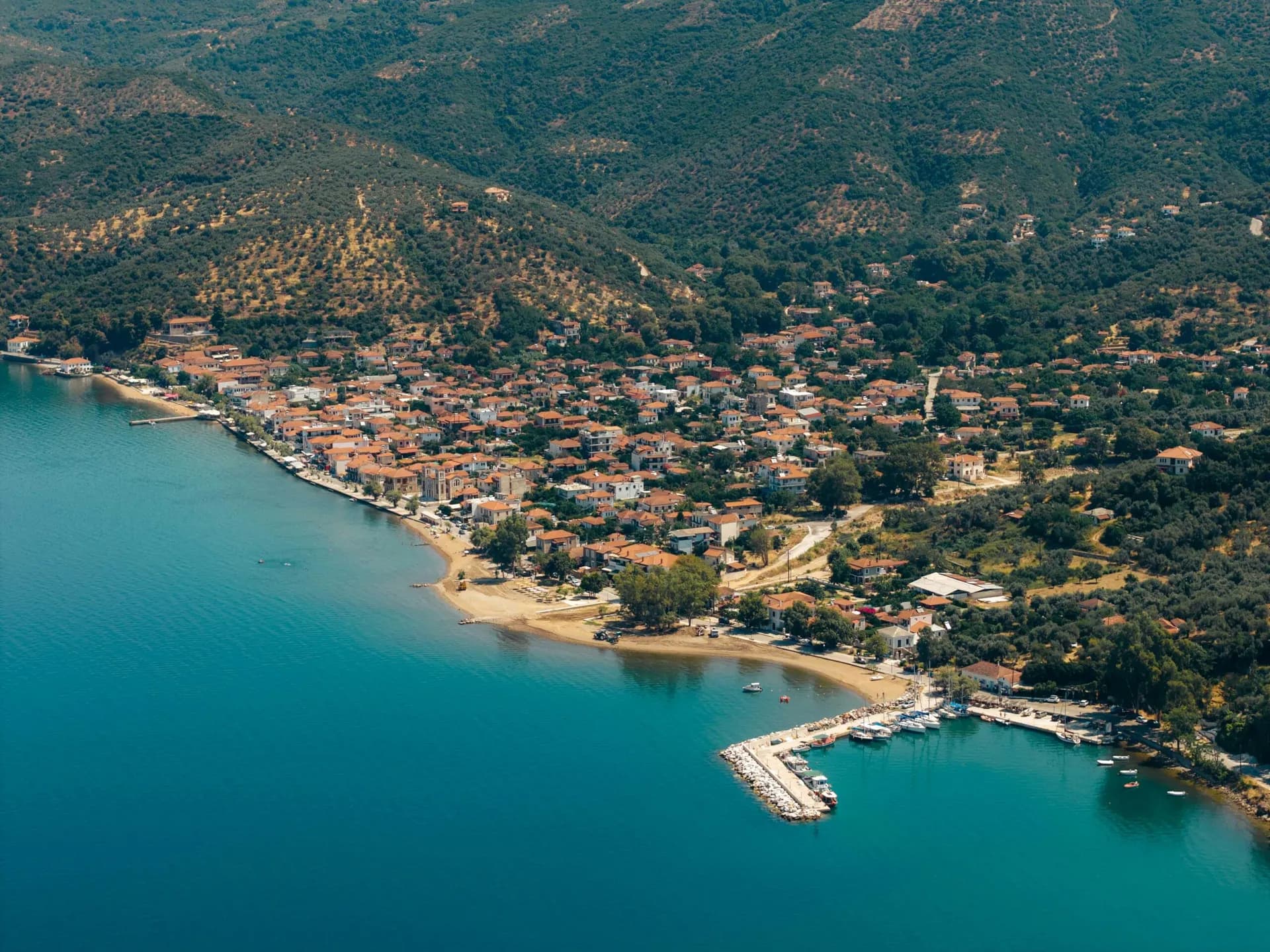
Southwest of Alatas, Milina spreads along the coast with the serenity of a village that still maintains its traditional soul while simultaneously enjoying modern amenities. Here, daily life flows at nature's pace, not at the clock's command.
This seaside settlement doesn't aspire to compete architecturally with Argalasti's elegance, nor does it claim the pristine charm of neighboring Horto. Instead, it offers something different: a cosmopolitan atmosphere that remains essentially Greek. Here you won't find noisy nightlife or huge hotel complexes. Milina appeals to those seeking tranquility, authentic flavors from the sea, and contact with a landscape that makes you feel that the Greek summer of the past hasn't been completely lost.
Sunset Magic
Milina's port has become a reference point in recent years for sailing and sea exploration enthusiasts. From here one can discover the countless small bays of the Pagasetic, while the small islands scattered in the gulf invite adventures by boat.
The element that stands out most in Milina is the daily spectacle of sunset. As the sun dives into the horizon, its red light transforms the Pagasetic into a canvas of golden and purple hues. The islets become intricate silhouettes in this luminous setting, while boats and traditional fishing vessels create a composition that seems to have emerged from a painting. Sitting in one of the seafront tavernas at this moment is itself a reason to visit.
Perfect Swimming Conditions
The shores of Southern Pelion bathed by the Pagasetic Gulf offer ideal conditions for family swimming. The shallow and warm waters, combined with the protection provided by the gulf's geography from strong winds, create a friendly environment for swimmers of all ages.
Milina's main beach, right in front of the settlement, is the easiest option. It has organized and free sections, suitable for those who prefer immediate water access without movement.
On the route connecting Horto with Milina, Vathia Spilia beach awaits visitors with its calm atmosphere. This protected cove, with its coarse pebbles and natural shade from olive trees, offers a more camping-like experience.
About ten kilometers from Milina, Marathias impresses with emerald waters and imposing olive trees shading the shore. Although it lacks tourist development, it magnetizes those seeking serenity and authentic contact with nature. Tzasteni, however, steals the show with its stunning landscape between its two small bays, creating a postcard-worthy scene.
Finally, an excursion to the fishing village of Lefokastro, forty minutes from Milina, is worthwhile to discover Razi beach. There, crystal waters combine with the luxury of natural shade from tamarisk trees that reach almost to the sea's surface.
This first taste of Southern Pelion confirmed what I had heard and read. Alatas with its history and Milina with its warm hospitality are just the beginning of a journey of discovery that promises many more secrets.
Frequently Asked Questions
What makes Greek food unique?
Greek cuisine is built on simplicity and quality ingredients. What makes it distinctive is regional variety — every island and mountain village has its own flavors, often unchanged for centuries.