Fourteen kilometers from the Greek-Albanian border, at 700 meters elevation, Delvinaki is one of the most isolated and Insider guide by food journalist Dim
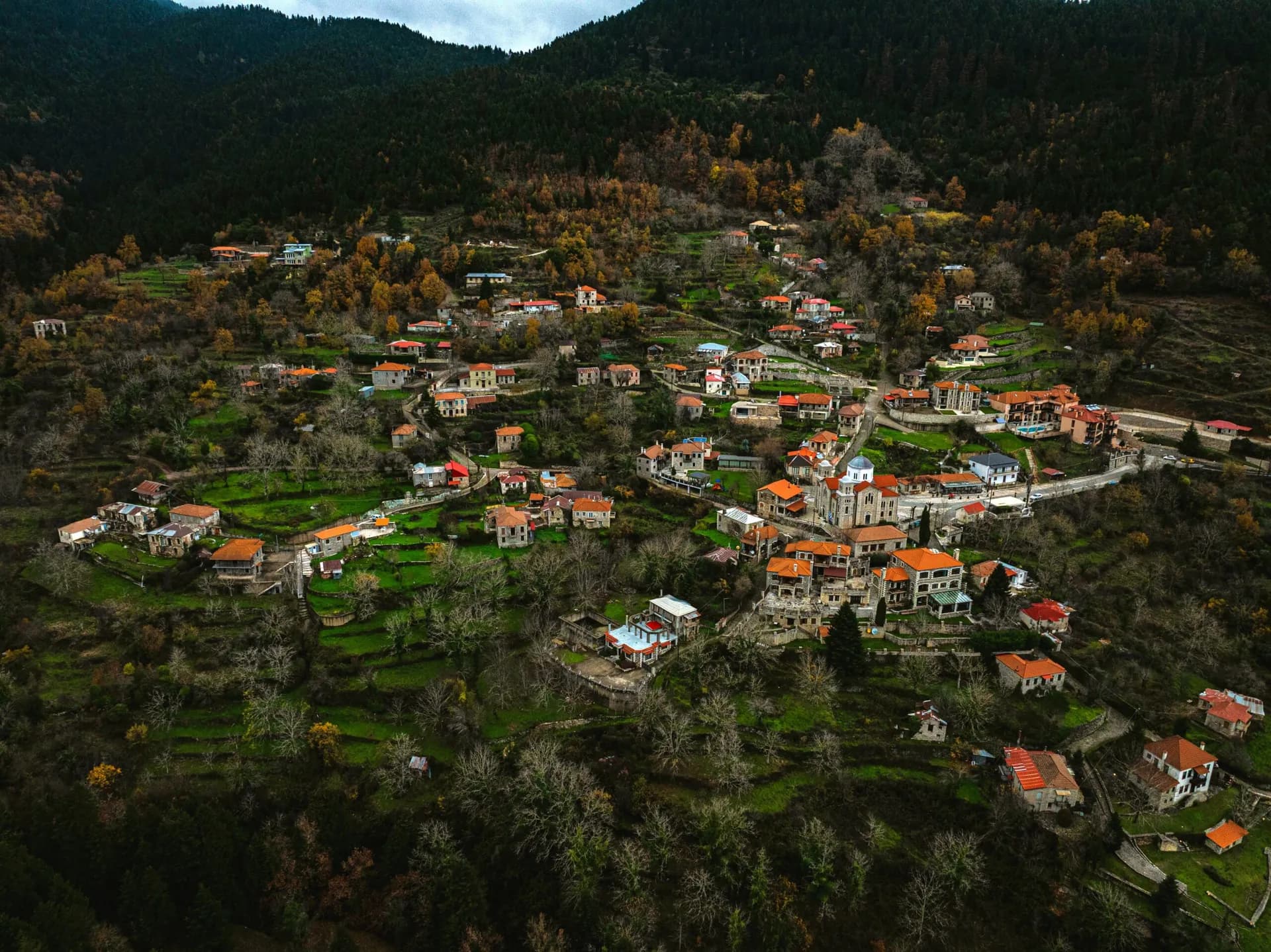
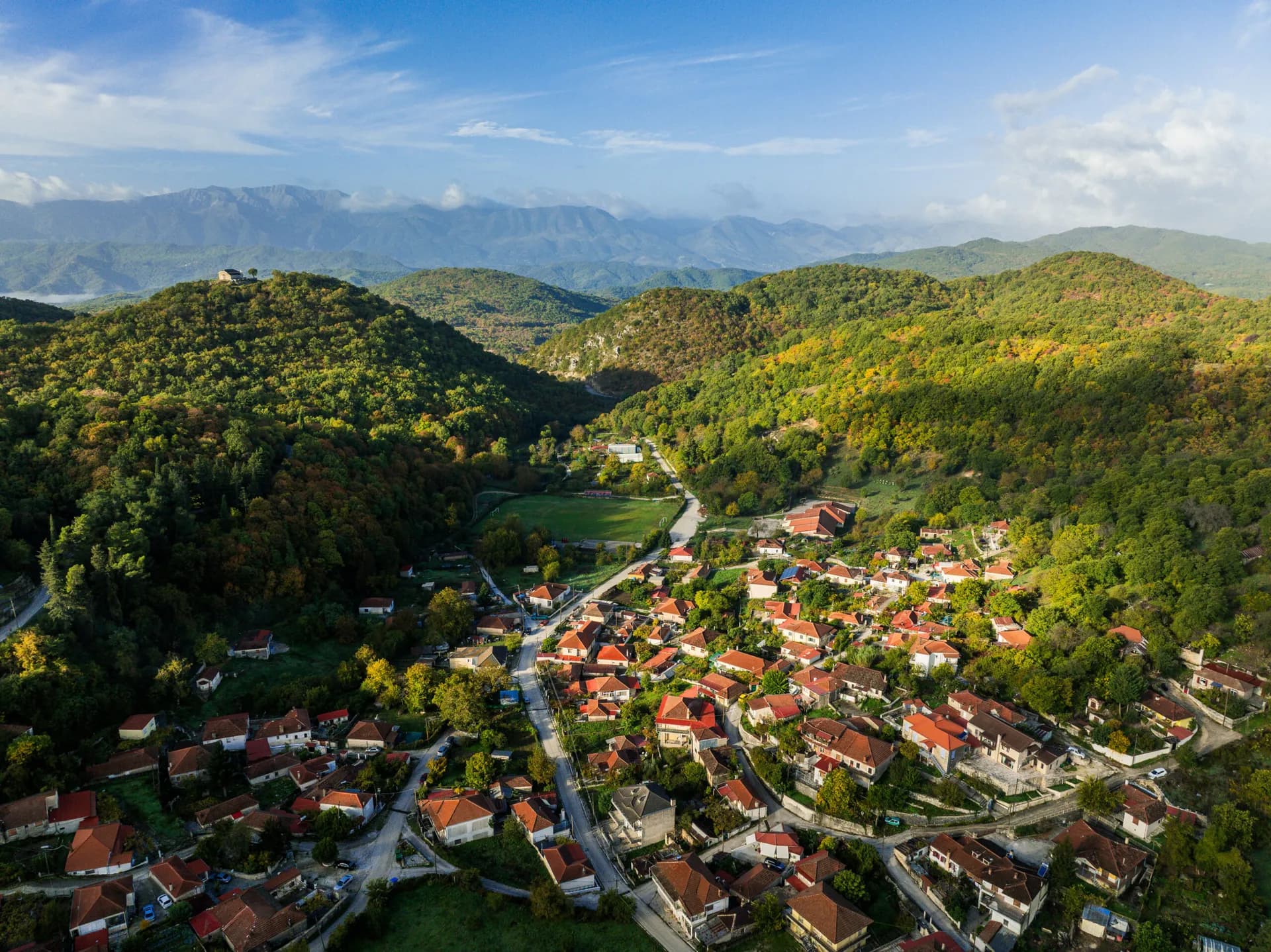
Fourteen kilometers from the Greek-Albanian border, at 700 meters elevation, Delvinaki is one of the most isolated and simultaneously tradition-rich villages in Epirus. Surrounded by dense oak forests and carved into the foothills of Kasidiaris, this village guards a treasure that far exceeds its size: the art of polyphonic song.
Morning in the Square
We arrive in the morning at the central square, where Manthos and Marianna are already serving coffee to locals. Their cafe, open from 8 in the morning until late evening, functions as the village's daily meeting point. "We stayed here permanently," Marianna tells us as she brings the Greek coffee we ordered.
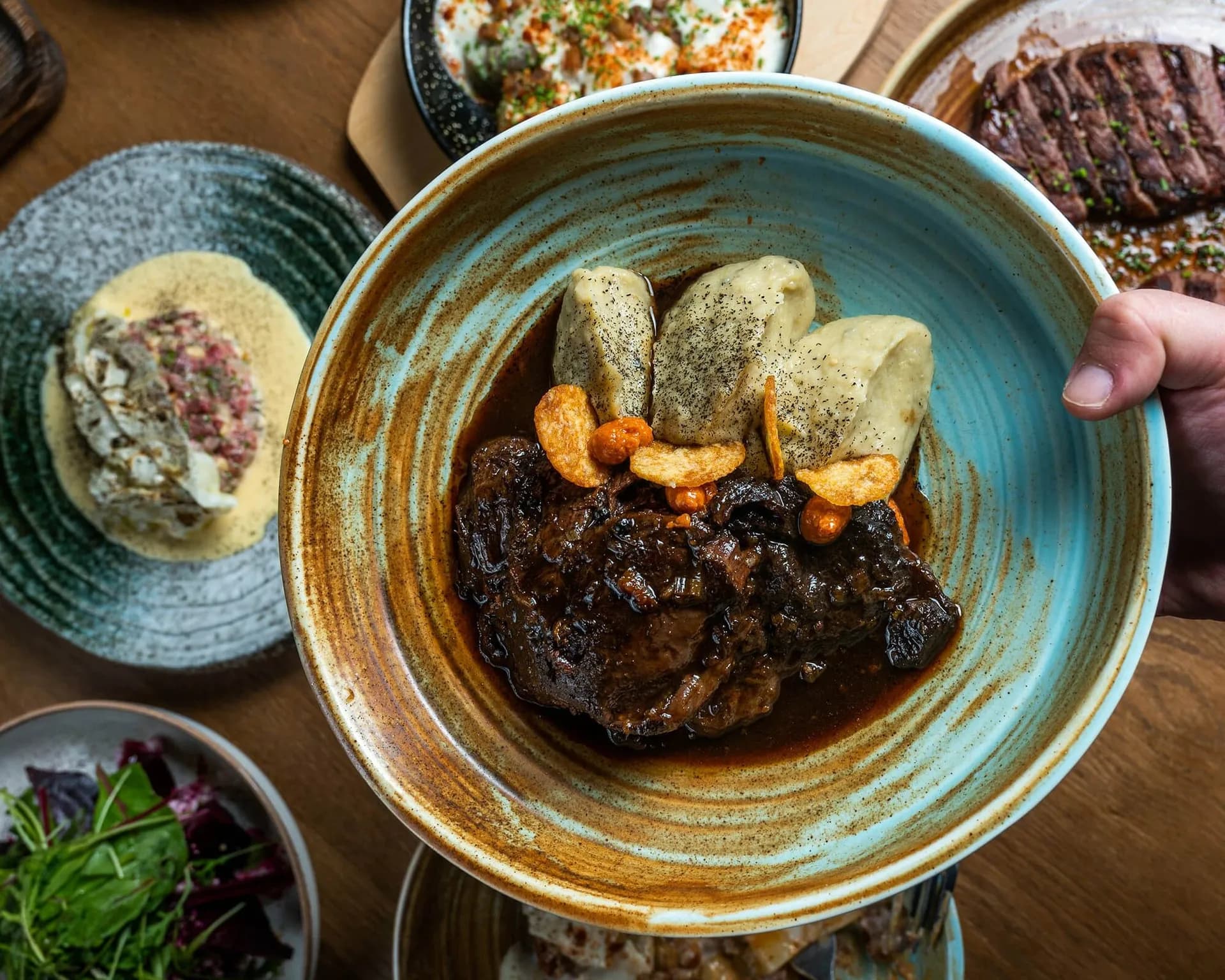
The place has a dual identity: morning spot for coffee and afternoon spot for tsipouro. The menu of mezedes reflects Epirote cuisine: lemon pork, braised beef, meatballs, rabbit stew, stuffed zucchini blossoms, hyacinth bulb salad.
From Prosperity to Frontier
Delvinaki knew times of wealth that today seem incredible. From the 18th to 19th centuries, its residents traveled as merchants to Constantinople, Romania, Russia, and Egypt. The wealth they accumulated returned to the village in the form of imposing mansions and educational institutions. In 1875 the Boys' and Girls' School was built, a two-story stone school with floor plan in the shape of "E" for Eleftheria (Freedom), a bold declaration of national resistance during Ottoman rule.
In 1913, however, the Treaty of London drew the border with Albania, dismembering the historical unity of Pogoni. Delvinaki, from a commercial center, became a frontier village. The 20th century's wars and the emigration of the 1950s and '60s gradually emptied the settlement. Today, walking the stone-paved cobblestones, you see stone mansions with heavy wooden doors and elaborate carved lintels, architectural testimony to another era.
Lake Zaravina's Mystery
Five kilometers from the village, Lake Zaravina hides among the forests. Despite its limited surface area (0.3 square kilometers), it reaches 31.5 meters depth, among the deepest natural lakes in the country. This disproportionate depth has fed local legends for centuries about sunken villages and underground connections with distant rivers. In its waters lives the endemic "Epirote tsima," a fish species on the verge of extinction, while on its shores a rare orchid appears. The lake is protected by the NATURA 2000 network.
The Voice of Epirus
But if there's something that makes Delvinaki unique, it's its music. Epirote polyphonic song, recognized by UNESCO as an element of intangible cultural heritage, finds here one of its last natural spaces. The song is strictly group-based and a cappella, based on the pentatonic scale. Its execution requires specific roles: the "partis" starts the melody, the "gyristis" responds with laryngeal sounds reminiscent of birds, while the "isokrates" maintain a continuous drone, the foundation upon which the sound is built.
The late Petroloukas Halkias, born here in 1934, elevated the Epirote clarinet to a global phenomenon. In a performance in Athens where he played an Epirote lament, an Indian ambassador confessed to him in tears that he recognized in the melody prayers used in India since the time of Alexander the Great.
The Pie Culture
In Delvinaki's cuisine, pie reigns. Not as an appetizer, but as the main meal. Kasiopita or aleuropita is the most characteristic: a batter of flour, eggs, and milk spread in a thin layer, covered with crumbled feta and butter, and baked until golden. Comfort food of mountain people. In the square's tavernas, roasts from local lamb and goat are still served, while when hunting season permits, wild boar from the forests of Kasidiaris makes its appearance.
Silent Testimony
Leaving Manthos' cafe, I look back at the square. The Church of the Dormition of the Theotokos, with its wooden carved templon from 1850 and frescoes from 1646, dominates silently. Around it, the stone mansions seem almost nostalgic for the times when their courtyards filled with voices.
Delvinaki is a destination for those who want to hear the history whispered by stone, the music hidden in the mountains' silence, the memory of a Greece resisting oblivion.
Common Questions
Is Ioannina worth visiting just for the food?
Absolutely — and I say this as someone who has eaten across most of Greece. The Northwestern Greek kitchen is the most underrated in the country. Lamb cooked over wood, pies made with hand-rolled phyllo, freshwater fish from the lake, and bougatsa that will ruin all other bougatsa for you. Plan a long weekend minimum.
What's the one dish I can't miss in Ioannina?
The lake eel, if you're adventurous — it's been a Ioannina specialty since Byzantine times. If that's too much, then the lamb in garlic sauce at one of the lakeside tavernas. Either way, sit by the water, order local wine, and take your time.