A place that managed to preserve its authenticity through the passage of time Discover Greece with a local expert.
A place that managed to preserve its authenticity through the passage of time.
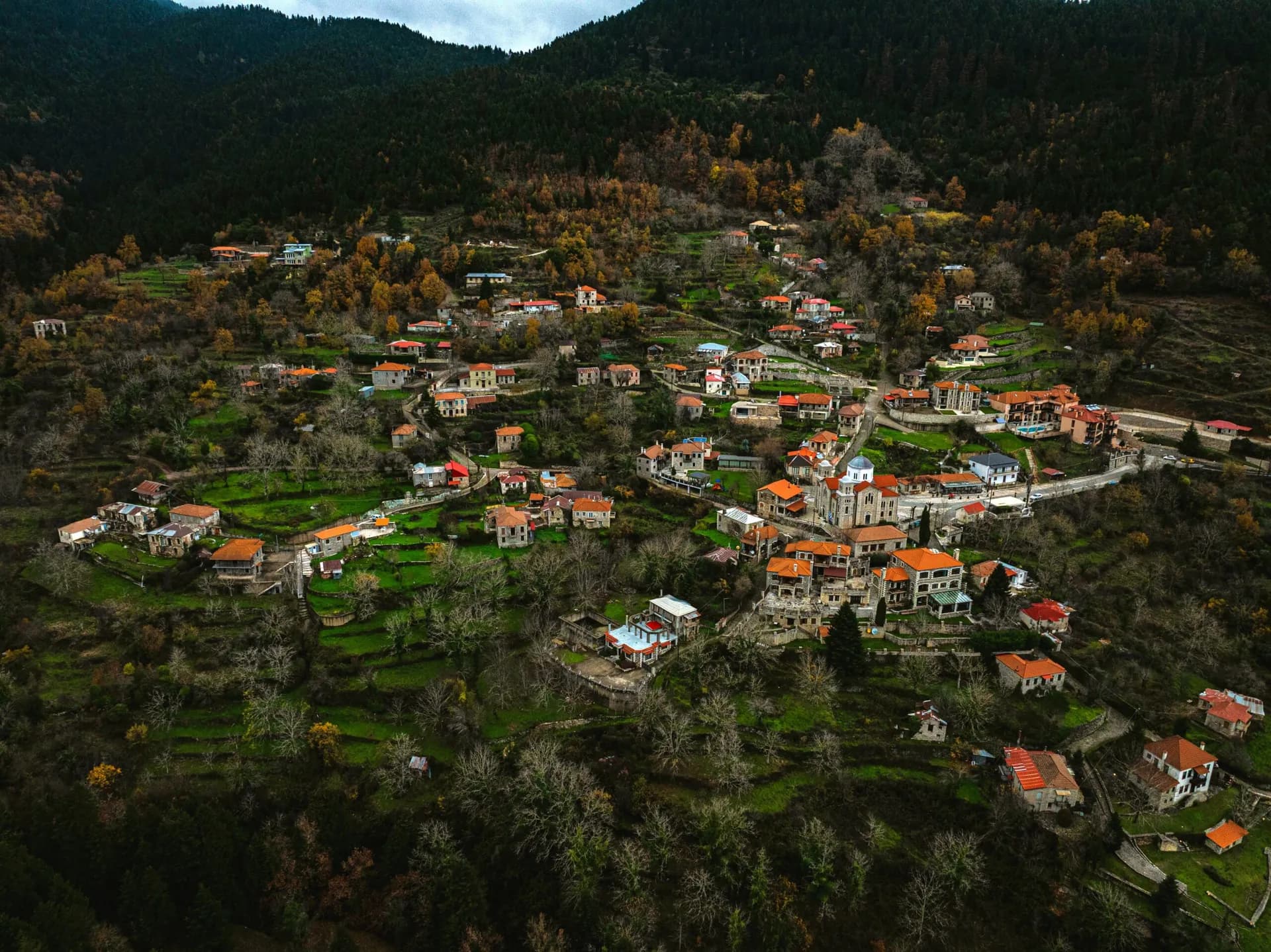
Fog embraces the peaks of Tzoumerka as the road climbs toward Pramanta. Here, in Epirus's heart, the earth rises in steep escarpments and forms one of the country's most precipitous mountain areas.
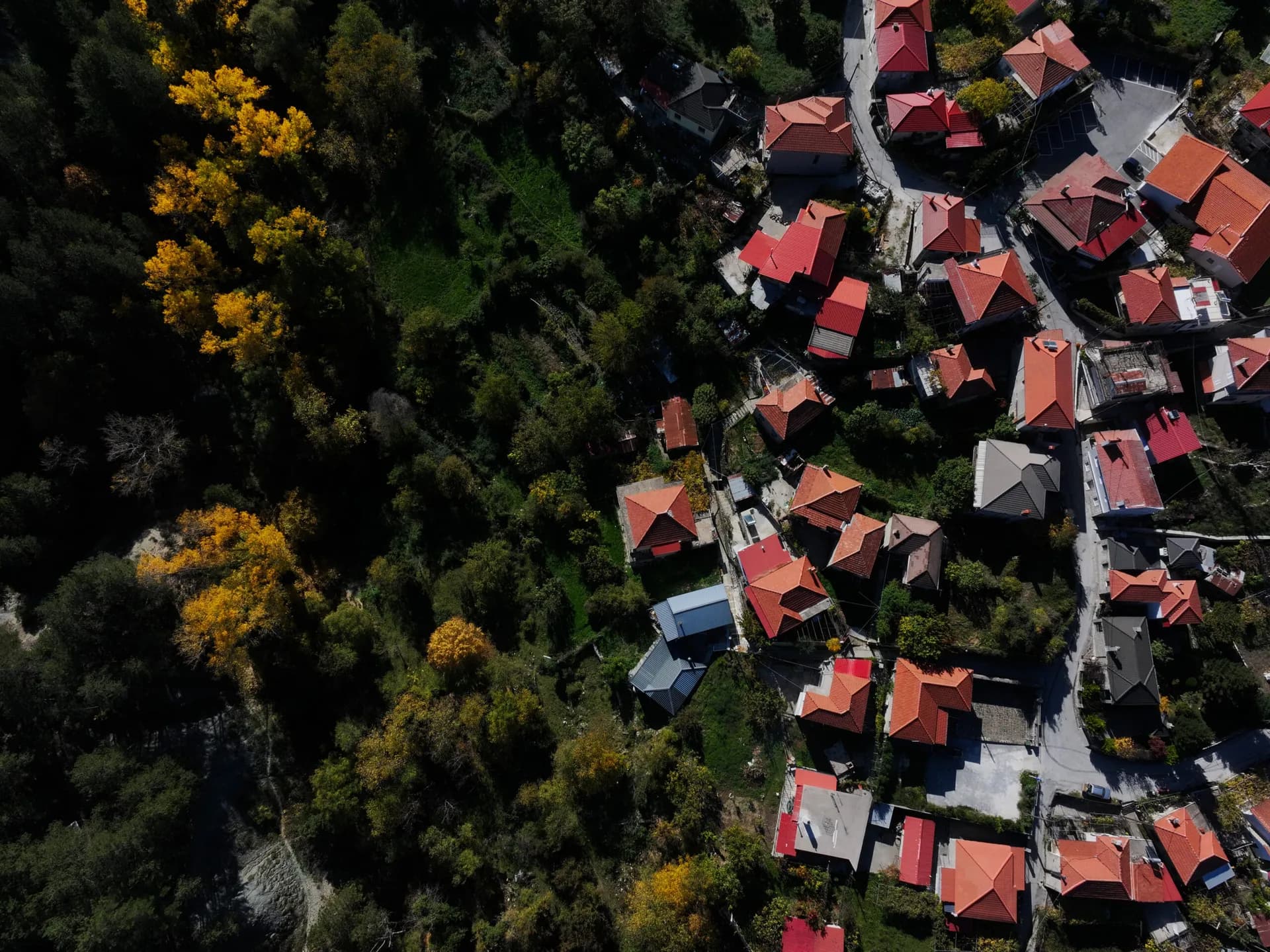
At 2,755 feet, the village stands amphitheatrically in the embrace of Strongoula, a peak reaching 6,929 feet. This place appeals to those seeking the authentic soul of the Greek mountain, where nature still imposes its own rhythms and human presence negotiates its endurance daily. Alpine orogenesis, the geological process that shaped the Mediterranean basin millions of years ago, left its mark here in the steep limestone peaks and gorges. The Arachthos, the river crossing the mountains, has carved its own passage for thousands of years, creating one of Greece's impressive gorges.
Two miles from the village, the earth guards a secret. The Anemotrypa Cave was discovered in 1960 by two young men who noticed a strong current of air emerging from a crack in the rock. This breath of earth betrayed the existence of a large underground system. It was the era when the great Greek speleologist and honorary president of the Hellenic Speleological Society, Anna Petrochilou, was visiting the northern Tzoumerka area. The then-president assigned the two daring young men, Apostolis Lampris and Giorgos Karakostas, to widen the narrow fissure from which the cool air emerged, so the interior could be explored. Crawling and without basic equipment, they managed to reach a wide cavity and were the first to behold an almost otherworldly beauty.
Today, walking inside the cave, among stalagmites resembling curtains and stalactites colored by iron oxides, you realize you're in a living organism. On the lower level, an underground river continues to erode the rock, forming a small waterfall before disappearing again into darkness.
Pramanta is surrounded by Tzoumerka National Park, an area functioning as refuge for some of Europe's rarest fauna species. The brown bear moves silently through the Cephalonian fir forests, while wild goats move with ease on rocks that seem untrodden. The wolf, the timeless symbol of mountain landscape, regulates herbivore populations and maintains the ecosystem's fragile balance.
Climbing toward Strongoula, the landscape changes abruptly. The forests recede and give way to meadows hiding botanical treasures: endemic plants found nowhere else in the world. From the summit, the view spreads over Pindus and reaches to the Ionian.
In the village square, the Arap's Fountain tells its own story. Built in 1887, the spout bears the form of a human head. According to one version, it depicts an Ottoman tax collector who controlled the area. His presence here, with water running constantly from his mouth, may symbolize the conqueror's submission to village needs or a way of exorcising fear. The fountain is a specimen of Pramanta stonemasons' craft, who for centuries traveled throughout Epirus and beyond, building bridges, churches, and mansions.
Stone here carries darker memories too. In autumn 1943, German troops burned the village during clearing operations against partisans. Residents fled to Strongoula's forests and caves to endure winter. When they returned, they rebuilt their place with stones from burned houses.
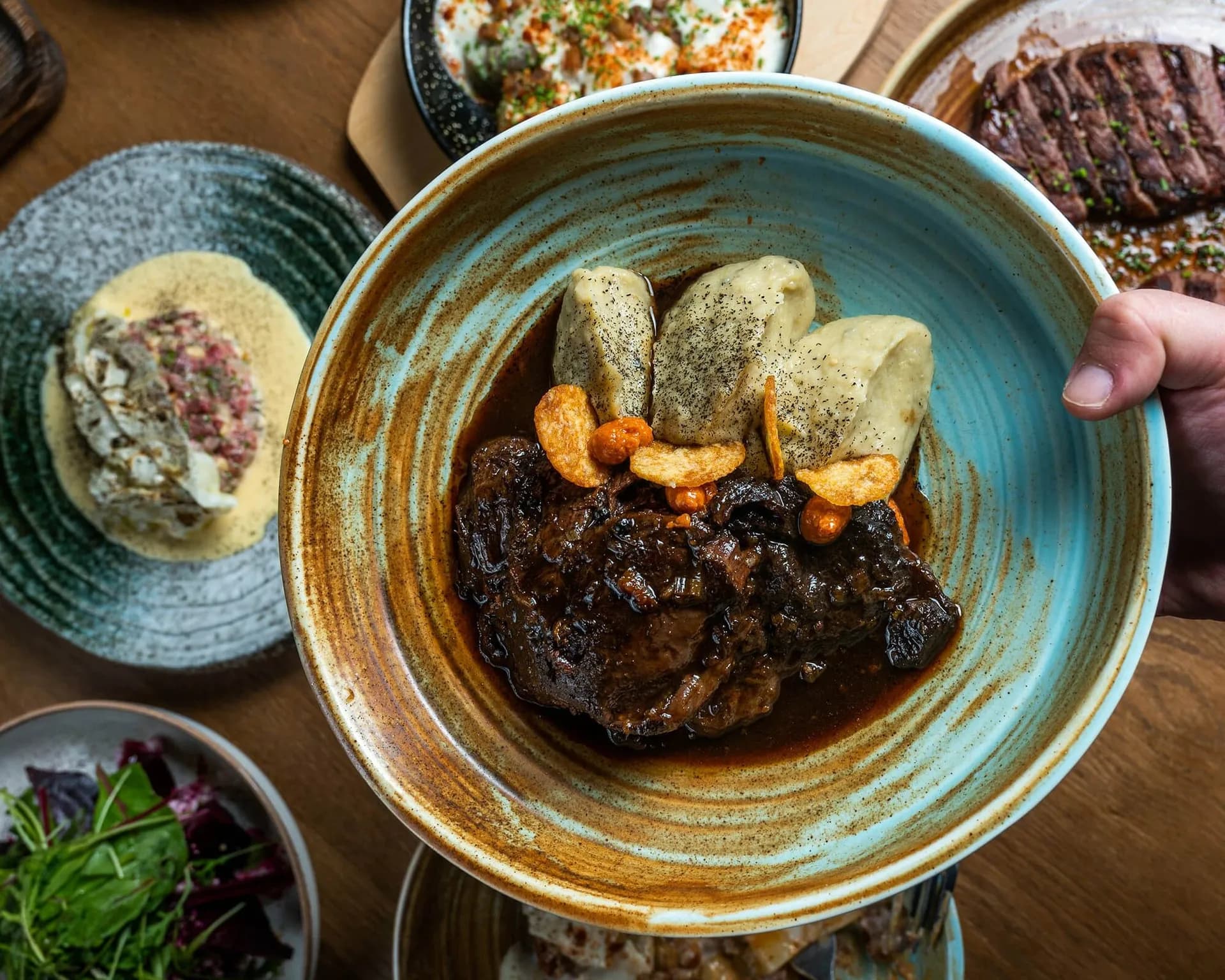
Pramanta's cuisine mirrors the place's relationship with the land. Kreatopita, with boiled meat, rice, and herbs between thick handmade phyllo sheets, is the feast food. Batsaria, a simple but delicious pie with cornmeal mush and wild greens, testifies to imaginative use of scarce available materials. Tsalafouti, a soft cheese with yogurt texture produced from sheep's milk, is considered the area's white gold. During summer months, when herds graze in alpine meadows, the milk becomes thicker and richer, giving the cheese its characteristic buttery flavor.
On Easter day or at the feast of Agia Paraskevi, Pramanta comes alive with a dance unlike any other. Kangelari is danced without musical instruments. Only the dancers' voices and the sound of steps give the rhythm. Men sing the verses and women repeat them, creating an antiphony that spreads across the mountain. Holding hands crosswise, the dancers form a chain that folds and unfolds in spiral patterns.
Tradition holds that the dance functioned as a means of secret communication during Turkish rule. A way for Greeks to count available men for battle without arousing suspicion. Today, Kangelari reminds us of a place's endurance and memory that chose to stay alive.
For the modern traveler, Pramanta offers something rare. The chance to experience nature in its wildest form. The ascent to Strongoula is demanding (about three hours on steep slopes and rocky terrain), but the view from the summit rewards every effort. The Kefalovriso waterfall, one of the area's most imposing, offers a gentler route, with the path crossing dense fir forests.
The Arachthos, on the other hand, invites a different type of adventure. Rafting from Politsa Bridge to the historic Plaka Bridge lasts about two hours, passing through a narrow gorge with rock walls rising dramatically around you. Passing under the single-arch bridge, the Balkans' largest, constitutes the route's natural climax. Leaving Pramanta, you take with you the sense of a place that managed to keep its identity.
Common Questions
How do I get here from Athens?
Most destinations covered on this site are 2 to 4 hours from Athens by car. I always recommend renting a car rather than joining a bus tour — you control your stops, you can pull over when something looks interesting, and the drive itself is often half the experience in Greece.
What is the best time to visit?
April to June is my personal preference — the wildflowers are out, the crowds haven't arrived, and the light is extraordinary. September and October are equally good. Summer is beautiful but you'll share it with everyone else. Winter is underrated and deeply local.