Exploring a lush village in Evrytania, with welcoming people and authentic flavors Discover Greece with a local expert.
Exploring a lush village in Evrytania, with welcoming people and authentic flavors.
The drive from Karpenisi through the firs, the square with seven water spouts, the stone fountains, the taverna that's been serving wild boar for 40 years, and the Panta Vrechei gorge compose a distinctive road trip in southern Evrytania. The 19 miles from Karpenisi to Krikello take nearly an hour, but that hour isn't wasted time. It's the time that slowly initiates you into the beauty of the place. The road climbs steadily, the town disappears behind, and somewhere at Rachi Tymfristou, at 3,900 feet, everything changes: the air turns sharper, the firs close over the road and form a natural arch. In winter, you need chains here. In summer, you just need open windows.
At Kokkalia, at 4,600 feet elevation, a monument recalls a battle from 279 BC, when the Evrytanians and Aetolians confronted Gallic tribes retreating northwest after their raids on Aetolia. The place name says it all: the bones of the defeated remained unburied for centuries. A bit higher, at Pyrgos, at 5,250 feet, the horizon opens. Vardousia, Oiti, Grammeni Oxia, the southern Pindus like a relief map. And then, the descent begins.
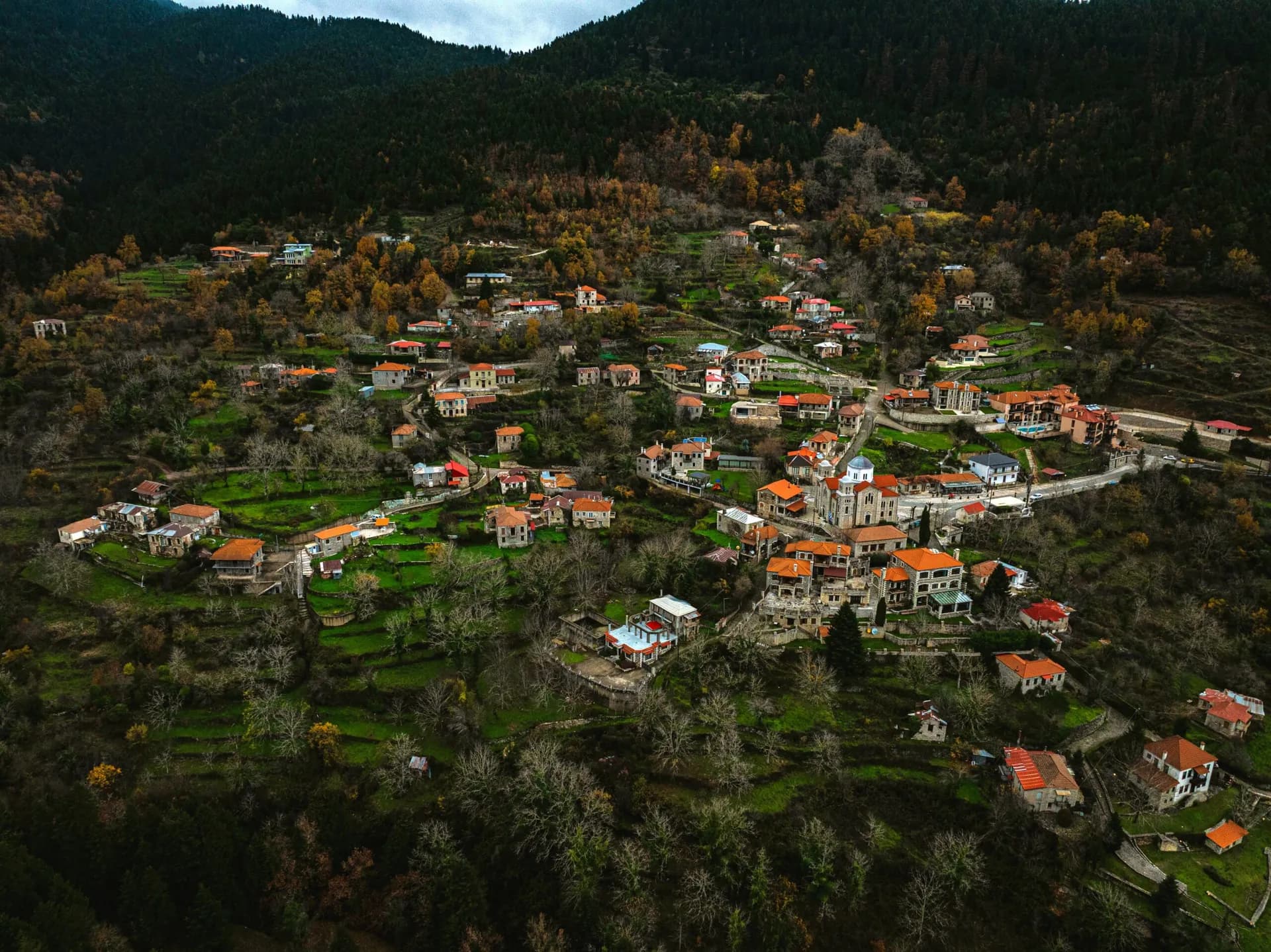
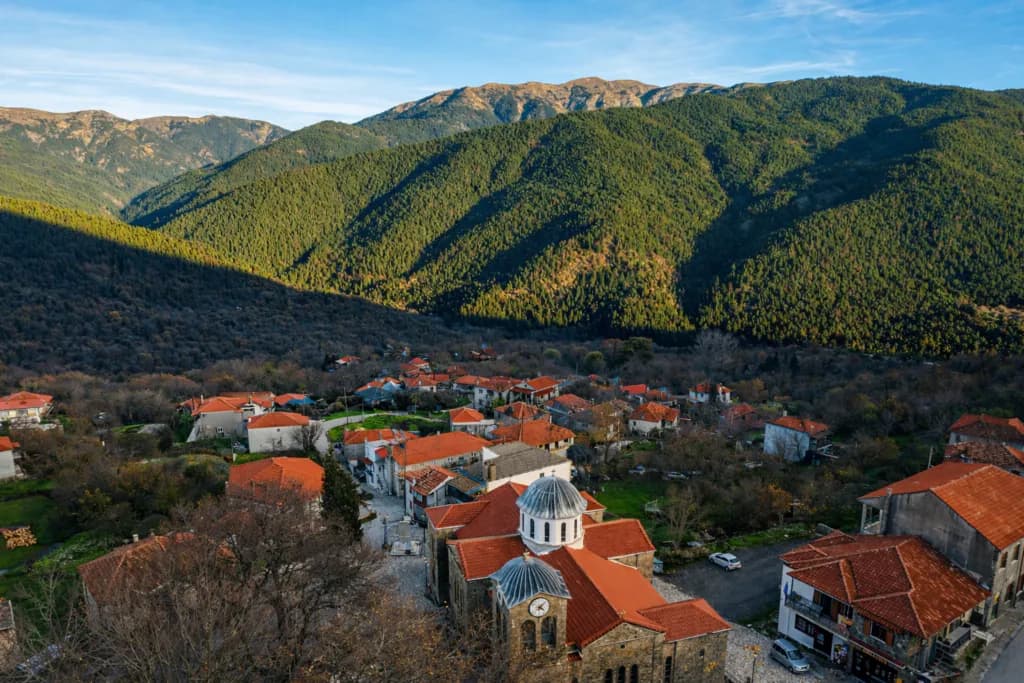
Krikello is amphitheatrical, built at 3,675 feet, on the eastern side of Kaliakouda. It wasn't always one village. It was created in 1650 from the merger of seven smaller settlements. The need for water and security brought them here. And water, indeed, is the first thing you encounter. The "solinaria" (seven stone fountains at the village entrance) run constantly, with ice-cold water straight from the mountain springs.
Next to them is the square: ancient plane trees, stone houses, and at the center, the church of Agios Nikolaos, built in 1903 with volunteer labor from the entire village. Each resident carried a few stones. The church, with its tall bell tower and icons, remains the collective pride of the village.
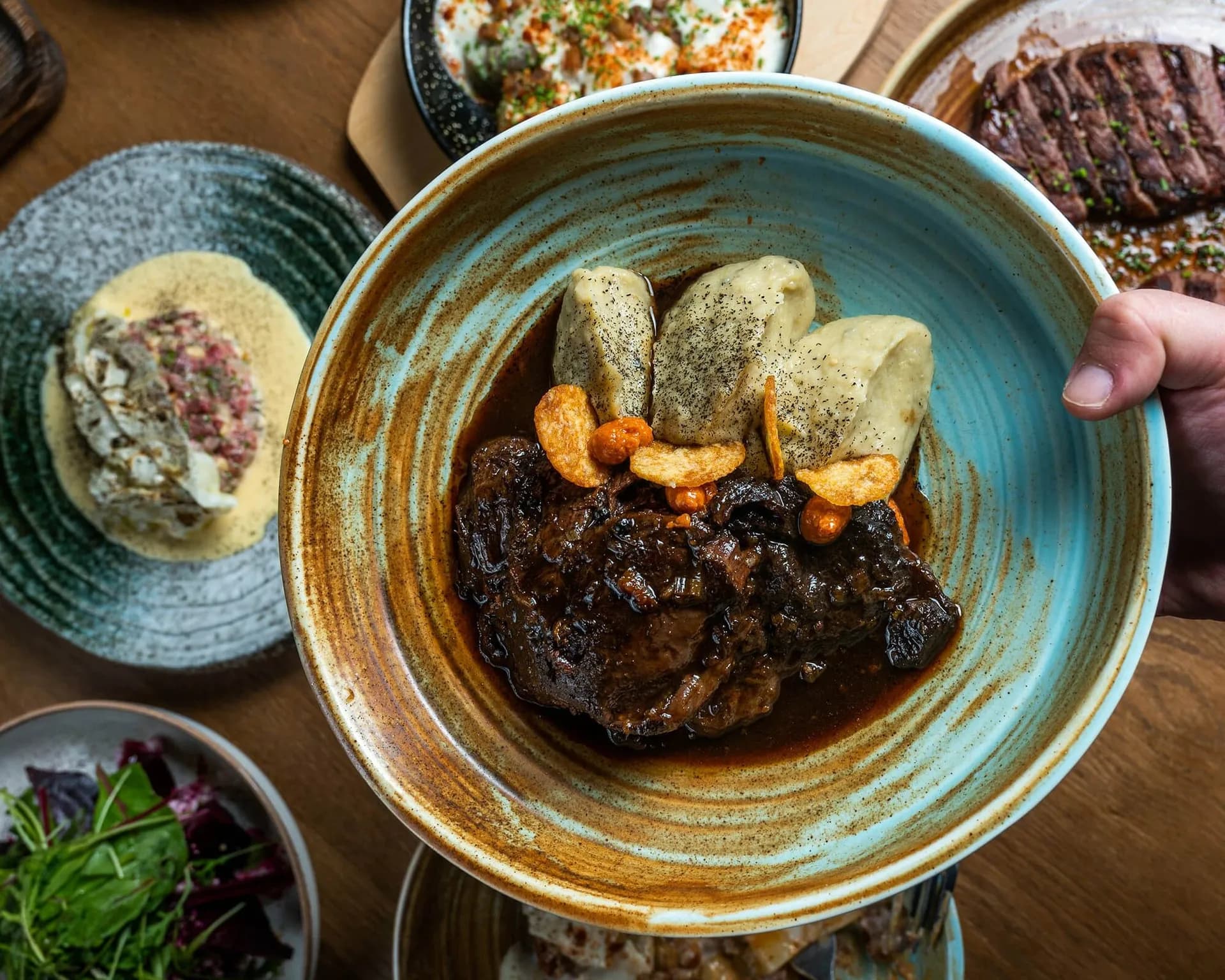
There are dining options in the square. We sat at Lena's. Delicious grilled meats, wild boar stew, lemon kid goat in a clay pot, veal giouvetsi in earthenware. Pies with wild greens and handmade phyllo. For dessert, galaktoboureko with eggs and milk from the village: the sweet conclusion to a generous meal. Before you leave, stock up on select products: prasata sausages, tsalafouti (a creamy local cheese), dark and thick fir honey, mountain tea, tsipouro, and blackberry liqueur.
The two-room elementary school was built in 1909. Hewn stone, symmetrical facade, a pediment at the entrance that resembles a miniature neoclassical building. Today it's a listed building. But its history isn't hidden in the architecture. During the Occupation, it operated as a meeting place for ELAS officers, and the school's flag was the first banner handed to Aris Velouchiotis. There are no students anymore. Instead, the space hosts exhibitions, musical evenings, and pieces from the village's folk collection.
In the old village post office, a lending library has operated since August 2025. The space was renovated by volunteers, based on a collection started years ago by philologist Soula Florou. A post office wasn't needed anymore. Books, it seems, still were.
Krikello is still alive. In summer, it celebrates with music and food under the plane trees. Together with neighboring Domnista, it organizes the Tsipouro Festival, with meze and people coming from everywhere. Few permanent residents, but many expatriates who return every year as if they never left. The Agrafa region, to which Krikello culturally belongs, was never recorded in Ottoman registers. During the Occupation, at nearby Koufovrysi, the first battle of ELAS led by Aris Velouchiotis took place. These mountains were refuge and remain a place that carries what happened here.
Common Questions
How do I get here from Athens?
Most destinations covered on this site are 2 to 4 hours from Athens by car. I always recommend renting a car rather than joining a bus tour — you control your stops, you can pull over when something looks interesting, and the drive itself is often half the experience in Greece.
What is the best time to visit?
April to June is my personal preference — the wildflowers are out, the crowds haven't arrived, and the light is extraordinary. September and October are equally good. Summer is beautiful but you'll share it with everyone else. Winter is underrated and deeply local.