At this time of year, the route from Konitsa to the village becomes almost ritualistic.
Winter in Epirus spreads quietly. The mountains deepen in color, the slopes of Nemertsika retain their green, and among the rocks the deciduous trees, now bare, let light touch the valleys in a reverent way. At this time of year, the route from Konitsa toward Molyvdoskepasti becomes almost ritualistic.
Following the course of the Aoos River, the road narrows. The river, sometimes calm and sometimes torrential, stands to our right as we cross the iron bridge and immerse ourselves in a world that seems untouched. Shortly before the Monastery appears, the fallen bridge (the old Mesogefy ra lost in the waters) still stands as both a wound and monument. A reminder that in mountainous Epirus, everything beautiful also bears a trace of trial.
The Lead-Roofed Monastery
At the junction of the Aoos with the Sarantaporos, where the foothills of Nemertsika meet stone and water, stands the Monastery of the Dormition of the Theotokos Molyvdoskepasti, one of the most historic monasteries in Epirus. The name "Molyvdoskepasti" isn't metaphorical. It comes from the lead plates that, instead of tiles, covered the katholikon in earlier times. These plates gave the monastery its fortress-like appearance, this sense of endurance against time and invasions.
Tradition has Emperor Constantine IV Pogonatos founding it in the 7th century, as he returned from a campaign in Sicily. Centuries later, Andronikos Palaiologos renovates it, while from the 12th to 17th centuries the Monastery becomes the seat of the Archbishopric of Pogoniani. Here operates one of the era's most important manuscript schools, where scholars, monks, and scribes will pass through.
In 1943, war leaves its mark: the Nazis bomb the Monastery, cells and refectory burn, but the katholikon survives. Today, renovated, with the lead coverings again in place, it stands as a beacon of continuity.
The Village on the Slope
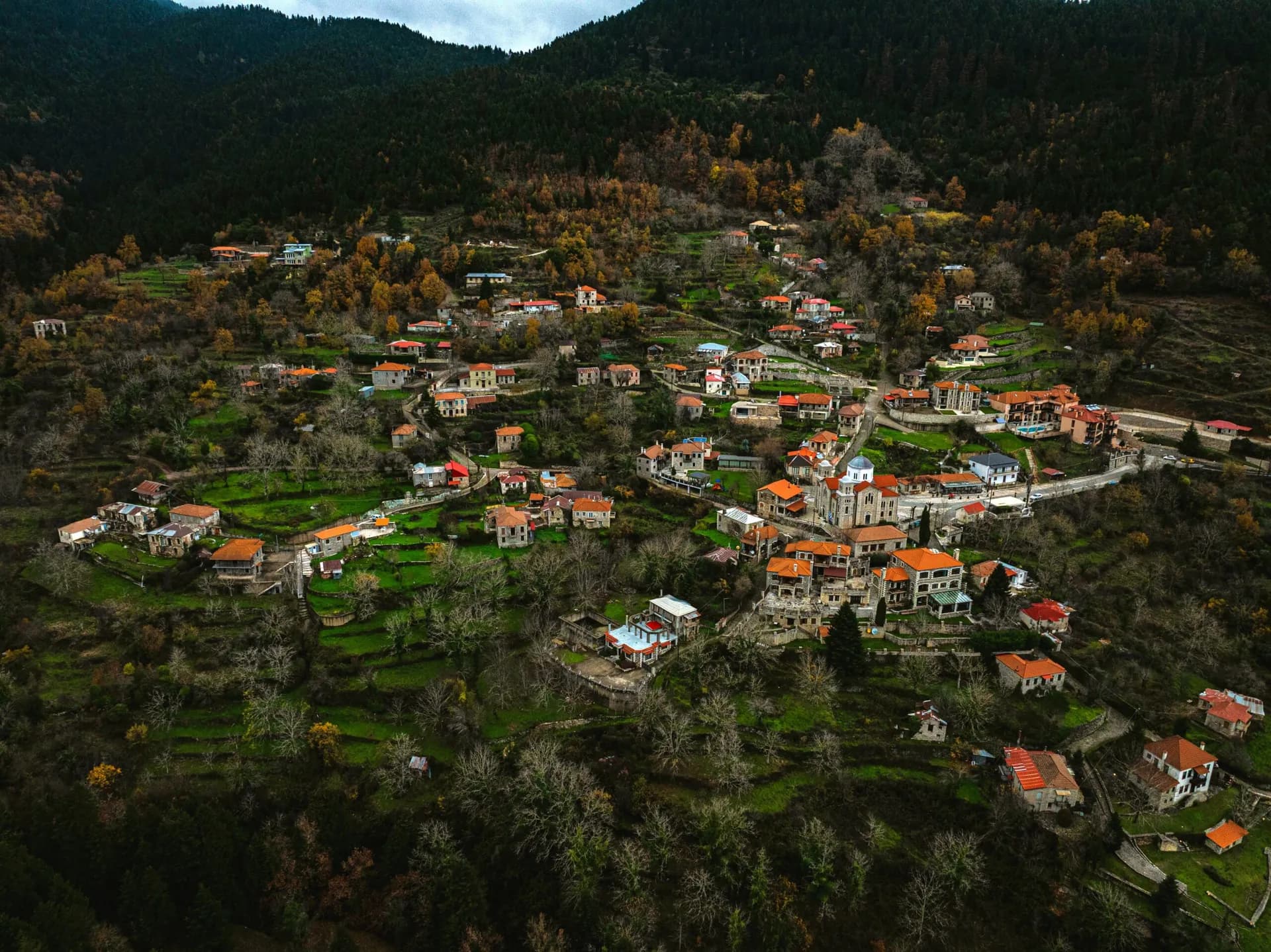
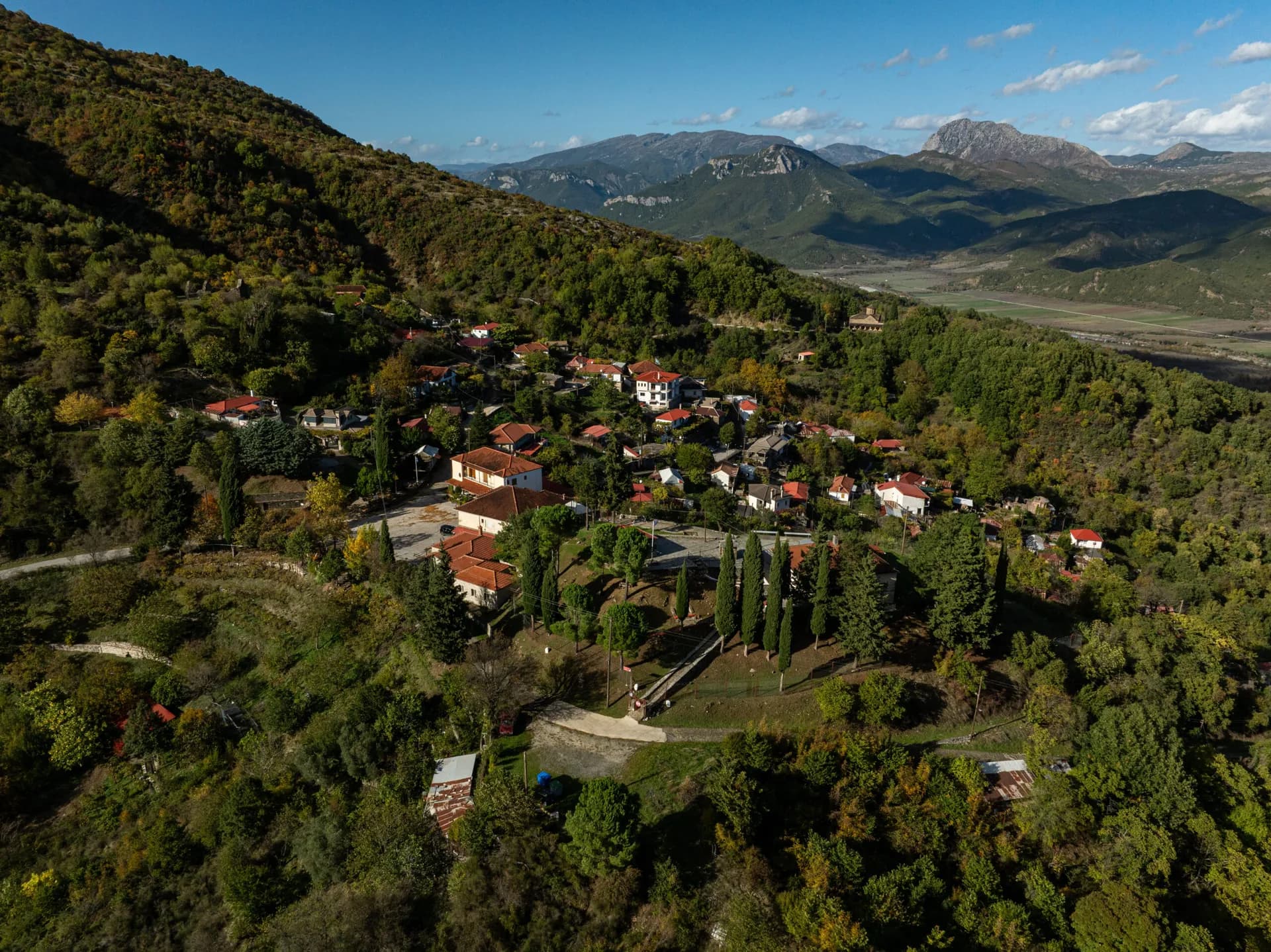
From the Monastery we climb uphill to the village. The road narrow, the slopes spread out, winter nature makes the landscape even clearer. Molyvdoskepasto, built on the eastern slopes of Nemertsika, is located just a few hundred meters from the Greek-Albanian border, at an elevation of about 600 meters. It was once called Dipalitsa, a name that for centuries accompanied a commercial and administrative place, with residents reaching as far as Moldowallachia and Constantinople.
In the square we leave the car. The village quiet, with stone houses and roads that seem to always lead a bit further back in time. The route to the church of the Holy Apostles is short. A path between courtyards, stones, and trees that still hold autumn's last colors.
At the Edge of Greece
The Byzantine church of the Holy Apostles, built in 1537 and frescoed in 1645, is located less than 50 meters from the border. It's one of those moments where landscape, history, and geography unite. The courtyard opens like a balcony over two countries. Below spreads the Albanian plain, bare in winter, with riverbeds forming silver lines in the landscape. Further right, the junction of the Aoos with Sarantaporos forms a natural cut showing water's power over time.
Greece ends here: a few more steps and the ground changes name. We stand for an hour, without speaking. The air cold, the stone's notes heavy. It's one of those moments when Epirus calls you to listen to it.
Stories in Stone
Molyvdoskepasto today may be small, but its stories are large: 20 Byzantine and post-Byzantine churches, paths connecting eras, squares where locals still speak of old merchants and journeys reaching the Danube. From here came Karolos Papoulias, further proof that great history is often born in frontier places.
On the return road, winter has now truly fallen. The light lowers, the Aoos reflections fade, and Nemertsika becomes a shadow protecting the village like an old guardian.
And we, having walked to the edge of Greece, leave with the certainty that there are places you don't conquer, they conquer you.
Common Questions
Is Ioannina worth visiting just for the food?
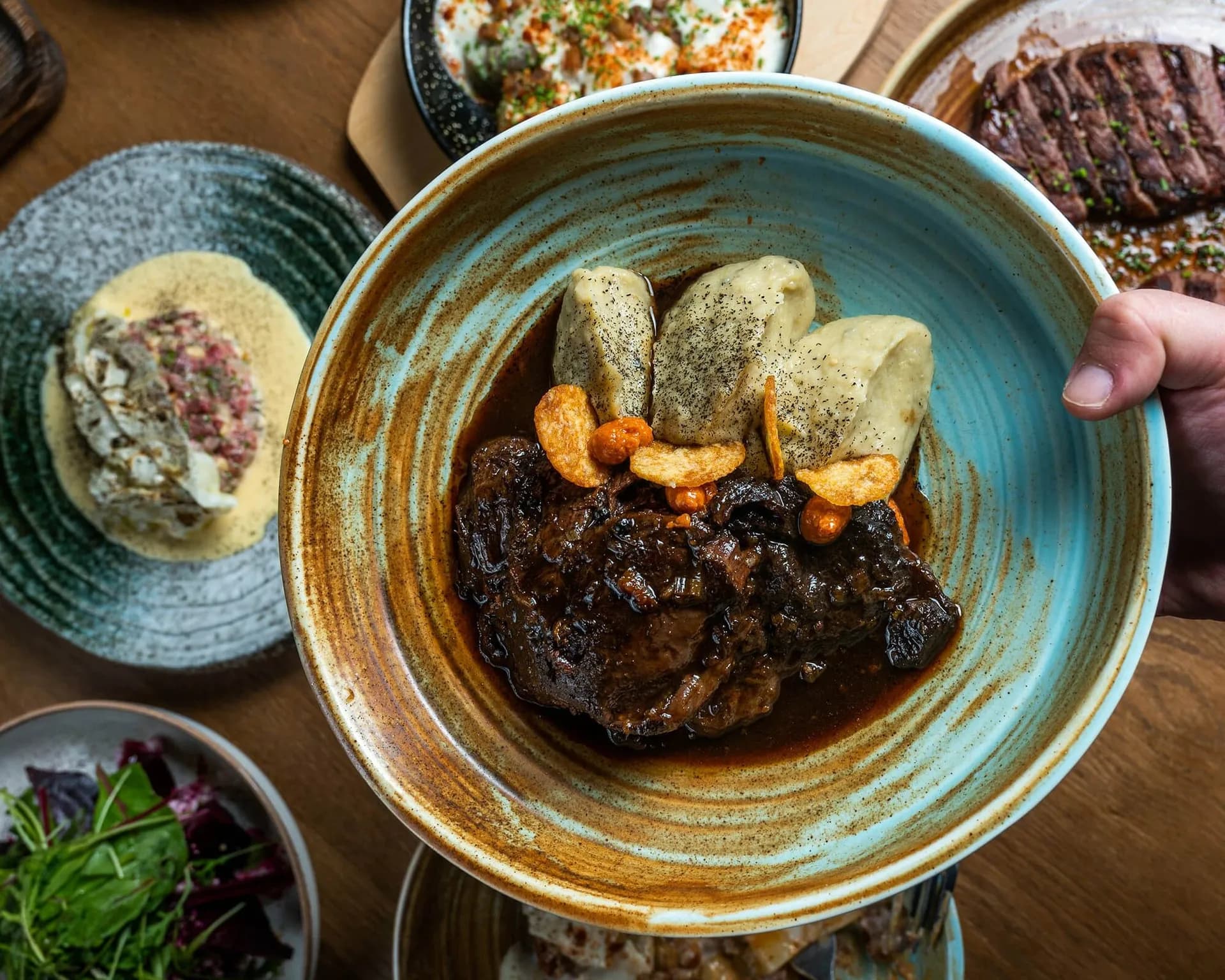
Absolutely — and I say this as someone who has eaten across most of Greece. The Northwestern Greek kitchen is the most underrated in the country. Lamb cooked over wood, pies made with hand-rolled phyllo, freshwater fish from the lake, and bougatsa that will ruin all other bougatsa for you. Plan a long weekend minimum.
What's the one dish I can't miss in Ioannina?
The lake eel, if you're adventurous — it's been a Ioannina specialty since Byzantine times. If that's too much, then the lamb in garlic sauce at one of the lakeside tavernas. Either way, sit by the water, order local wine, and take your time.