The restaurant's menu will focus on Greek cuisine with a creative approach and influences from the Eastern Mediterranean He left By food journalist Dimitr
The restaurant's menu will focus on Greek cuisine with a creative approach and influences from the Eastern Mediterranean
He left Greece 24 years ago to study fine arts in London. He found himself sneaking glances into Europe's kitchens, and very quickly realized that the culinary terrain was where he wanted to play his own game, without hesitating to set his own rules.
Vasilis Chamam hails from Thessaloniki, born to a Greek mother and a father who grew up in Jordan, with a Palestinian grandfather and a Lebanese grandmother. Today he's returning permanently to his city to take on the culinary venture of the well-known creative agency Beetroot, in the city center on Valaoritis Street. The restaurant's menu will focus on Greek cuisine with a creative approach and influences from the Eastern Mediterranean.
"I grew up in a home where two cuisines coexisted: Greek and Levantine. At my mother's traditional Greek family meals, my father would often add sumac, coriander, or cardamom, and this was like a private joke between him and me. The same thing would happen when my mother, in turn, criticized his interventions. The lunch table was the primary place of interaction and communication for my family," he tells us on the sidelines of a beautiful wine excursion to the vineyards of Goumenissa, organized by Winetuned. There he prepared a casual meal that we enjoyed at a stunning winery, Mikro Ktima Titos, a breath away from Goumenissa. We walked alongside the Serios River, and an earthy little path, like something from a fairy tale, led us to the vineyard and then to the winery, which from a distance looks like the house we'd all want to have in nature.
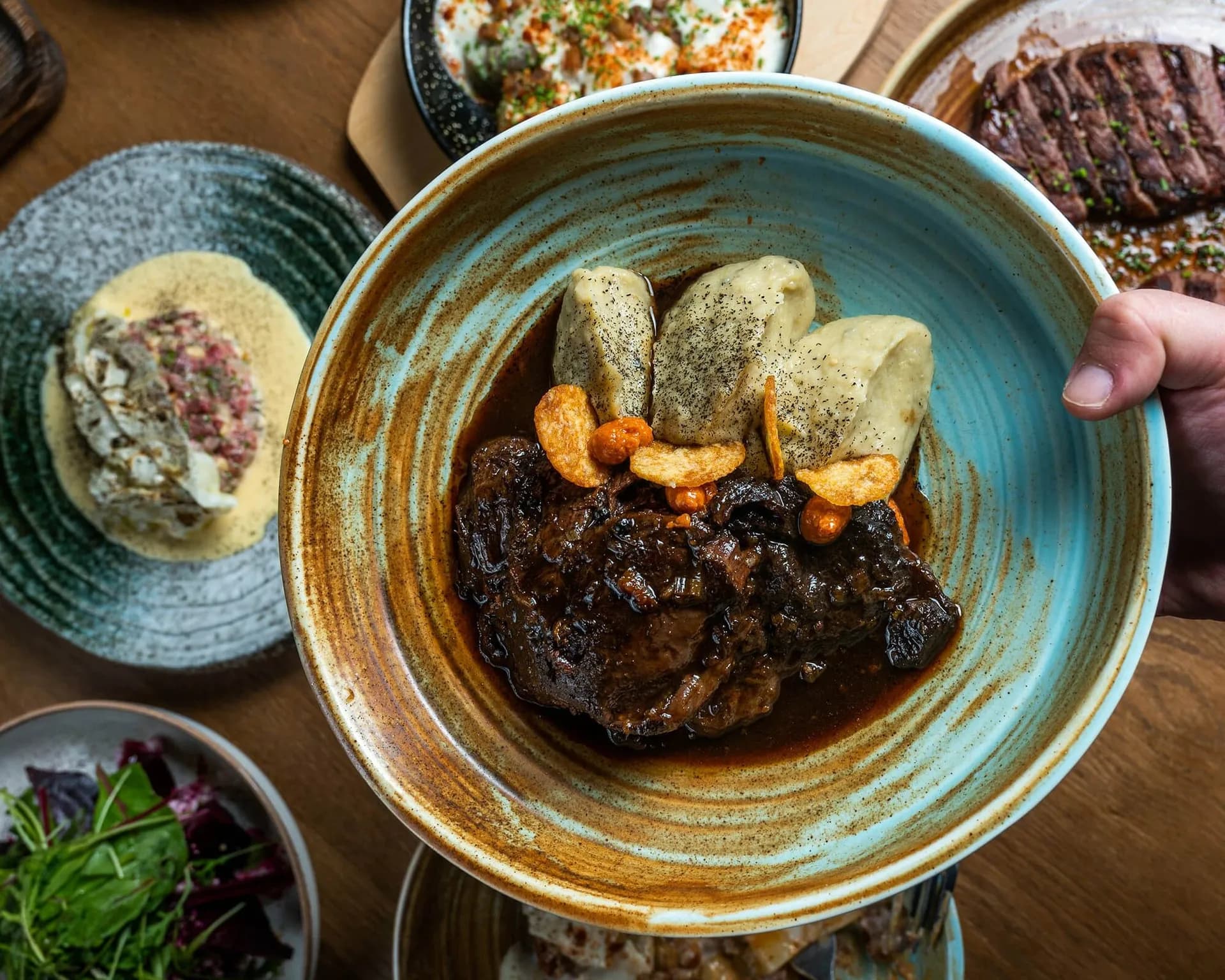
When it's time to eat, the kitchen counter fills with roasted eggplant, lamb pie with chestnuts, green salad, wild greens, and sweet pear with syrup made from Negosca, the local grape variety. The deliciousness is hidden in every bite. Vasilis cooks simply and knows how to put flavor into his dishes. "I try to make the most of seasonal ingredients, to follow local recipes as a guide, and generally not to mix too many ingredients. Success in the kitchen, I believe, is being able to make delicious dishes with few and simple ingredients."
After the meal ends, the conversation revolves around his journey so far. "I'd say everything happened somewhat by chance. I took part in a Tate Modern competition where we had to cook with fish as the theme. The winning dish would go on the restaurant's menu." As he tells us, he made red mullet with ouzo syrup, fennel, and paximadi with aioli and Kalamata olives. He won. However, the dish never made it onto the menu. He didn't care much, because it was enough for him that he'd entered a professional kitchen. "I put on the uniform, held a super sharp knife, and I was among professional chefs. I felt roughly the way I did when I got top marks on my master's. From then on I was thinking about how I could get into the field."
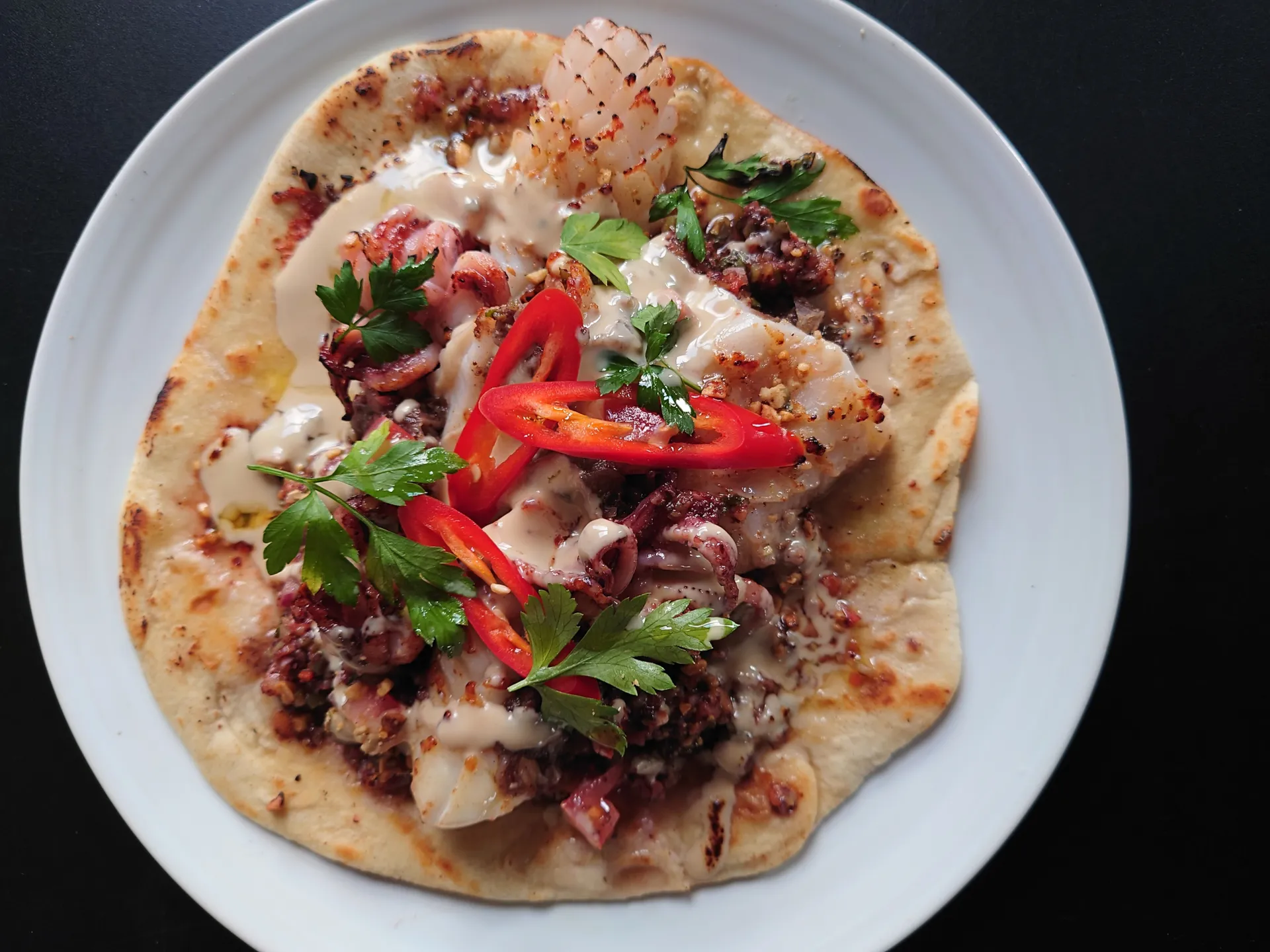
"I started getting more and more involved with cooking as a hobby. The hobby turned into an obsession, but I was very dedicated to the visual arts, and that's what I wanted to be my profession, with cooking being something for me and my friends. Thirteen years later, when I turned 34, I wanted a change in my life and found a job where amateur cooks upload their dishes to an online platform and then receive orders on their phone. From day one I started making the food I ate as a kid. Greek with Eastern Mediterranean influences. Fattoush salad with feta, Greek salad with sumac, and much more. I got a fridge from eBay for one British pound and filled my painting studio with tupperware. I'd deliver orders by bike. One every half hour. I felt like I was finally doing what I wanted."
We're next to all these vineyards in Goumenissa and the conversation turns to wine. We renew our meeting at the courtyard of Ktima Chatzivariti, where the hospitable family (Mrs. Olga, Mr. Vangelis, and of course the ever-energetic Chloe) do everything to make their visitors feel comfortable. We taste wines and go down to the cellar. Chloe Chatzivariti talks about wine and clearly enjoys it. "This is my favorite wine," Vasilis tells me when it's time to taste the estate's Ni. "It has precision in its balance and eloquence in its structure. The proper pairing of wine with food is very important. I always ask for experts' opinions, and that's what can elevate a good culinary effort another notch."
We close this conversation in the courtyard of Ktima Chatzivariti as the sun setting behind the vineyards leaves a bit of its red to blend with the green of the leaves. Where Xinomavro found its own kingdom to offer us wines full of aromas and flavors. We can't wait to taste a wine from the region's wineries at the brand-new Beetroot restaurant and pair it with everything Vasilis has already started thinking about.
Frequently Asked Questions
What makes Greek food unique?
Greek cuisine is built on simplicity and quality ingredients. What makes it distinctive is regional variety — every island and mountain village has its own flavors, often unchanged for centuries.