A unique natural monument that combines scientific significance with mythological tradition in Pindos In the heart of the Lakmos Insider guide by food jou
A unique natural monument that combines scientific significance with mythological tradition in Pindos
In the heart of the Lakmos mountain range, where Epirus meets Thessaly, an impressive geological phenomenon provokes awe and wonder. Verliga, one of the legendary dragon lakes of Pindos, is a unique natural monument that combines scientific importance with mythological tradition.
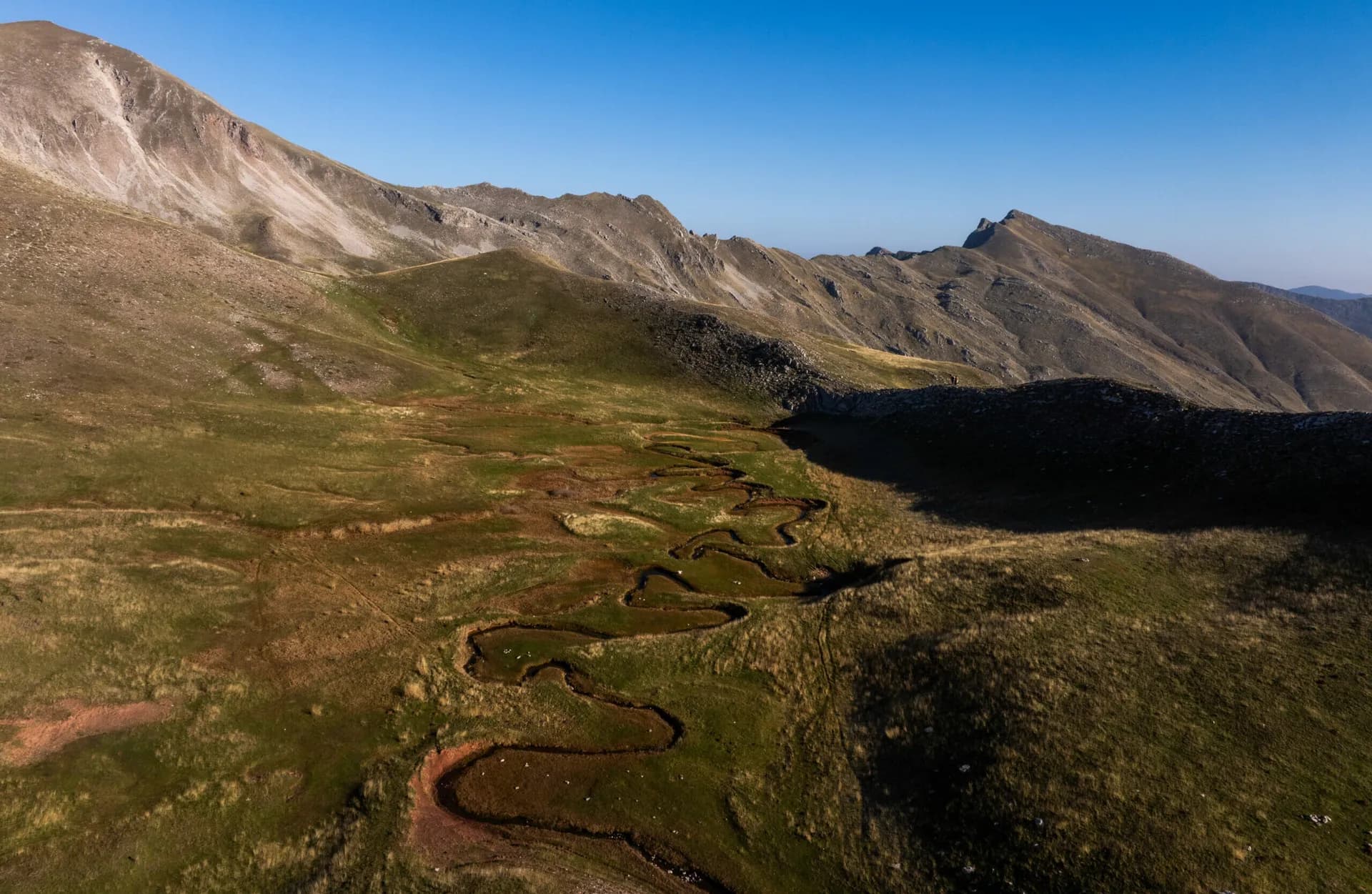
At an altitude of 2,050 meters, between the imposing peaks of Tsoukarela (2,295 meters) and Megas Trapos (2,240 meters), stretches an alpine plateau that hosts one of the country's most distinctive hydrogeological systems. Verliga, covering an area of approximately 10 acres, is characterized by a complex system of ten serpentine streams that constitute the first springs of the historic Acheloos River.
The most impressive feature of Verliga is the way its waters "disappear" through a natural funnel. This phenomenon gave the lake its name ("Vringa" in Vlach means circle) and fed numerous local myths. In spring, as the ice melts, the water flow creates a magical spectacle of meandering formations before vanishing into the bowels of the earth. In mid-autumn, when we had the opportunity to visit, the water is sparse, yet it still flows and we were able to see both the meanders and the point where the water disappears.
Local tradition has woven a rich mythological veil around Verliga. According to legend, an invisible dragon in the form of a snake inhabited the waters. The myth recounts that this creature sprang from the rock, left its imprint on the earth in the form of serpentine streams, and finally disappeared at the point where the funnel is located today. The area is also known as Farmakolakka, a name that comes from shepherds and is connected to mysterious losses of animals in the region.
Verliga is part of a broader ecosystem that transforms dramatically with the changing seasons. In spring, snowmelt creates a rich aquatic landscape, while in summer and autumn the area transforms into an alpine meadow with unique flora. This seasonal variation contributes to maintaining rich biodiversity.
From a scientific perspective, Verliga, like the other dragon lakes of Pindos, is a legacy of the last glacial period. Along with the stands of Black Pine, it's among the last witnesses of an era that fundamentally shaped the Greek mountain landscape. Study of the region's hydrogeological system continues to offer valuable information for understanding climate change and geological processes.
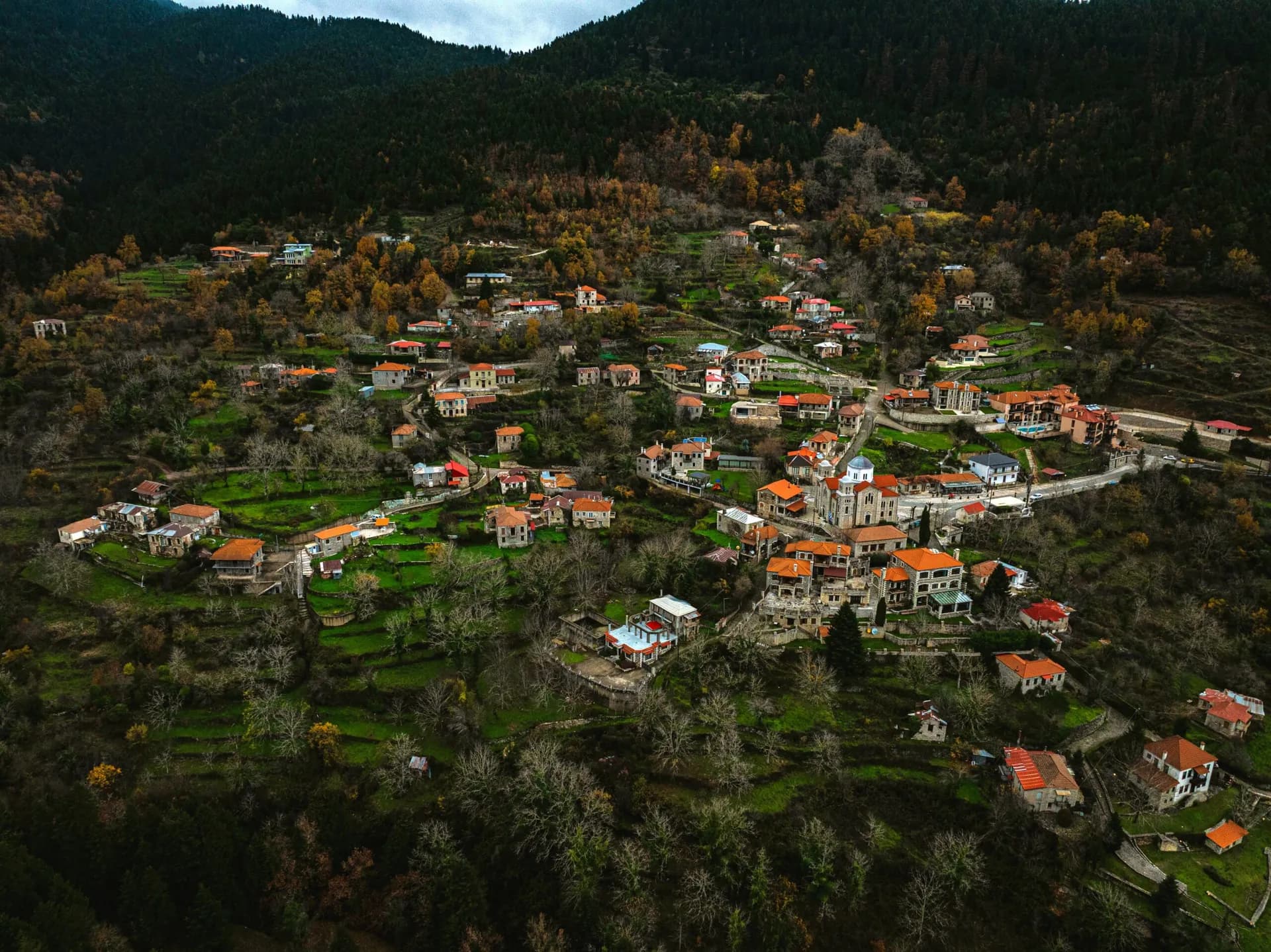
Access to Verliga is possible from the village of Chaliki Aspropotamou, although the route requires special equipment and preparation. Protection of this unique ecosystem is a priority, as it combines environmental, scientific, and cultural value. There is a road that gets you close to Verliga, but it requires a four-wheel-drive vehicle and a driver experienced with such routes. In any case, the vehicle must remain several hundred meters away, where the barrier has been placed, as we mentioned above, this is an area that requires special attention.
Verliga isn't just a geological phenomenon. It's a living witness to the timeless relationship between the natural environment and human civilization in mountainous Greece, a place where science meets myth and natural beauty coexists with mystery.
At Baros: A Journey-Experience at Greece's Highest Pass
Baros Pass: Driving at 1,900 Meters, You'll Feel Like You're Flying in the Clouds
A Journey Through the Vlach Villages in Northern Pindos National Park
Common Questions
Where can I find this in Athens?
The Central Market (Varvakios Agora) on Athinas Street is the best starting point for any serious ingredient hunt in Athens. It's open weekday mornings and is genuinely one of the great food markets of Europe — chaotic, loud, and completely authentic. Go with a local if you can. I take people there on my Athens food walk.
What makes Greek versions of this different from what I've had elsewhere?
Greek cooking is obsessed with quality of ingredients, not complexity of technique. The olive oil is better. The tomatoes taste like tomatoes should. The feta is brined in whey, not plastic brine. When you eat the same dish in Greece vs. a Greek restaurant abroad, you're eating fundamentally different food.